The Music Industry’s War on Ownership



Making a Scene Presents – The Music Industry’s War on Ownership
Listen to The Podcast Discussion
Platforms want access. Artists need ownership.
There is a war on ownership in the music business, and most of it is happening in plain sight.
It is not being fought with lawsuits or angry speeches. It is being fought with product design. It is being fought with dashboards, autoplay, pre-save buttons, short-form feeds, and a thousand tiny choices that train artists to believe reach is enough. The message is always the same. Be everywhere. Post more. Feed the machine. Stay visible. Hope the platform keeps showing you to people.
That sounds like opportunity. A lot of the time, it is really dependency.
The U.S. music business is making real money. In 2025, recorded music revenue in the United States hit a record $11.5 billion. Streaming alone brought in $9.5 billion, or 82% of the total. Paid subscriptions reached 106.5 million accounts. So let’s be honest right from the jump. The system is not broken because it cannot make money. It is working very well. The problem is where the power sits when that money moves. Too often, the artist gets exposure while the platform keeps the relationship.
That is the part indie artists in the United States need to stop romanticizing. Fans have been taught to rent music by the month. Artists have been taught to rent attention the same way. You do not build a home. You borrow space inside somebody else’s app. You do not own the audience file. You get an insights tab. You do not get a direct line to the people who care. You get a graph.
And a graph is not a business.
Access is a great product for listeners and a weak foundation for artists
For listeners, access is amazing. It is easy, fast, cheap, and endless. For the fan, that feels like freedom. For the working artist, it often turns into a trap.
Spotify for Artists gives artists real data. You can see followers, listeners, release engagement, source of streams, and city-level audience patterns. But Spotify also states very clearly that artists can see the total number of followers, not the names of individual followers. That one detail tells you almost everything you need to know about the modern platform economy. You are allowed to see the crowd, but you are not allowed to own the crowd.
Spotify has also built out ways to keep commerce inside its own walls. Through its Shopify integration, artists can publish up to 250 merch items to Spotify, and fans can find those items on artist profiles, release pages, the Now Playing view, and artist store pages. That is smart for Spotify. It keeps listening, browsing, and buying in one place. It is convenient. It is useful. But it is still platform-first. The fan is shopping in Spotify’s house, not stepping into the artist’s owned ecosystem.
TikTok is doing a version of the same thing. TikTok for Artists launched globally in 2025 as a music insights platform with daily analytics, song performance data, post performance data, follower insights, and a Pre-Release tool that lets fans pre-save albums to Spotify or Apple Music. Again, that is useful. It helps artists understand what is happening on TikTok. But it still starts with TikTok deciding how much of that relationship stays on TikTok and how much the artist has to work to pull out.
Instagram and YouTube offer similar value with similar limits. Instagram says creators can use Insights to learn more about account and content performance, including audience demographics when enough reach data is available. YouTube says the Audience tab in YouTube Analytics shows who is watching and includes demographic insights, while also noting that some audience data may be limited. These tools are not fake. They are helpful. But they are still mirrors inside somebody else’s building. They tell you what happened on the platform. They do not hand you the actual relationship.
That is the whole trick. Platforms are happy to let artists feel informed as long as artists stay dependent.
Dashboards are not relationships
This is where a lot of musicians get fooled. A spike in streams feels like progress. A jump in views feels like momentum. A bigger follower number feels like leverage. But numbers can flatter you while still leaving you broke.
Spotify’s own fan research is a perfect example. Spotify says super listeners make up just 2% of an artist’s monthly listeners on average, but they drive more than 18% of monthly streams and account for 50% of ticket sales through Spotify. That means the real business is not hiding in the widest ring of casual attention. It is hiding in the smaller circle of people who keep choosing you.
That is a brutal and useful truth for indie artists. The biggest audience is not always the most valuable audience. The most valuable audience is the one that commits. The fan who comes back. The fan who buys. The fan who shows up on a Tuesday night. The fan who answers the text, opens the email, grabs the shirt, and tells a friend. That is the fan who keeps a working artist alive.
The modern music business does not like to talk that way because commitment is harder to package than reach. Reach looks sexy in a pitch deck. Commitment looks like boring infrastructure. Reach can be sold as scale. Commitment looks like email lists, buyer history, city tags, attendance logs, and weird little systems that do not make headlines. But commitment is the part that pays for gas, vinyl, merch restocks, and the next round of recording.
That is why ownership matters so much. Ownership is what lets an artist recognize commitment and act on it.
Flip the script and turn platforms into the top of the funnel
This is where indie artists need to stop acting like tenants and start acting like owners.
The platforms are not your home. They are the street corner. They are the billboard. They are the noisy room where somebody hears your name for the first time. That matters. Discovery matters. But discovery should not be the destination.
The modern system trains artists to send fans deeper into platform land. Watch the clip, go to the stream, follow the profile, save the song, maybe buy merch if the app decides to surface it. The artist becomes a supplier to the feed. The fan stays inside the machine. The platform wins because the artist created the interest, and the platform kept the user.
Indie artists need to flip that script.
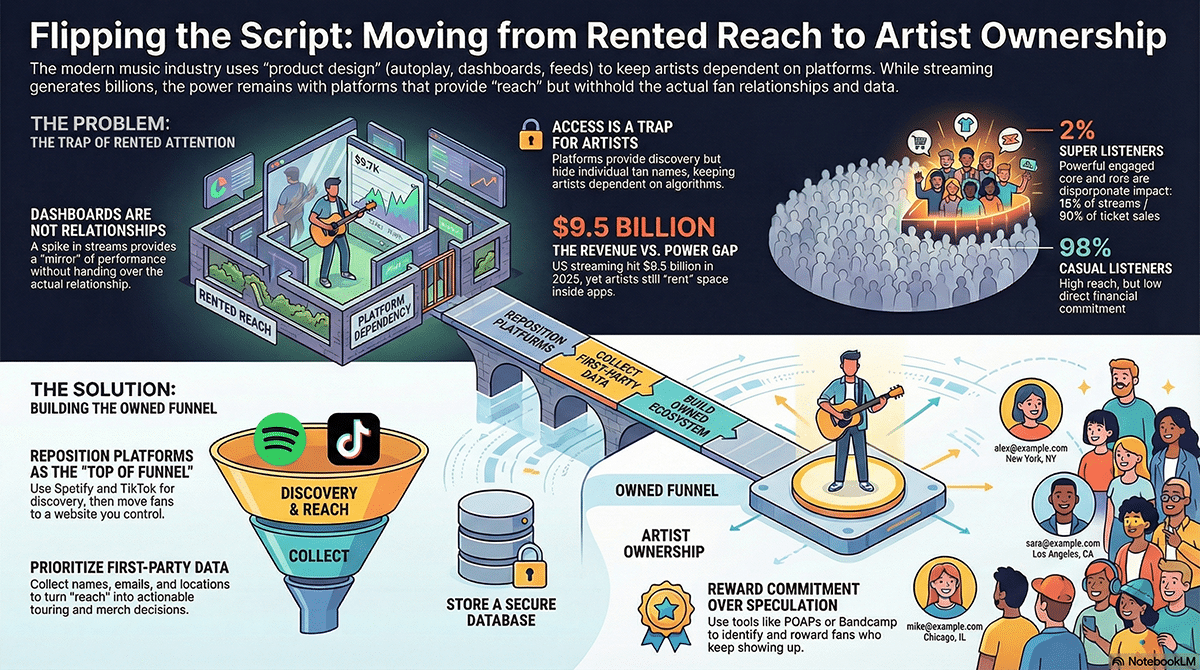
Use Spotify, TikTok, Instagram, YouTube, and every other discovery platform for what they do well. Let them surface your music. Let them create moments. Let them produce curiosity. But do not treat those platforms like your headquarters. Treat them like the top of the funnel. Their job is discovery. Your job is transfer.
That means every short clip, every music video, every live post, every onstage mention, every bio link, and every campaign should point serious interest back toward a system you control. The goal is not just to be seen on the platform. The goal is to move the interested person off the platform and into your world before the algorithm pulls them away.
That one mental shift changes everything. A TikTok is no longer the product. It is the invitation. A Spotify profile is no longer home base. It is a discovery node. A YouTube video is not the finish line. It is a door. The moment you understand that, you stop chasing platform behavior like it is the whole business and start using platform behavior to feed your own business.
That is how you stop renting attention and start building ownership.
Your website should behave like a platform, but work for you
This is where most indie artists still leave money on the table.
Too many artist websites are still built like digital business cards. A photo. A bio. A few social icons. A tour tab. A store tab. A bunch of easy exits back to Spotify, Instagram, TikTok, and YouTube. That is backwards.
Your website should not be a place people visit for ten seconds before leaving. It should be a place designed to keep the fan there.
Platforms understand this very well. Every part of their design is built to keep users inside the system. One click leads to another. One piece of content leads to another. One interaction opens another path deeper in. Indie artists need to steal that logic and use it for themselves.
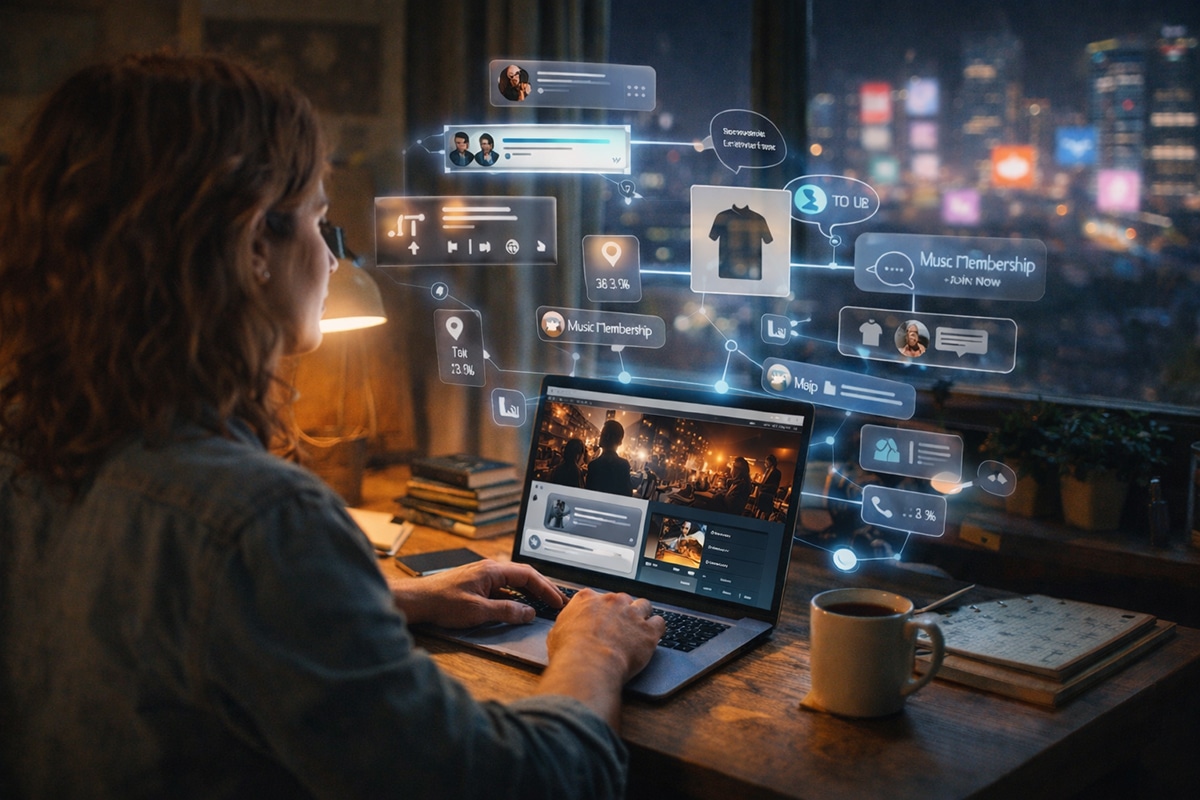
Once a fan lands on your site, the site should guide that person deeper into your own ecosystem. Let them hear music on your site. Let them watch the live clip there. Let them read the story behind the song there. Let them see upcoming shows there. Let them buy merch there. Let them join your email or text list there. Let them claim a member perk there. Let them get to the next step without being pushed right back into rented land.
That means the first job of your site is not to send people away. The first job is to collect fan data and deepen engagement.
Bandcamp gets this better than most platforms. Bandcamp’s own artist guide says followers are more like an enhanced mailing list than a typical social media audience because they receive messages on Bandcamp and by email, and every person who follows is also invited to opt into the artist’s mailing list, which the artist can export from the tools page at any time. Bandcamp also lets artists target messages by fan location and level of support. That is ownership thinking. That is a system designed to preserve the relationship, not hide it.
Bandcamp also gives artists direct access to raw sales data. Its help pages say the raw data sales report can be downloaded as a CSV file and opened in spreadsheet programs, and that artists can view buyer location data from their stats page, including city and state data for U.S. sales on Pro accounts. That matters because geography is not trivia for a working musician. Geography is routing. Geography is merch planning. Geography is deciding where to spend money and where not to.
Your own website should be built with that same spirit. Do not make it an exit ramp. Make it a venue. Make it a store. Make it a clubhouse. Make it the place where attention turns into a relationship.
Artists have to be in the data loop themselves
One of the dumbest leftovers from the old music business is the idea that artists should stay in the creative lane while managers, labels, and consultants deal with the data.
That is a nice way to turn an artist into labor inside their own company.
If you are independent, you need to be in the data loop. Not because every songwriter needs to become a full-time analyst. Not because the art should become a spreadsheet. But because the artist usually understands the meaning behind the numbers better than anybody else.
The artist knows which song made the room lean in. The artist knows which city looked soft online but hit hard in person. The artist knows whether a shirt sold because of the lyric, the design, the color, or the story around it. The artist knows which fans came for the scene, the sound, the community, the cause, or the live experience. That context matters.
So yes, artists should be directly involved in the process of collecting their own fan data. They should know what gets collected, why it matters, and what the next move is once that information comes in. That means asking for more than a stream. Ask for first name, email, city, and state. Add SMS if it fits your style and your audience. Track show attendance. Track merch purchases. Track repeat support. Then use that information to make decisions.
Shopify makes some of this easier because customer data can be exported as CSV files, including tags and supported metafields. That means merch buyers do not have to stay trapped inside your store software as a blur of old transactions. They can become part of a real customer file you can study and segment.
Patreon can play a similar role for membership-style support. Patreon’s own help center says creators can export their audience’s emails, and Patreon’s Audience Relationship Manager lets creators filter members by things like email address, tier, join date, and membership status. That is useful because it turns “community” into something an artist can actually work with, not just admire from a distance.
When artists stay close to that information, they stop guessing so much. They stop trusting platform mood swings as if those were business plans. They stop treating audience behavior like magic. They start seeing patterns.
And patterns are where good decisions come from.
Web3 matters when it rewards commitment instead of speculation
Now we get to the part that still makes some people twitch.
Web3.
A lot of people hear that term and think of scams, ugly JPEGs, fake scarcity, and tech bros yelling about the future while everybody else quietly backs away. That reaction did not come out of nowhere. Plenty of nonsense was sold under the Web3 banner.
But bad hype does not erase useful infrastructure.
For indie artists, the best use of Web3 is not speculation. It is commitment tracking, portable membership, and programmable access. The useful question is not, “How do I turn fans into traders?” The useful question is, “How do I reward the people who keep showing up?”
Unlock Protocol is a strong example. Unlock describes itself as an open-source, community-governed, peer-to-peer system for time-based memberships and subscriptions. More importantly, its own docs say its goal is to increase conversion from “users” to “members.” That is exactly the right frame for independent artists. You do not need more passive users. You need more members.
POAP is another good example. POAP stands for Proof of Attendance Protocol. POAP says collectors own their POAPs, and its site describes them as limited-edition digital collectibles that can acknowledge participation in real-life or virtual events. It also highlights the use of POAPs for things like digital ticket stubs, online passports, perks, and gated experiences. That is not hype. That is a useful way to turn attendance into a durable support signal.
Think about how powerful that can be in the indie market. A fan comes to your show in Athens, Georgia, and claims a digital attendance collectible. Then they come to your next show in Asheville. Then they buy a live EP bundle. Then they get early access to a regional run or a private stream because your system knows they are not just a random follower. They are a repeat supporter.
That is what Web3 can do when it is used with some common sense. It gives artists a way to record and reward commitment over time. It turns fandom into a trail of proof the artist can recognize and build on.
That is a much better use of technology than trying to squeeze a short-term speculation rush out of your fanbase.
AI turns raw fan data into decisions
Collecting the data is step one. Making it useful is step two. That is where AI becomes a real tool for artist ownership.
OpenAI’s help center says ChatGPT can analyze uploaded Excel files, CSV files, PDFs, and JSON files, and it can also work with file uploads from Google Drive and OneDrive. That matters because a lot of indie artists do not need expensive enterprise software. They need a way to ask plain-English questions about the messy information they already have.
That could mean uploading your Bandcamp raw sales report, your Shopify customer export, your Patreon supporter list, your show attendance spreadsheet, and your email sign-up file. Then you start asking better questions. Which cities have the strongest mix of buyers and attendees? Which supporters buy physical merch fastest? Which songs seem to lead people toward higher-value actions? Which regions should get a smaller acoustic routing plan instead of a full-band gamble? AI can help an artist get from raw exports to practical decisions without needing to become a professional analyst.
Chartmetric is useful in a similar way from the outside-in. Chartmetric says its artist analytics tools track audience demographics across streaming and social platforms, and its Audience Insights feature turns raw data into written takeaways with the help of Chartmetric Intelligence. The company also says audience demographics can show where fans are across different platforms, which matters because your Spotify listeners are not always the same as your TikTok followers or YouTube viewers.
That difference matters a lot. A platform spike in one place does not always equal ticket demand somewhere else. One city might stream you. Another city might actually buy from you. One platform might create noise. Another might reveal the people who are ready to act. AI-assisted tools help artists compare those signals faster and make smarter calls.
Cyanite is another strong example on the catalog side. Cyanite says its Auto-Tagging and Descriptions tools can generate tags for genre, mood, instruments, lyric theme, tempo, energy, and more. It also says Auto-Descriptions can create neutral descriptions that explain how a track sounds. That matters for sync, playlist pitching, internal catalog organization, and even your own release planning. AI is most powerful when it helps artists better understand the assets they already own.
This is the deeper point a lot of musicians miss. AI is not just for making content faster. It is for seeing your business more clearly.
Ownership changes touring
Touring decisions get much better when they are built on owned data instead of platform mood.
Spotify can show you where listeners and followers are by city. TikTok can show where content is hitting. Instagram and YouTube can reveal audience patterns. Those signals are useful, but they are still platform signals. The real move happens when you lay your owned data on top of them. Now you can compare where listeners live with where buyers live, where attendees live, where repeat supporters live, and where your deeper fans actually act.
That is how you stop routing by vanity and start routing by commitment.
Maybe Chicago looks huge in streams, but Madison has stronger email signups, merch buyers, and attendance history. Maybe Atlanta gives you attention, but Athens, Asheville, Knoxville, and Chattanooga give you repeat support. Maybe a college town that looks tiny on the dashboard is actually the start of a profitable weekday circuit because your capture page and show history say those fans keep showing up.
That is what ownership does. It helps the artist see the difference between noise and traction. In the indie market, that can be the difference between a profitable regional run and a dumb expensive loop built on wishful thinking.
Ownership changes merch
Merch is one of the clearest places where commitment beats attention.
A lot of artists look big online and still move very little merch. That usually means one of two things. Either the audience is shallow, or the artist has no real system for seeing who buys what and why.
Spotify’s own research points toward the answer. Its super listeners are a tiny slice of the audience, but they drive a much bigger share of streams and ticket sales. That is a reminder that the most valuable customers are often not the broad crowd brushing past your content. They are the smaller group that already cares enough to act.
When you own your customer data, merch stops being guesswork. Shopify exports can show who bought what. Bandcamp sales reports can show where purchases came from. Bandcamp stats can reveal buyer locations and referrers. Patreon can show who is willing to support regularly. If you connect those dots, your merch table becomes more than a pile of T-shirts and hope. It becomes a feedback loop.
Then Web3 can deepen the relationship. A fan who buys a shirt at a show can claim a POAP tied to that event. That token can later unlock a private live stream, early access to a limited-run item, or a members-only piece of content. Now the shirt is not just a shirt. It is a point on a supporter timeline.
That is what rewarding commitment looks like when it is done right. It is not gimmicky. It is not extractive. It is memory plus access plus value.
Ownership changes releases
This is where a lot of artists still fall back into old habits.
They spend weeks teasing a single, then on release day they send everybody straight to streaming links and hope the algorithm does the rest. That is not a release strategy. That is a surrender.
Platforms can help create release momentum. TikTok’s Pre-Release tool can help fans save an upcoming album to Spotify or Apple Music. Spotify’s Countdown Pages are designed to drive pre-saves directly on Spotify. Spotify also lets artists tag merch to releases so it shows up on release pages and in the Now Playing view. These are useful tools. But if that is the whole plan, the artist still ends up with access-heavy activity and relationship-light results.
An ownership-based release strategy looks different. Use the platforms to create attention, then move that attention back to your own site. Capture email, city, and state before release day. Offer a reason to sign up. Maybe it is an acoustic version, a private demo, first access to tickets, a limited-run shirt, a fan passport, or a member-only live Q&A. Then, when the song lands, you are not shouting one message into the void. You are speaking differently to different kinds of supporters.
The deep fans get one kind of offer. New fans get another. Local fans get a city-specific invite. Buyers get one path. Streamers get another. The people who showed up before get rewarded first.
That is how releases start working like businesses instead of lotteries.
The real fight is not against technology
The enemy here is not streaming. It is not TikTok. It is not Instagram. It is not YouTube. It is not AI. It is not even access itself.
The enemy is dependency.
Platforms are useful as discovery tools. Very useful. They can get music in front of people who might never hear it otherwise. That matters. But discovery is not the same thing as ownership, and artists who confuse those two ideas will spend years feeding systems they do not control.
The better move is not to reject the platforms. It is to reposition them.
Let platforms do the top-of-funnel work. Let them create visibility. Let them start the conversation. Then move people into a system you own. Build a website that keeps fans there. Collect data respectfully and clearly. Tag the cities. Track the buyers. Reward the repeat supporters. Use Web3 where it actually helps. Use AI to read your own business faster and better.
That is how an indie artist builds a middle-class music career instead of chasing endless low-paid visibility.
The practical call to action
So here is the call.
Stop using your main link as an exit ramp to rented platforms. Make it the front door to your own system.
Rebuild your website so it acts less like a brochure and more like a platform. Let fans play music, watch videos, read stories, buy merch, see shows, and join your list without being pushed back into the feed. Design it to keep them there.
Use Spotify, TikTok, Instagram, and YouTube as discovery engines, not as home base. Let those platforms help people find you. Then give those people a clear next step into your world.
Collect your first-party fan data with intention. Start with the basics: first name, email, city, and state. Add a phone number only if you are ready to use SMS in a smart and respectful way. The Making a Scene FREE Fan Funnel WordPress plugin helps automate this process by capturing fan data, delivering a free gift, and sending a scheduled series of four follow-up emails designed to build trust and start the relationship the right way. From there, keep track of who buys, who attends shows, and who comes back. Most importantly, stay personally connected to that data so you understand what your audience is actually doing.
Then use AI to study what that data is telling you. Find your strongest touring markets. Find your best merch customers. Find the fans who act instead of browse. Find the release moves that create commitment, not just noise.
Add a Web3 layer only if it helps you reward real support. Use it for attendance, memberships, perks, and fan history. Do not use it to chase hype. Use it to recognize the people who keep showing up.
Because that is the truth underneath all of this. The music industry discourages ownership because ownership changes the balance of power. A fan you can identify, understand, and reach directly is a fan the platform cannot fully control. A website designed to keep that fan in your world is a direct challenge to a system built on keeping everybody in theirs.
The next generation of working indie artists will not win by renting attention better than everyone else. They will win by turning discovery into ownership, turning data into decisions, and turning casual listeners into committed supporters.
That is how you fight the war on ownership.
That is how you flip the script.
That is how you build something that lasts.
 |  Spotify |  Deezer |  Breaker |
 Pocket Cast |  Radio Public |  Stitcher |  TuneIn |
 IHeart Radio |  Mixcloud |  PlayerFM |  Amazon |
 Jiosaavn |  Gaana |  Vurbl |  Audius |
 Reason.Fm | |||
Find our Podcasts on these outlets
Buy Us a Cup of Coffee!
Join the movement in supporting Making a Scene, the premier independent resource for both emerging musicians and the dedicated fans who champion them.
We showcase this vibrant community that celebrates the raw talent and creative spirit driving the music industry forward. From insightful articles and in-depth interviews to exclusive content and insider tips, Making a Scene empowers artists to thrive and fans to discover their next favorite sound.
Together, let’s amplify the voices of independent musicians and forge unforgettable connections through the power of music
Make a one-time donation
Make a monthly donation
Make a yearly donation
Buy us a cup of Coffee!
Or enter a custom amount
Your contribution is appreciated.
Your contribution is appreciated.
Your contribution is appreciated.
DonateDonate monthlyDonate yearlyYou can donate directly through Paypal!
Subscribe to Our Newsletter
Order the New Book From Making a Scene
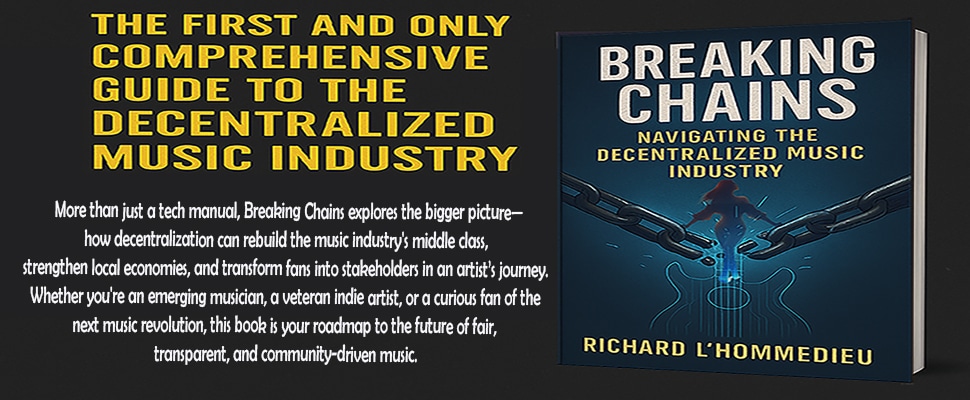
Breaking Chains – Navigating the Decentralized Music Industry
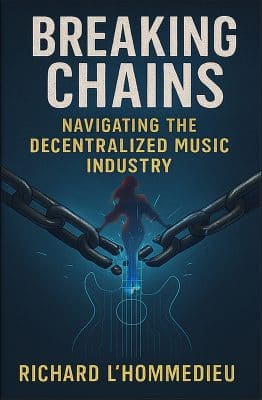
Breaking Chains is a groundbreaking guide for independent musicians ready to take control of their careers in the rapidly evolving world of decentralized music. From blockchain-powered royalties to NFTs, DAOs, and smart contracts, this book breaks down complex Web3 concepts into practical strategies that help artists earn more, connect directly with fans, and retain creative freedom. With real-world examples, platform recommendations, and step-by-step guidance, it empowers musicians to bypass traditional gatekeepers and build sustainable careers on their own terms.
More than just a tech manual, Breaking Chains explores the bigger picture—how decentralization can rebuild the music industry’s middle class, strengthen local economies, and transform fans into stakeholders in an artist’s journey. Whether you’re an emerging musician, a veteran indie artist, or a curious fan of the next music revolution, this book is your roadmap to the future of fair, transparent, and community-driven music.
Get your Limited Edition Signed and Numbered (Only 50 copies Available) Free Shipping Included
Discover more from Making A Scene!
Subscribe to get the latest posts sent to your email.


