The Last Great Land Grab: How Web3 Will Decide Who Owns the Next Music Economy



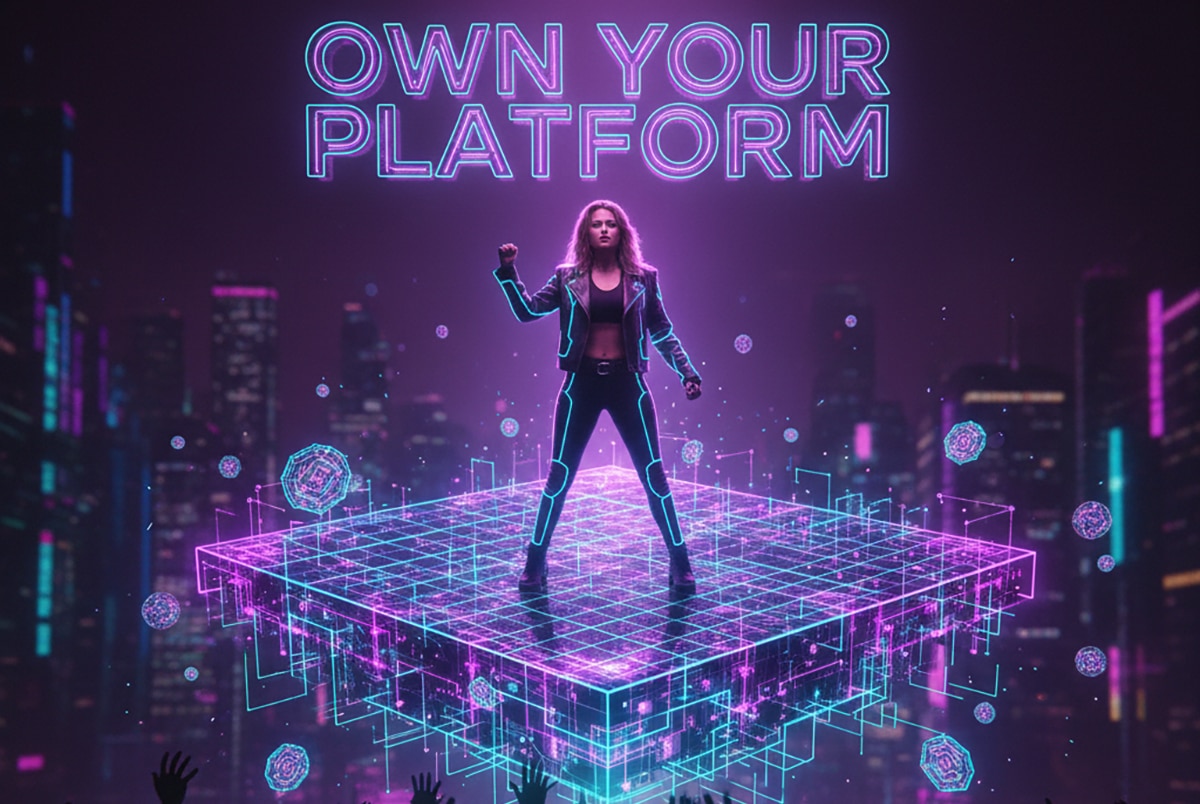
Making a Scene Presents – The Last Great Land Grab: How Web3 Will Decide Who Owns the Next Music Economy
Listen to the podcast discussion to gain more insight into the New Music Economy!
The music industry is going through one of the biggest power shifts in its history, and most artists don’t even realize it yet. The shift isn’t happening in the headlines. It’s happening underneath everything, in the code, in the way money moves, in the way fans connect, and in the way ownership works online. This isn’t a slow drift like the move from CDs to downloads. It’s a full-on takeover. It’s a land grab. And whoever claims their territory first will own the next music economy.
This time, the people calling the shots won’t be the major labels, the giant streaming platforms, or the industry lobby groups. For the first time ever, the people with the most power will be the artists who understand Web3 and decentralized ownership. These artists will build their own platforms, create their own fan economies, mint their own value, and run their careers without any boss over their shoulder.
If that sounds wild, good. The truth is always wild at first.
This deep dive will walk you through exactly why Web3 is the last great land grab in music, why the traditional industry is terrified, and what indie artists must do right now if they want to own a piece of the new world before someone else takes it.
The Ground Is Shifting Under the Music Industry
If you’ve been in the music world long enough, you already know it works in cycles. First the labels had all the power. Then MTV took the wheel. Then Napster blew it up. Then iTunes patched it together. Then Spotify swallowed everything whole and turned streams into pennies.
Each shift rewrote the rules. Each shift created winners and losers. Each shift handed the crown to someone new.
Now you can feel another shift bubbling up. It’s not happening on the radio or in a boardroom. It’s happening inside blockchain networks, smart contracts, decentralized apps, and fan-owned communities. It’s happening on platforms like Audius at https://audius.co, Sound at https://sound.xyz, Zora at https://zora.co, and Catalog at https://catalog.works.
This shift isn’t about formats. It’s about ownership. It’s about deciding who actually controls the money and the relationships in music. The old world was built on a simple rule. Whoever owned the masters, the publishing, the distribution, and the fan data ran the show. The labels owned the masters. The publishers owned the songs. The distributors owned the channels. The streaming platforms owned the data. The artists owned nothing.
Web3 flips that structure upside down. Suddenly, the artist can own every part of the system without asking permission. The tools exist. The technology is out there. The pathways are open. This is why I call it the last great land grab. Because whoever grabs ownership right now will become the new rulers of the music world.
Why Web3 Is Not a Trend but a Takeover
Some people still call Web3 a fad because they only paid attention during the NFT craze of 2021. They saw the headlines, the confusion, the scams, and the hype. What they didn’t see was the deeper truth. Web3 isn’t about cute monkey pictures or crypto swings. It’s about control. It’s about rebuilding the entire music economy on a foundation where artists own the infrastructure instead of renting it.
Streaming platforms own everything. They own your numbers, your fans, your payouts, and your discovery. Labels own your masters and your future. Publishing companies own your catalogs and your passive income. Managers and middlemen take their cuts on top of everything.
Web3 takes that whole system and puts it back into your hands.
When you mint an NFT album, you own the sales directly. When you create an artist coin, you own the entire micro-economy built around your brand. When you run a token-gated fan club, you own the access and the data. When you tour using smart contracts, you own the payments and the splits.
The traditional industry hates this because they can’t control it. They can’t skim percentages. They can’t lock you into deals. They can’t manipulate your revenue. They can’t gate who gets access.
The difference between Web3 and everything before it is that this time artists can own the rails themselves. Not just the content. The rails.
That’s why it’s a takeover, not a trend.
The Old Music Industry Knows It’s Losing Power
If you want proof that Web3 is a threat to the old world, look at how the major players are reacting. They’re doing what every threatened empire does. They’re trying to buy the land before you realize it’s valuable.
Labels are investing in blockchain companies. Publishing groups are studying smart contracts. Streaming giants are quietly monitoring decentralized platforms. Managers and agencies are starting “Web3 divisions” to keep artists from walking away.
But none of that changes the core reality. These companies cannot own Web3. They cannot control smart contracts. They cannot gate access to NFTs. They cannot take over decentralized networks.
That’s the exact thing that scares them.
In the Web3 world, the power sits with whoever owns the tokens, the contracts, and the fan communities. That won’t be Universal Music Group. It won’t be Sony. It won’t be Spotify. It will be the artists who build early.
They know it. They just hope you don’t.
What This Land Grab Actually Looks Like
To understand the land grab, you need to see how Web3 tools give artists control over the same structural elements labels once used to dominate them.
Let’s break down each Web3 piece in a simple way.
NFT Albums: The New Master Ownership
When you release an album as NFTs on places like https://sound.xyz, https://zora.co, https://catalog.works, or https://opensea.io, you’re not just dropping a collectible. You’re creating a digital master file that you control. You set the price. You choose the editions. You own the revenue.
There’s no label advance. No recoupment. No distributor cut. No streaming fractions. Your fans buy your work directly, and you keep the income.
NFTs give you instant master ownership that cannot be taken from you.
This is the same type of ownership labels fought to keep for decades. Now it’s yours.
Artist Coins: A Personal Music Economy
Artist coins are one of the most powerful pieces of the Web3 revolution. They let fans invest in your career while tying that investment to actual utility. With platforms like https://mint.club, https://rally.io, https://audius.co and https://heir.app, you can launch your own micro-currency.
Fans can collect your coin to unlock perks. They can trade it based on the value of your brand. They can hold it as your career grows. This creates a feedback loop where your success boosts the value of the coin and the coin boosts your success.
Labels used to control the financial machinery around artists. Now you can build your financial machinery around yourself.
Token-Gated Communities: The New Fan Clubs
In the old days, fan clubs were run by labels, managers, or fan-club companies that took huge fees and controlled the access. Web3 flips that model.
Platforms like https://gated.xyz, https://guild.xyz, and even NFT-based communities on https://discord.com and https://opensea.io let you run your own fan club. Fans unlock your world by holding your NFT or coin. You control the perks. You control the data. You control the experience.
This is old-school fan clubs but rebuilt so the artist—not the company—owns everything.
Smart-Contract Touring: No More Getting Cheated
Touring has always been messy. Promoters hide numbers. Venues delay payouts. Travel costs eat your profit. But smart contracts on platforms like https://get-protocol.io are changing all of that.
You can program a contract that holds the ticket revenue. When the show happens, the contract automatically pays out your split and the venue’s split the moment the event is confirmed. No arguments. No excuses. No unpaid shows.
This replaces the entire touring infrastructure with something fair and automatic. That is revolutionary.
Decentralized Streaming: Owning the Platform, Not Working for It
One of the biggest problems in music is that streaming platforms own the relationship with the listener. Spotify knows your fans better than you do. Apple tracks every play. You get the scraps.
But decentralized streaming changes the game. Places like https://audius.co and https://bitsong.io let you upload music where you—not the platform—own the control. You set the rules. You determine monetization. You connect with fans directly. You keep the revenue share.
This is what labels used to do. Now it’s in your hands.
Why the Industry Pushback Is So Loud
Whenever something threatens the old guard, you hear the same excuses. You hear that NFTs are dead. You hear that crypto is fake. You hear that blockchain is a scam. You hear that fans don’t understand Web3.
These excuses are not truth. They are fear.
Labels are scared because Web3 kills their leverage. Publishers are scared because smart contracts can automate what they do. Streaming platforms are scared because decentralized streaming lets artists leave. Managers are scared because token-gated access gives you direct fan control.
When you understand this fear, you understand how close you are to taking real ownership of your career.
Why This Is the Final Land Grab
Here’s the part that matters most. The window to claim your territory will not stay open forever. Early adopters in every tech shift end up owning the most land. Early radio stations owned the airwaves. Early MTV artists owned the music video era. Early Spotify artists owned playlists. Early YouTube musicians owned digital fame.
Now we’re seeing early Web3 musicians owning massive parts of the new economy.
Artists like RAC, Daniel Allan, Haleek Maul, Pussy Riot, deadmau5, Latasha, and Grimes already built empires in Web3. They didn’t wait for permission. They moved when no one else understood the space, and now they’re the pioneers everyone looks to.
The same thing will happen again, and again, and again.
The artists who plant flags now will own cultural territory that no one else can touch.
If you wait until everything is mainstream, you’ll be building on land someone else already claimed.
What Indie Artists Must Do Right Now to Avoid Being Left Behind
The most important thing you can do right now is start. You don’t have to build a giant ecosystem overnight. You don’t need a huge fanbase. You don’t have to understand every technical detail.
You simply need to start planting seeds.
You can mint one NFT on https://zora.co. You can release one digital collectible on https://sound.xyz. You can open a simple token-gated chat on https://guild.xyz. You can upload a track to https://audius.co. You can try one small social token on https://mint.club.
Every step you take is a plot of land in the new music economy that you own forever.
That’s the whole point. Ownership.
If you don’t grab it now, someone else will.
The Future Belongs to the Builders
The truth is simple. The next generation of music superstars won’t rise from major label deals. They’ll rise from decentralized ecosystems they built themselves. They won’t sign away their rights. They won’t hand over their masters. They won’t beg streaming platforms for attention. They’ll build micro-economies, tokenized fanbases, smart-contract touring networks, and digital worlds no one else can touch.
This is the last great land grab, and it belongs to the artists who move before the crowd.
The question is whether that includes you.
Are you going to build your world now, when the territory is open, or are you going to wait until someone else claims the land that should have been yours?
The clock is ticking. The soil is fresh. The gates are wide open. History always rewards the early builders. And this time, those builders can be you.
 |  Spotify |  Deezer |  Breaker |
 Pocket Cast |  Radio Public |  Stitcher |  TuneIn |
 IHeart Radio |  Mixcloud |  PlayerFM |  Amazon |
 Jiosaavn |  Gaana |  Vurbl |  Audius |
 Reason.Fm | |||
Find our Podcasts on these outlets
Buy Us a Cup of Coffee!
Join the movement in supporting Making a Scene, the premier independent resource for both emerging musicians and the dedicated fans who champion them.
We showcase this vibrant community that celebrates the raw talent and creative spirit driving the music industry forward. From insightful articles and in-depth interviews to exclusive content and insider tips, Making a Scene empowers artists to thrive and fans to discover their next favorite sound.
Together, let’s amplify the voices of independent musicians and forge unforgettable connections through the power of music
Make a one-time donation
Make a monthly donation
Make a yearly donation
Buy us a cup of Coffee!
Or enter a custom amount
Your contribution is appreciated.
Your contribution is appreciated.
Your contribution is appreciated.
DonateDonate monthlyDonate yearlyYou can donate directly through Paypal!
Subscribe to Our Newsletter
Order the New Book From Making a Scene
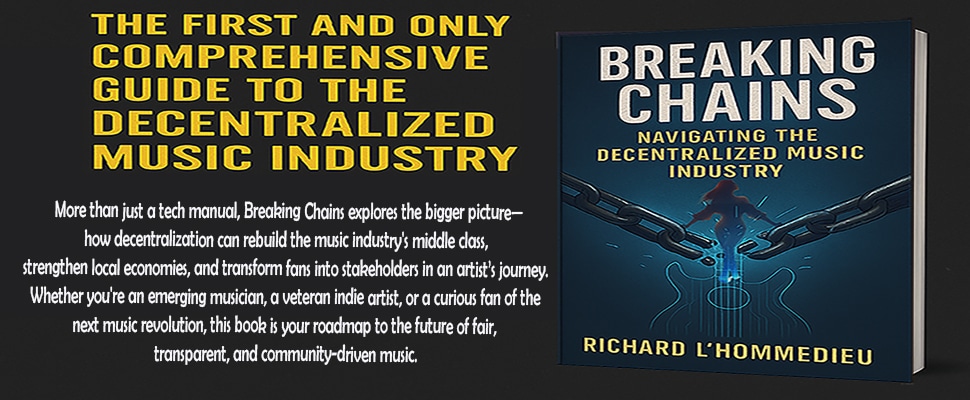
Breaking Chains – Navigating the Decentralized Music Industry
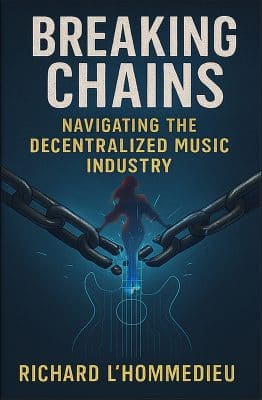
Breaking Chains is a groundbreaking guide for independent musicians ready to take control of their careers in the rapidly evolving world of decentralized music. From blockchain-powered royalties to NFTs, DAOs, and smart contracts, this book breaks down complex Web3 concepts into practical strategies that help artists earn more, connect directly with fans, and retain creative freedom. With real-world examples, platform recommendations, and step-by-step guidance, it empowers musicians to bypass traditional gatekeepers and build sustainable careers on their own terms.
More than just a tech manual, Breaking Chains explores the bigger picture—how decentralization can rebuild the music industry’s middle class, strengthen local economies, and transform fans into stakeholders in an artist’s journey. Whether you’re an emerging musician, a veteran indie artist, or a curious fan of the next music revolution, this book is your roadmap to the future of fair, transparent, and community-driven music.
Get your Limited Edition Signed and Numbered (Only 50 copies Available) Free Shipping Included
Discover more from Making A Scene!
Subscribe to get the latest posts sent to your email.


