

Squirrel Nut Zippers Fat City”(The Ballad of Lil’ Tony)




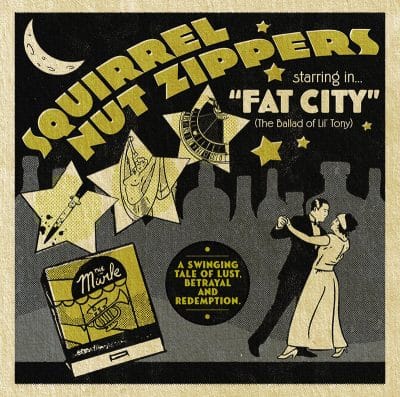
Squirrel Nut Zippers
Fat City”(The Ballad of Lil’ Tony)
Music Maker Foundation
Squirrel Nut Zippers is an American swing and jazz band formed in 1993 in Chapel Hill by Jimbo Mathus, vocals and guitar, along with five other musicians including his wife, Katharine Whalen, on vocals, banjo, and ukulele. The band’s music blends Delta blues, gypsy jazz, 1930s-era swing, klezmer, and other vintage American styles. They found major commercial success during the swing revival of the late 1990s. “Nut Zippers” is a Southern term for a type of old bootleg moonshine, and it is also the name of a caramel-and-peanut candy dating back to 1890. The band drew inspiration from artists such as Johnny Ace, Cab Calloway, Django Reinhardt, Fats Waller, and Tom Waits. Their breakthrough single, “Hell,” with its calypso rhythm, aligned the band closely with the neo-swing movement. Their second album, “Hot,” released in 1996, was certified platinum. The band also performed at the 1996 Summer Olympics in Atlanta and at Bill Clinton’s second inaugural ball. They also appeared on A Prairie Home Companion and television programs including The Tonight Show, Late Show with David Letterman, Late Night with Conan O’Brien, and Dick Clark’s New Year’s Rockin’ Eve.
Mathus explains that the character of Lil’ Tony is based on his grandfather Tony Malvezzi, who began life in the early twentieth century as a bootlegger and juke joint operator. After World War II, he continued as a big band promoter in hotels and ballrooms such as The Peabody Memphis and Old Absinthe House. Many of the stories and characters described in “Fat City” come from memories of the time when Metairie attempted to market itself as “Fat City,” a lower-cost alternative to the French Quarter.
The current band lineup includes guitarists Dr. Sick (“Dago Joe”) and Mathus, with Dr. Sick also doubling on fiddle and ukulele. Pianists include Leslie Martin and Mathus. The horn section features Hank West, Charlie Halloran, Eddie King, and Dave Boswell. John Kveen handles bass, while drummers Niellson Bernard III, Alex Holeman, and Mathus rotate through the rhythm section. Vocal duties are shared by Mathus, Dr. Sick, Henry Westmoreland, Schaeffer Llana, and Cella Blue.
This album contains twenty-three tracks divided into three acts, making it impossible to cover every moment in detail, so only a few highlights can be noted. Act One begins with “Dark Eyes,” where the horns open the album and Mathus sings, “Why do dark eyes hypnotize, when your driving in the moonlight, those dark eyes how they mesmerize”.
On “Lil’ Tony’s Theme (The Jig Is Up),” he chimes, “the rain it flows, the sky it glows, the bars have all closed down…but you can’t keep a good man down…I’m the biggest little man in Fat City…the jig is up, I’m puttin’ down”, supported by a strong horn solo and a driving drum beat.
“Snake Oil Hustlers & Hambones” may feature Dr. Sick on lead vocal, with the line, “because mama we got to get downtown”. On “Don’t Doubt Me Babe,” Cella Blue belts out, “Don’t doubt me babe, you know you done me wrong, believe me when I say don’t doubt me babe”.
“Monday Night At The Mark” is an instrumental that simply strolls forward with relaxed confidence.
Act Two begins with the slow ballad “Town Where Nobody Lives,” where the singer moans, “I used to know the town like the back of my hand, every woman and man I could count on, now I’m just a stranger in a town where nobody lives, a town where nobody gives a damn”.
On “Fat City,” Mathus groans, “I didn’t stand a ghost of a chance…that deal went down with a hand shake…with a hey, and a ho, watch out fat city was ready to blow, with the back of my hand”. On “Anybody Seen My Man?” Cella Blue cries, “woke up this morning, tell me if you can, did anybody see my man? I’ve taken all I can stand, has anybody seen my man?”
Act Three opens with “I Left My Heart In Reno,” as Cella Blue wails, “I left my heart in Reno, at the towns Carnival casino…and California’s just over the line, that city had me in its sway…I lost my poor little heart in Reno, I’ll be coming back someday, and from you I’ll never stray, craps and Keno, I left my heart in Reno”.
“Lil’ Tony’s Last Cab Ride” serves as a short instrumental interlude. On “Dirty River,” the lyric declares, “Go down, go down, you dirty river, go down…I sat on the banks and I rode your waters…someday in my dreams, someday in my dreams”. The closing track, “Our Lady of Sorrow,” is presented as an instrumental dirge.
Inside the package is a black-and-white photograph of Tony seated, possibly with his wife at the time. The entire album feels like something conceived three decades ago, perhaps a recurring dream finally completed. Mathus is no stranger to Music Maker Foundation, where he serves as part of the creative team, in-house producer, bandleader, and advisory board member. Dreams, after all, are what life is made of.
Richard Ludmerer
Buy Us a Cup of Coffee!
Join the movement in supporting Making a Scene, the premier independent resource for both emerging musicians and the dedicated fans who champion them.
We showcase this vibrant community that celebrates the raw talent and creative spirit driving the music industry forward. From insightful articles and in-depth interviews to exclusive content and insider tips, Making a Scene empowers artists to thrive and fans to discover their next favorite sound.
Together, let’s amplify the voices of independent musicians and forge unforgettable connections through the power of music
Make a one-time donation
Make a monthly donation
Make a yearly donation
Buy us a cup of Coffee!
Or enter a custom amount
Your contribution is appreciated.
Your contribution is appreciated.
Your contribution is appreciated.
DonateDonate monthlyDonate yearlyYou can donate directly through Paypal!
Subscribe to Our Newsletter
Order the New Book From Making a Scene
Breaking Chains – Navigating the Decentralized Music Industry
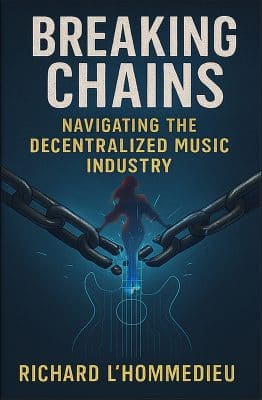
Breaking Chains is a groundbreaking guide for independent musicians ready to take control of their careers in the rapidly evolving world of decentralized music. From blockchain-powered royalties to NFTs, DAOs, and smart contracts, this book breaks down complex Web3 concepts into practical strategies that help artists earn more, connect directly with fans, and retain creative freedom. With real-world examples, platform recommendations, and step-by-step guidance, it empowers musicians to bypass traditional gatekeepers and build sustainable careers on their own terms.
More than just a tech manual, Breaking Chains explores the bigger picture—how decentralization can rebuild the music industry’s middle class, strengthen local economies, and transform fans into stakeholders in an artist’s journey. Whether you’re an emerging musician, a veteran indie artist, or a curious fan of the next music revolution, this book is your roadmap to the future of fair, transparent, and community-driven music.
Get your Limited Edition Signed and Numbered (Only 50 copies Available) Free Shipping Included
Discover more from Making A Scene!
Subscribe to get the latest posts sent to your email.


