
Know Your Fans: How AI Analytics Shows You Who to Market To (and How)





Making a Scene Presents – Know Your Fans: How AI Analytics Shows You Who to Market To (and How)
Listen to the Podcast Discussion to gain more insight into AI Analytics
Picture this. You’ve just dropped your new single. You check your stats on Spotify, maybe glance at YouTube views, and you’re left wondering—Who’s actually listening to my stuff? Are they in your hometown? Across the country? Maybe on the other side of the world?
Most indie musicians have asked these questions at some point. The thing is, guessing who your fans are is kind of like throwing darts blindfolded. You might hit something now and then, but you’re mostly just hoping for the best. That’s where AI analytics comes in to lift the blindfold.
AI can take all that streaming and social data that used to look like a messy spreadsheet and turn it into something clear, useful, and surprisingly personal. Suddenly you’re not just seeing numbers—you’re seeing faces behind the streams. You can figure out who’s listening, where they live, what songs they repeat, what playlists they use, even what kind of content or merch they’d love from you next.
And the best part? You don’t need to be a data scientist or marketing pro to do it. With tools like Chartmetric (chartmetric.com), Cyanite (cyanite.ai), and Musiio (tag.musiio.com), any indie artist can learn how to use data to market smarter, tour better, and build stronger connections with fans.
So let’s break it down together—no jargon, no bullet points, just a real conversation about how AI analytics can show you exactly who to market to, and how.
Why Knowing Your Fans Is Everything
Imagine throwing a party and not knowing who’s on the guest list. You’d have no clue what kind of music to play, what snacks to serve, or even where to host it. That’s basically what promoting your music is like when you don’t know your audience.
When you do know who your fans are, everything changes. You stop wasting energy on random marketing, and you start focusing on what really connects. Maybe you learn that most of your fans are in the Midwest. That might influence where you tour next. Maybe you realize they’re into eco-friendly merch, so you make shirts printed on organic cotton. Maybe you notice they’re heavy TikTok users, so you double down on short-form video.
Every move gets smarter when you have real data backing it. It’s not about guessing anymore—it’s about knowing.
Meet Chartmetric: Your Global Fan Map
Let’s start with Chartmetric, one of the most powerful fan analytics tools out there. Think of it as your personal command center for understanding how your music moves through the world. Chartmetric collects data from all kinds of places—Spotify, YouTube, Apple Music, TikTok, Instagram, Shazam—and turns it into clean, colorful dashboards that actually make sense.
When you log in, you can see where your listeners live, how your songs are performing on playlists, what kind of social media engagement you’re getting, and even how similar artists are trending. It’s like having a bird’s-eye view of your music career.
Getting started is simple. You go to chartmetric.com and sign up for their Artist Plan. Once you’ve got your profile set up, Chartmetric begins pulling data from your streaming accounts and social platforms. You don’t need to connect everything right away—there’s plenty of info already available for public artist profiles.
Once you’re in, head to the Audience and Geography tab. Here’s where the magic happens. You’ll see a map light up with your listeners’ locations. Maybe you’ll find that half your plays come from the U.S., but there’s a surprising pocket of fans in Mexico City or Berlin. That kind of insight is gold. Suddenly, you’re not just “someone with fans”—you know where your fans are.
Next, you can check what platforms people use to listen. If Spotify is dominant, maybe you focus your promo there. If YouTube has a lot of traffic, maybe you invest in better video content. You might notice that you’re being added to certain playlists and can see which ones drive real traffic.
It’s one of those moments where you realize the internet isn’t random—it’s patterns. Chartmetric just helps you see them.
Let’s say you notice 30 percent of your streams are coming from Brazil. You could decide to release a Portuguese subtitled version of your lyric video, or collaborate with a Brazilian artist. Maybe your merch line gets a special Brazil-inspired design. That one insight could open a new market you didn’t even know existed.
Even if your numbers seem small at first, don’t worry. Every indie artist starts somewhere. Ten consistent listeners in a city can turn into a full crowd if you nurture it right. Chartmetric helps you see those seeds before they bloom.
Cyanite: Understanding the Sound of Your Music
Now that you know where your fans are, let’s talk about what your music says to them—sonically and emotionally. That’s where Cyanite comes in.
Cyanite uses AI to analyze your songs and break down what’s actually inside them. It listens for mood, energy, tempo, instrumentation, even the emotion behind the track. It can tell if a song feels “dreamy,” “energetic,” or “melancholic,” and tags it accordingly. You can check it out at cyanite.ai.
You upload a track, and within seconds you get a detailed analysis: key, tempo, mood, energy level, vocal profile, and more. It’s like getting a mirror held up to your music—but one that speaks the language of algorithms, playlist curators, and recommendation engines.
Why does that matter? Because the internet doesn’t feel your song like a human does—it categorizes it. When you know how your song is tagged, you can align it with the right playlists and marketing strategies. Maybe you thought your song was mellow indie pop, but the AI hears it as more upbeat and energetic. That’s a big clue that you should pitch it differently.
Cyanite also helps when you’re building your brand. If your top tracks all come up as “chill,” “dreamy,” and “warm,” that tells you something about your sound identity. Maybe your visuals should use softer colors, pastel tones, and more relaxed imagery. Your merch might follow that vibe too. Everything from your Instagram feed to your stage lighting can start to reflect the mood your fans subconsciously connect with.
It’s also a fun creative checkpoint. Upload your favorite artist’s songs into Cyanite and compare. Are your tracks showing similar tags? Are you in the same emotional ballpark? That’s a cool way to see if your mix, energy, and tone are aligning with the artists you admire—or maybe to spot where you can carve out your own unique space.
Cyanite doesn’t tell you what to sound like. It just shows you how the world might be hearing you. That’s a powerful insight when you’re trying to stand out.
Musiio: Speaking the Language of Playlists
Next up is Musiio, a platform by SoundCloud that uses AI to tag and sort songs for discovery. You can play with their tagging tool at tag.musiio.com. Like Cyanite, it listens to your song and automatically identifies genre, energy level, instrumentation, and vocal type.
The cool thing about Musiio is that it’s used by actual streaming platforms and labels to sort through huge libraries of songs. That means when you use it, you’re learning to speak the same “language” those systems use to categorize your music.
You upload your song, and Musiio tells you what it hears. Maybe it says “Indie Rock – Energetic – Male Vocals.” Or “Soulful Pop – Chill – Female Vocals.” Those tags aren’t just labels; they’re the keywords playlist curators and algorithms look for when deciding what songs fit where.
So if your track is tagged “Indie Pop, Dreamy, Female Vocals,” that’s your pitch language. When you contact curators or submit to a playlist called “Dream Pop Vibes,” you can say, “Hey, this track was tagged by AI as Dreamy Indie Pop with warm female vocals. I think it fits your list perfectly.” It shows you’ve done your homework.
It also helps with branding. If Musiio consistently tags your tracks as “Energetic / Urban,” but you’ve been marketing yourself as acoustic folk, that mismatch might explain why your streams plateaued. The solution isn’t to change your sound—it’s to align your message with how your songs feel to others.
Musiio helps you see your songs from a different angle—through the lens of how the digital world classifies them. Once you know that, you can use it to your advantage.
Turning Data into Decisions
Now let’s talk about what to actually do with all this information. Knowing your fans is powerful, but the real magic happens when you act on it. AI analytics should never just sit in a dashboard—it should shape your next move.
Start by looking at your listener map in Chartmetric. Where are your top three cities? Maybe it’s Austin, Chicago, and Berlin. That’s a great start. Instead of spreading your energy everywhere, focus your efforts there. Plan local gigs or partner with venues in those cities. Reach out to radio stations, podcasters, and blogs in those regions. The data already told you they’re listening—now it’s about showing up for them.
Next, use your Cyanite and Musiio tags to guide how you present your music. If your top songs are labeled “dreamy,” then your visuals should feel dreamy too. Think soft lighting, ethereal videos, cozy live sets. If they’re “energetic” and “upbeat,” maybe your shows lean more danceable, your videos faster-paced. Fans connect most when everything—sound, imagery, tone—feels cohesive.
You can even use this insight for merch. Let’s say Chartmetric shows a big fan base in Mexico, and Cyanite describes your sound as “warm and nostalgic.” Maybe you release a special shirt that says “Warm Vibes / Calor Musical” as a nod to your fans there. That kind of personalization makes people feel seen—and that’s what builds superfans.
Your social media content can follow the same rule. If most of your fans are using TikTok, focus your time there. Don’t burn hours on platforms they’re not using. Chartmetric will show you which platforms drive real engagement. Combine that with your mood data from Cyanite—if your sound is chill, post slower-paced, emotional clips. If it’s high-energy, post behind-the-scenes videos of live moments.
And then—keep watching what happens next. Maybe you post a dreamy acoustic clip and notice a spike in listens from Germany that week. That’s a signal. Do it again. Over time, you’ll see clear cause-and-effect patterns between what you post, where, and who responds. That’s marketing driven by understanding, not luck.
A Real-World Example
Let’s walk through what this might look like in practice.
Imagine you’re “Indie Artist Alex.” You’ve just released a new single. You sign up for Chartmetric, connect your artist profile, and start exploring. After a few minutes, you see something surprising—20 percent of your streams are coming from Brazil, another 10 percent from Germany, and a growing audience in Chicago and Austin.
Then you upload the single to Cyanite. The AI tells you your track is “Mid-tempo, Dreamy, Warm, Female Vocals, Indie Pop.” You try it in Musiio too, and get similar results: “Indie Pop / Chill / Dreamy.” So you’re in that hazy, emotional, cinematic lane of indie pop.
Now you put the puzzle together. Your biggest fan clusters are in Brazil and Chicago, and your music is tagged as dreamy, chill indie pop. Suddenly the picture’s clear. You might decide to plan a small U.S. tour starting in Chicago and Austin while building an online campaign aimed at Brazilian fans. Maybe you make a soft-tone merch design with Portuguese text that says “Dreamy Nights.”
On social media, you start posting pastel-tinted clips of your recording sessions and acoustic versions of the song. You add captions in both English and Portuguese, thanking fans from each region. Within a few weeks, you notice your Brazil numbers inch up on Chartmetric. More followers appear on Instagram from São Paulo. That’s feedback in real time.
And just like that, AI analytics has guided your first international audience strategy—without needing a label, a marketing degree, or a giant budget.
Why This Matters More Than Ever
The music world used to be driven by radio stations and record stores. You could tell where your audience was just by where your CDs sold. Today, it’s all digital. Fans discover you through playlists, short videos, and algorithms. Without analytics, you’re swimming in an ocean with no map.
But AI changes that. It pulls the invisible threads together—streams, followers, locations, moods—and weaves them into a story you can actually read. You see where the heartbeat of your music really lives.
And this isn’t just for big stars or label acts anymore. These tools were built so independent artists could play the same data-driven game. You don’t need millions of plays to learn something valuable. Even a few hundred listens can reveal patterns if you’re paying attention.
Think of AI analytics as your translator. It helps you understand what your fans are saying through their actions. When you know that, every decision—from a tour route to a TikTok caption—starts to feel less like guesswork and more like strategy.
Keeping It Real While Using AI
One thing artists often worry about is losing their authenticity when they start looking at data. That’s a fair concern. You don’t want to make soulless choices just because an algorithm says so. The good news is, you don’t have to.
AI isn’t there to tell you who to be. It’s there to help you see who’s already listening. You still get to choose how to respond. Maybe the data shows you’ve got a fan base in a country you’ve never visited. That doesn’t mean you have to suddenly change your sound—it just gives you the chance to connect with those people in your own way.
It’s like looking at your audience from the balcony instead of the stage. You see the bigger picture. And with that perspective, you can still follow your gut—but now your gut has backup.
From Numbers to Names
When you look at analytics long enough, something amazing happens. Those charts and maps stop feeling like cold data and start feeling like a community. You see clusters of real people—fans who found you, shared your songs, added you to their playlists, and told their friends.
Maybe one day you’ll play a show in Berlin and recognize faces from your Chartmetric map. Or you’ll sell out a small club in Chicago because you noticed those streams early and planned for it. Or you’ll get a message from a fan in São Paulo wearing that “Dreamy Nights” shirt you designed just for them.
That’s the magic of using AI analytics as an indie artist. It turns numbers into relationships.
The Future of Fan Insights
As AI keeps evolving, fan analytics will only get smarter. Tools like Chartmetric are already starting to predict trends—telling you not just where your fans are, but where they’re going to be next. Cyanite is developing emotion-based tagging that digs even deeper into how songs make listeners feel. Musiio is integrating with SoundCloud’s search engine to help artists get discovered faster.
Soon, you might open an app that tells you, “Hey, your next single will probably do best in Spain, on Spotify, among 18- to 25-year-olds who also love dream pop.” That’s not science fiction—it’s the direction we’re heading.
But remember, AI is only as good as the artist using it. You bring the creativity, the emotion, and the story. The AI just helps you aim it.
Wrapping It Up
Knowing your fans used to be a guessing game. Now, it’s a science—and an art. With a few free or affordable tools, you can see exactly who’s listening, where they are, what platforms they love, and what mood your music gives them. That’s the kind of insight that can transform a casual listener into a lifelong supporter.
Start with Chartmetric to learn who and where. Use Cyanite to understand what your songs say emotionally. Try Musiio to see how your tracks fit into playlists and trends. Then take that knowledge and act on it. Book smarter tours. Create merch your fans actually want. Post content that speaks their language.
You don’t need a label, a manager, or a marketing degree. You just need curiosity and a willingness to look at your music from another angle.
So open up those dashboards. Watch your map light up. Learn what your sound means to the people who love it. The fans are already out there—you just have to get to know them.
And thanks to AI analytics, that’s easier than ever.
Resources Mentioned:
-
Chartmetric — https://chartmetric.com
-
Cyanite — https://cyanite.ai
-
Musiio Tag Demo — https://tag.musiio.com
Frequently Asked Questions (For the Indie Artist)
Q: Do I need to use all three tools (Chartmetric, Cyanite, Musiio)?
A: No. You could start with just one (e.g., Chartmetric) and get value. But combining them gives more insight. Chartmetric tells you who/where, Cyanite tells you what/how, Musiio tells you how in relation to playlists/industry.
Q: But I don’t have many listens yet—will this still help?
A: Yes. Even low numbers can show trends. If you see even 2-3 % of your streams coming from a new city, that might be worth exploring. Growth is about trend spotting, not only huge numbers.
Q: Is this just more work? I’m already making music, doing social media…
A: It is some extra work—but think of it as investing in smarter work. The goal is to spend less time guessing and more time doing strategies that work.
Q: Will using these tools make my music less authentic?
A: Not unless you let them force you into something you’re not. Use the data as a guide, not a rulebook. Your creative voice matters most.
Q: How private or secure is my data?
A: Check each platform’s terms of service. With Chartmetric, Cyanite, Musiio you’re uploading or linking your data—make sure you’re comfortable with that. But for most indie artists the benefits outweigh concerns.
A Sample Walkthrough with an Indie Artist (“You”)
Let’s pretend you are “Indie Singer Sam”. You released a single last month and now you want to use these tools.
Baseline
-
Using Chartmetric: You discover most streams are from the U.S. (50%), Canada (20%), Brazil (15%), Germany (8%), UK (7%). Within the U.S., you notice Chicago and Austin have more listens than expected.
-
Platform insight: Most streams are from Spotify, then YouTube, and minimal Apple Music.
-
Mood tagging (via Cyanite): The single is tagged “Mid-tempo, Warm, Dreamy, Guitar-driven, Female Vocals.”
-
Tagging (via Musiio): Tags show “Indie Pop, Chill, Warm, Playful.”
Insights
-
You have a decent Brazil audience (15%)—which is high considering you didn’t specifically target it.
-
Your U.S. cities: Chicago and Austin are showing up—two cities known for vibrant music scenes, which is promising.
-
Your mood/genre is “warm/chill indie pop” with guitar/ vocals. Yet your usual content has been high-energy rock visuals. So there’s a mismatch.
-
Platform: Spotify is strong, but YouTube is second — maybe you should lean into YouTube video content.
Action Plan
-
Tour: Plan a small show in Austin (local club gig) and another in Chicago. At the same time, consider doing online “watch-party” in Brazil (since you have a fan base there) even if you don’t tour there yet.
-
Merch: Design a tee that says “Dreamy Nights” with pastel colours and circle-moon logo. Also make a Brasil limited-edition variant: “Dreamy Nights – Brasil” with Portuguese subtitle.
-
Content:
-
On YouTube: Upload a “Behind the Song” video for the single, emphasising the dreamy/warm story.
-
On Instagram: Post a photo set shot in soft lighting, aligned with the warm/mood tags. Use Portuguese caption once a week: “Obrigado, Brasil!”
-
On TikTok: Use the high-tempo moments of the song to create a short playful video (even though the song is mid-tempo, pick a hook moment that could work).
-
-
Keep monitoring: After these moves, check Chartmetric next month. Did Brazil’s stream percentage rise? Did Chicago audience grow? Did YouTube watch-time increase?
Adjust
-
If you see Brazil streaming jump to 20% after content/merch, maybe next release you do a Brazil-specific promo.
-
If your mood tag for the next song shifts (maybe you release a more upbeat track), you’ll adjust visuals/merch accordingly.
 |  Spotify |  Deezer |  Breaker |
 Pocket Cast |  Radio Public |  Stitcher |  TuneIn |
 IHeart Radio |  Mixcloud |  PlayerFM |  Amazon |
 Jiosaavn |  Gaana |  Vurbl |  Audius |
 Reason.Fm | |||
Find our Podcasts on these outlets
Buy Us a Cup of Coffee!
Join the movement in supporting Making a Scene, the premier independent resource for both emerging musicians and the dedicated fans who champion them.
We showcase this vibrant community that celebrates the raw talent and creative spirit driving the music industry forward. From insightful articles and in-depth interviews to exclusive content and insider tips, Making a Scene empowers artists to thrive and fans to discover their next favorite sound.
Together, let’s amplify the voices of independent musicians and forge unforgettable connections through the power of music
Make a one-time donation
Make a monthly donation
Make a yearly donation
Buy us a cup of Coffee!
Or enter a custom amount
Your contribution is appreciated.
Your contribution is appreciated.
Your contribution is appreciated.
DonateDonate monthlyDonate yearlyYou can donate directly through Paypal!
Subscribe to Our Newsletter
Order the New Book From Making a Scene
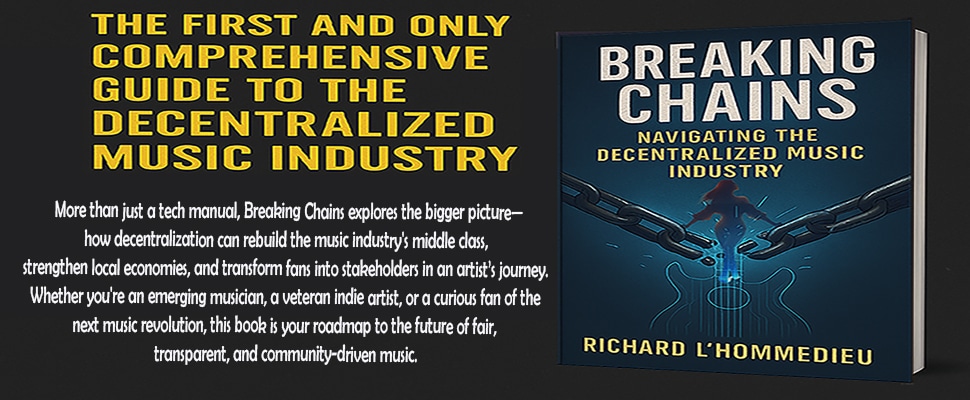
Breaking Chains – Navigating the Decentralized Music Industry

Breaking Chains is a groundbreaking guide for independent musicians ready to take control of their careers in the rapidly evolving world of decentralized music. From blockchain-powered royalties to NFTs, DAOs, and smart contracts, this book breaks down complex Web3 concepts into practical strategies that help artists earn more, connect directly with fans, and retain creative freedom. With real-world examples, platform recommendations, and step-by-step guidance, it empowers musicians to bypass traditional gatekeepers and build sustainable careers on their own terms.
More than just a tech manual, Breaking Chains explores the bigger picture—how decentralization can rebuild the music industry’s middle class, strengthen local economies, and transform fans into stakeholders in an artist’s journey. Whether you’re an emerging musician, a veteran indie artist, or a curious fan of the next music revolution, this book is your roadmap to the future of fair, transparent, and community-driven music.
Get your Limited Edition Signed and Numbered (Only 50 copies Available) Free Shipping Included
Discover more from Making A Scene!
Subscribe to get the latest posts sent to your email.


