
How to Use AI to Book Your Band: From Finding Venues to Routing Tours





Making a Scene Presents – How to Use AI to Book Your Band: From Finding Venues to Routing Tours
Booking shows has always been one of the toughest parts of being an independent musician. You can write the songs, rehearse with your band, and record a great album, but without gigs, it’s hard to grow a fanbase. Traditionally, booking tours meant hours of emailing venues, chasing down contacts, and trying to figure out where to play and how much to charge. That process hasn’t disappeared, but today artists have a secret weapon: artificial intelligence.
AI isn’t just for tech nerds or big businesses anymore. Indie musicians can use it to find venues, design promo materials, plan routes, and even calculate budgets. Think of AI as your virtual booking assistant, working behind the scenes to save you time and help you make smarter choices. Let’s walk through how you can actually use these tools to book yourself locally, regionally, and even nationally, and make sure you don’t lose money while doing it.
Why Booking Agencies Aren’t the First Step
Many artists dream of signing with a booking agency that will take care of all the hard work. The reality is very different. Booking agents are not in the business of convincing venues to give you a chance. Venues expect agents to deliver acts that will sell tickets, bring in bar sales, and fill the room. If an agent has to “sell” you to a venue, you’re not ready for representation yet.
Instead, you need to build your own track record to the point where venues are calling agents asking for you. That’s when an agent sees you as a profitable addition to their roster. Getting there takes time, consistency, and strategy—but AI can help speed up that journey. By using AI tools to research venues, market your shows, and route profitable tours, you do the groundwork that proves your value. Only then will a booking agent step in to amplify what you’ve already built.
Finding Venues That Will Book You
The first step in booking any show is finding a venue that fits your music. In the past, you’d flip through phone books, check gig listings, or beg friends for leads. Now AI tools can scan the internet for you.
One powerful site is Indie on the Move (https://www.indieonthemove.com/). It has a massive database of venues, festivals, and booking contacts across the U.S. You can search by city or genre and start making a list of places that actually book your style of music. AI-powered research assistants like ChatGPT (https://chat.openai.com/) or Perplexity AI (https://www.perplexity.ai/) can also help you dig deeper. You can literally ask, “What are midsize indie rock venues in Nashville that pay guarantees?” and get a curated list of options.
To make this easier, you can also use Bandsintown for Artists (https://artists.bandsintown.com/). This platform not only lets you see what venues artists similar to you are playing but also connects you with promoters and booking agents. The AI recommendation system inside Bandsintown looks at your genre and location to suggest venues that are most likely to say yes.
The trick here is not just finding venues but matching the right ones to your music. An AI search tool can look at what artists you sound like, scan their past tour dates, and point you to the exact rooms where you’ll fit. Instead of cold-emailing random places, you’re approaching venues that already host bands like yours.
Creating Marketing Material That Sells You to Venues
Once you’ve found a list of venues, you need to convince them to book you. This is where your electronic press kit (EPK) comes in. Your EPK is basically your band’s résumé—it usually has your bio, photos, music links, videos, and a short list of past shows.
AI can make creating this way less stressful. Tools like Canva (https://www.canva.com/) now include AI design features that let you drag and drop photos, generate custom layouts, and even create smart-looking graphics in minutes. You don’t need to hire a graphic designer to have a pro-level EPK.
For writing, Jasper AI (https://www.jasper.ai/) or ChatGPT can help polish your band bio and show descriptions. For example, you can paste in a rough draft of your bio and tell AI to rewrite it in a way that’s “upbeat and professional, geared toward venue bookers.” The AI will make it flow better and sound more enticing.
If you want promo videos, you can turn to AI-powered editing tools like Runway (https://runwayml.com/) or Pictory (https://pictory.ai/). These can quickly turn your performance clips into snappy highlight reels with captions, graphics, and transitions. Bookers love to see short, high-energy clips because they give a sense of how you’ll look on stage.
With an AI-polished EPK, you’ll stand out. Most indie artists send sloppy emails with broken links and outdated photos. When you send a sharp, branded EPK, you look like a pro—and venues take you more seriously.
Writing Emails That Get Responses
After building your EPK, the next step is reaching out. This is where many artists freeze. Writing a booking email feels awkward. You don’t want to sound desperate, but you also don’t want to come across as arrogant.
AI can help you strike the right tone. With tools like ChatGPT, you can input the details of your band, the venue, and your show history and ask it to draft a professional yet friendly booking email. For example, you might tell AI:
“Write an email to the booker of The Bluebird Café in Nashville. My band is a folk-rock trio with 1,500 followers on Instagram. We’ve played locally at two venues with 100–200 people. We want to book a slot in late April.”
AI will return a polished email that introduces you, mentions your draw, links your EPK, and politely asks for a date. You can then edit the draft so it still feels personal and true to your voice.
Using AI this way doesn’t just save you time—it boosts your chances of getting a reply because the message is clear and professional.
Routing a Tour with AI
Let’s say you’ve landed a few venue confirmations. Now you have to figure out how to connect the dots into a tour. Routing is about building a logical path that minimizes driving and maximizes shows.
This is where AI-powered map tools shine. Google Maps (https://maps.google.com/) is the obvious choice, but you can add AI route planners like Roadtrippers (https://roadtrippers.com/) or Circuit Route Planner (https://getcircuit.com/route-planner). These tools can analyze distances, travel times, and even gas costs.
A great hack is to use ChatGPT with map data. You can ask, “If I’m starting in Atlanta and want to tour to Nashville, Louisville, and Chicago, what’s the most efficient route with two off-days built in?” AI can plan a schedule that reduces backtracking and suggests realistic drive times between cities.
Bandsintown for Artists also has a routing feature where you can plug in your target cities, and it will recommend venues and dates based on your path. This saves you hours of staring at maps and second-guessing your plan.
With AI, routing isn’t just about geography—it’s about strategy. The software helps you place shows where your fans already are and stack gigs so you’re not burning money on gas.
Building a Business Plan for Your Tour
A lot of indie artists make the mistake of jumping into a tour with nothing more than a list of venues and a tank of gas. That might sound adventurous, but it’s also a fast way to end up broke, stranded, or worse—burned out. That’s where a business plan comes in.
A business plan for your tour is exactly what it sounds like: a written roadmap that lays out your expected income, your expenses, your goals, and the strategies you’ll use to reach them. It’s not just a boring spreadsheet—it’s your safety net. It tells you whether the tour makes financial sense before you hit the road and helps you avoid nasty surprises halfway through.
Why a Business Plan Matters
Think of your tour as a small business. You’re investing money in gas, hotels, food, and promo with the hope of earning it back through guarantees, ticket sales, and merch. Without a business plan, you’re basically gambling. With a plan, you can see if the math works out and whether you’ll actually make money.
Venues and booking agents also take you more seriously if you’re organized. If you know exactly how much you need to make per night to break even, you’ll negotiate smarter and avoid underselling yourself.
And here’s a big one: cars break down. Tires blow. Vans need repairs. That’s why you should have at least $2,000 in your band fund before you leave. That cushion can cover emergency repairs or unexpected costs without forcing you to cancel shows or drive home in defeat.
What to Include in Your Plan
A good tour business plan usually covers: projected income (guarantees, door deals, merch sales, tips, and sponsorships), projected expenses (gas, lodging, food, tolls, parking, promo, crew payments, and insurance), profit and loss forecast, that $2,000 emergency fund, and clear goals.
Tools and Resources to Build One
AI makes creating a plan much easier. Platforms like LivePlan (https://www.liveplan.com/) walk you through building a step-by-step business plan. You don’t need to be an accountant—the software asks simple questions and automatically generates charts and forecasts.
Causal (https://causal.app/) is another option. It uses AI-powered modeling so you can play out “what if” scenarios. For example, what if you sell 15 shirts a night instead of 10? What if gas prices rise by 15%? Causal will show you how that impacts your bottom line in real time.
If you’re comfortable with spreadsheets, Google Sheets (https://docs.google.com/spreadsheets/) with GPT for Sheets and Docs is an excellent DIY solution. You can set up categories for income and expenses, then use AI to help you write formulas, generate projections, and even suggest realistic numbers for each city based on average ticket sales or fuel costs.
For deeper planning, check out resources from Small Business Administration (SBA) (https://www.sba.gov/business-guide/plan-your-business/write-your-business-plan). While these guides are geared toward traditional businesses, the same rules apply to touring musicians. You’re essentially running a traveling small business.
Example: A Three-Show Mini Tour
Let’s say you book three shows:
-
Show 1: $400 guarantee
-
Show 2: Door deal, you expect 50 people at $10 tickets, so $500
-
Show 3: $600 guarantee
That’s $1,500 in income. Now add expenses: gas $250, hotels $300, food $150, promo $100. That’s $800 in costs. Profit looks like $700. Add merch—say $200 per show, so $600 total—and now your net profit is $1,300. That’s a successful run.
But what if the car breaks down and you have a $1,500 repair bill? Without that $2,000 reserve, the entire profit disappears and you’re stuck. With it, you can fix the car, finish the tour, and still keep your reputation intact.
Example: Regional Run With 7 Shows
For a weeklong regional run, you might project:
-
Average income per show: $500 guarantee + $200 merch = $700 per night
-
Seven shows = $4,900 total income
-
Expenses: $1,000 gas, $800 lodging, $350 food, $200 promo = $2,350
Your net profit would be $2,550—before emergencies. With a $2,000 emergency fund, you can absorb a breakdown or medical expense without wiping out your gains.
Figuring Out How Much to Charge
One of the trickiest parts of booking is knowing how much to ask for. If you undercharge, you lose money. If you overcharge, venues won’t book you.
AI can help you benchmark the right fee. Tools like Chartmetric (https://chartmetric.com/) analyze data about your streams, social media followers, and live history to estimate your draw. Combine that with ticketing sites like Eventbrite (https://www.eventbrite.com/) or Songkick (https://www.songkick.com/) to see what similar acts are charging.
You can also ask ChatGPT to model this for you. For example:
“I’m an indie folk duo with 3,000 Instagram followers, 25,000 Spotify streams, and an average draw of 60 people per show. What’s a fair booking fee for a 150-cap venue in Austin?”
The AI will pull industry averages and give you a ballpark range. This doesn’t mean you always get the number you want, but it gives you confidence when negotiating.
Over time, AI-powered analytics can even track your growth so you know when to raise your fee.
Using AI to Promote Your Shows
Once you book a gig, you need to make sure people actually show up. AI marketing tools make this part way easier.
Lately.ai (https://www.lately.ai/) can take one piece of content, like a video of your rehearsal, and automatically generate dozens of social posts. Canva AI can help you design flyers and posters sized perfectly for Instagram, Facebook, or TikTok. Hootsuite (https://www.hootsuite.com/) and Buffer (https://buffer.com/) have AI scheduling assistants that figure out the best time to post so more fans see your updates.
For ticket sales, you can use Feature.fm (https://www.feature.fm/). It has AI-powered targeting to run ads aimed directly at people who listen to your genre in the cities where you’re playing. That way you’re not wasting money advertising to people who will never come to your show.
All of these tools make it possible for indie artists to market like a pro, even if you don’t have a dedicated social media manager.
Booking Locally, Regionally, and Nationally
The process of booking doesn’t really change whether you’re playing a local coffeehouse or a national club tour. What changes is scale.
For local shows, AI can help you find venues that are a good fit and polish your pitch. Since you’re close to home, costs are lower, so you can accept smaller guarantees while you build your reputation.
For regional tours, AI helps you link together multiple cities without losing money. Using routing tools and budgeting apps ensures you’re not stuck driving five hours for a $100 gig.
For national tours, AI becomes even more important. You’re competing for attention, and mistakes are costly. AI data tools can show you where your fans are clustered so you only book cities where you already have traction. Instead of guessing, you’re playing strategically and improving your odds of breaking even—or better, turning a profit.
This kind of groundwork is exactly what makes booking agencies notice you. If you can consistently route tours, draw audiences, and turn profits on your own, agencies know they won’t have to sell you—they’ll simply connect you to bigger opportunities you’re already primed for.
The Future of AI in Booking
AI isn’t replacing human bookers or managers, but it is leveling the playing field. For indie musicians, it means you can do much of what a professional agent does without paying a hefty commission. Over time, we’ll see even more integrated AI platforms that combine venue discovery, routing, budgeting, and promotion into one seamless system.
What’s exciting is that AI makes touring less about guesswork and more about strategy. You still need great songs and a killer live show, but with AI, you have a smarter roadmap to get those songs in front of the right audiences.
Final Thoughts
Booking your band can feel overwhelming, especially if you’re new to the music business. But with AI on your side, you don’t have to stumble through it alone. These tools help you find the right venues, create professional promo materials, plan smart routes, and build financial safety nets. They also give you confidence when negotiating with venues and planning your career step by step.
Remember: booking agencies don’t want to sell you—they want to represent artists who already sell themselves. The way to get there is to put in the hard work now. Use AI to research smarter, market better, and book strategically. Do it consistently enough, and you’ll reach the point where venues start calling for you, and agents see you as a clear win for their roster.
Start small—book a few local shows using AI to guide you. Then scale up to regional runs, and eventually, national tours. With every step, AI becomes your behind-the-scenes partner, helping you move from struggling DIY artist to a professional act with a clear plan.
So fire up those AI tools, polish your pitch, and start booking. The road is waiting, and now you’ve got the technology to make the journey a whole lot smoother.
 |  Spotify |  Deezer |  Breaker |
 Pocket Cast |  Radio Public |  Stitcher |  TuneIn |
 IHeart Radio |  Mixcloud |  PlayerFM |  Amazon |
 Jiosaavn |  Gaana |  Vurbl |  Audius |
 Reason.Fm | |||
Find our Podcasts on these outlets
Buy Us a Cup of Coffee!
Join the movement in supporting Making a Scene, the premier independent resource for both emerging musicians and the dedicated fans who champion them.
We showcase this vibrant community that celebrates the raw talent and creative spirit driving the music industry forward. From insightful articles and in-depth interviews to exclusive content and insider tips, Making a Scene empowers artists to thrive and fans to discover their next favorite sound.
Together, let’s amplify the voices of independent musicians and forge unforgettable connections through the power of music
Make a one-time donation
Make a monthly donation
Make a yearly donation
Buy us a cup of Coffee!
Or enter a custom amount
Your contribution is appreciated.
Your contribution is appreciated.
Your contribution is appreciated.
DonateDonate monthlyDonate yearlyYou can donate directly through Paypal!
Subscribe to Our Newsletter
Order the New Book From Making a Scene
Breaking Chains – Navigating the Decentralized Music Industry
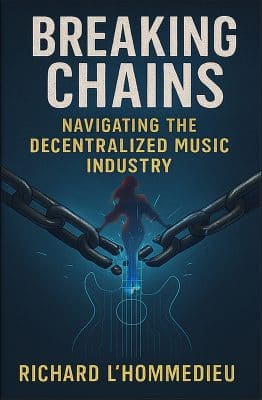
Breaking Chains is a groundbreaking guide for independent musicians ready to take control of their careers in the rapidly evolving world of decentralized music. From blockchain-powered royalties to NFTs, DAOs, and smart contracts, this book breaks down complex Web3 concepts into practical strategies that help artists earn more, connect directly with fans, and retain creative freedom. With real-world examples, platform recommendations, and step-by-step guidance, it empowers musicians to bypass traditional gatekeepers and build sustainable careers on their own terms.
More than just a tech manual, Breaking Chains explores the bigger picture—how decentralization can rebuild the music industry’s middle class, strengthen local economies, and transform fans into stakeholders in an artist’s journey. Whether you’re an emerging musician, a veteran indie artist, or a curious fan of the next music revolution, this book is your roadmap to the future of fair, transparent, and community-driven music.
Get your Limited Edition Signed and Numbered (Only 50 copies Available) Free Shipping Included
Discover more from Making A Scene!
Subscribe to get the latest posts sent to your email.


