Glenn Crytzer and His Quartet The Songbook Sessions, Vol.1 -1920




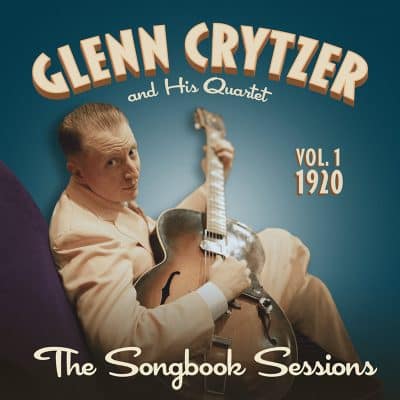 Glenn Crytzer and His Quartet
The Songbook Sessions, Vol.1 -1920
Self-released
Admittedly, I am late to this one, but bandleader Glenn Crytzer has 240 more songs forthcoming, so, in effect, he is just getting started. In reality, the release date for the first ten songs on an album entitled The Songbook Sessions, Vol. 1- 1920 is December 5, 2025. Yet, Crytzer has been releasing singles every Friday, having begun on 10/3. He will execute the same pattern for Volume 2, starting on December 12, resulting in a new song every Friday for 250 weeks. This is an unmatched feat. No other artist has released with this elongated frequency.
Guitarist Crytzer is a NYC-based bandleader who specializes in music from the Jazz Age and Swing Era. His quartet features trumpeter Mike Davis, clarinetist and saxophonist Ricky Alexander, and upright bassist Ian Hutchinson. These four gathered in Crytzer’s apartment, where he converted a room to a recording and live streaming studio. The band presented 10 songs per week for 25 weeks for a live streaming audience, beginning with songs from 1920 and moving chronologically to 1944. In the process, they sought out the original sheet music.
In my recent review of Sean Mason’s A Breadth of Fresh Air, I made this comment: “There are not many jazz artists today schooled in the music of the ‘20s, ‘30s, and ‘40s. It’s not that they can’t play that music; it’s mostly due to a lack of interest.” So, Crytzer and his quartet are a clear exception, as are Colin Hancock, Catherine Russell, Sean Mason, Eyal Vilner, Terry Waldo, and Evan Arntzen, all covered on these pages.
Considering this music is now over a century old, listeners will be amazed by the fresh sound. If you were to play this music for a friend and have them guess the year, they may guess correctly, but the next question might well be, “Why does it sound so clear?” As you glean through the composers, familiar names such as W.C. Handy, Al Jolson, Jerome Kern, and Irving Berlin will appear. At least for me, I wasn’t aware that the latter two were composing as early as 1920. The quartet often sounds like a much larger ensemble, primarily due to the sterling interplay, melody, and counterpoint, as well as the harmonic choices of Davis and Alexander. These cats are deep musicologists and musicians. On Glenn’s website, www.GlennCrytzer.com, you will find a wealth of information on the aspects of songs he found interesting. He offers, ‘My friend Bria Skonberg introduced a term to me a number of years back: “a pineapple” – a chord or note in a tune that catches you by surprise, is hard to remember, or just generally stands out out from “stock” jazz progressions These moments in songs bring me a lot of joy, but much like the mighty buffalo they are, generation by generation, disappearing from jazz. Young musicians often learn songs from sources like the realbook or iReal, which have errors on nearly every tune and often rewrite the original harmonies to make them fit into one of a handful of harmonic clichés. This, IMO, not only does a disservice to the songs and their composers, but to jazz itself, reducing the repertoire to a small number of repetitive harmonic tropes.”
Some of these tunes, like the opener “Whispering,” were recorded in later years, too. In its case, Benny Goodman recorded it in 1955, but the original was Roy Fox and His Orchestra. Some had lyrics such as “Lena From Palesteena,” originally recorded by New Orleans’ Original Dixieland Band, and Kern/DeSylva’s “Looking for a Silver Lining,” first performed by Marion Harris. They also recorded “Margie” and “Singin’ the Blues, the latter popularized in 1927 by Frank Trumbauer and Bix Beiderbecke. “Aunt Hagar’s Blues,” later popularized by Louis Armstrong, was first recorded by W.C. Handy and His Orchestra. Nora Bayes had a hit with “In Apple Blossom time,” Billy Murray with Berline’s “I’ll See You in Cuba,” and “San” by The Benson Orchestra of Chicago. These indicate how Crytzer’s quartet transformed and distilled vocal and orchestral originals into their own renditions.
You can access this music on all major streaming platforms, including Bandcamp. You can also subscribe to Crytzer’s newsletter on his website to stay abreast of the forthcoming material, as well as this first album. What’s old is incredibly new again.
– Jim Hynes
Buy Us a Cup of Coffee!
Join the movement in supporting Making a Scene, the premier independent resource for both emerging musicians and the dedicated fans who champion them.
We showcase this vibrant community that celebrates the raw talent and creative spirit driving the music industry forward. From insightful articles and in-depth interviews to exclusive content and insider tips, Making a Scene empowers artists to thrive and fans to discover their next favorite sound.
Together, let’s amplify the voices of independent musicians and forge unforgettable connections through the power of music
Make a one-time donation
Make a monthly donation
Make a yearly donation
Buy us a cup of Coffee!
Or enter a custom amount
Your contribution is appreciated.
Your contribution is appreciated.
Your contribution is appreciated.
DonateDonate monthlyDonate yearlyYou can donate directly through Paypal!
Subscribe to Our Newsletter
Order the New Book From Making a Scene
Breaking Chains – Navigating the Decentralized Music Industry
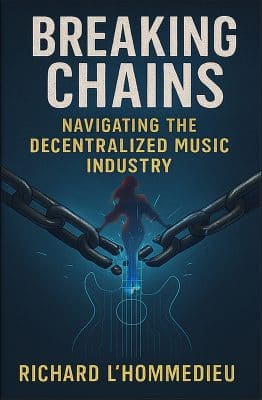
Breaking Chains is a groundbreaking guide for independent musicians ready to take control of their careers in the rapidly evolving world of decentralized music. From blockchain-powered royalties to NFTs, DAOs, and smart contracts, this book breaks down complex Web3 concepts into practical strategies that help artists earn more, connect directly with fans, and retain creative freedom. With real-world examples, platform recommendations, and step-by-step guidance, it empowers musicians to bypass traditional gatekeepers and build sustainable careers on their own terms.
More than just a tech manual, Breaking Chains explores the bigger picture—how decentralization can rebuild the music industry’s middle class, strengthen local economies, and transform fans into stakeholders in an artist’s journey. Whether you’re an emerging musician, a veteran indie artist, or a curious fan of the next music revolution, this book is your roadmap to the future of fair, transparent, and community-driven music.
Get your Limited Edition Signed and Numbered (Only 50 copies Available) Free Shipping Included
Discover more from Making A Scene!
Subscribe to get the latest posts sent to your email.


