

Gerry Casey’s Interview with Gloria




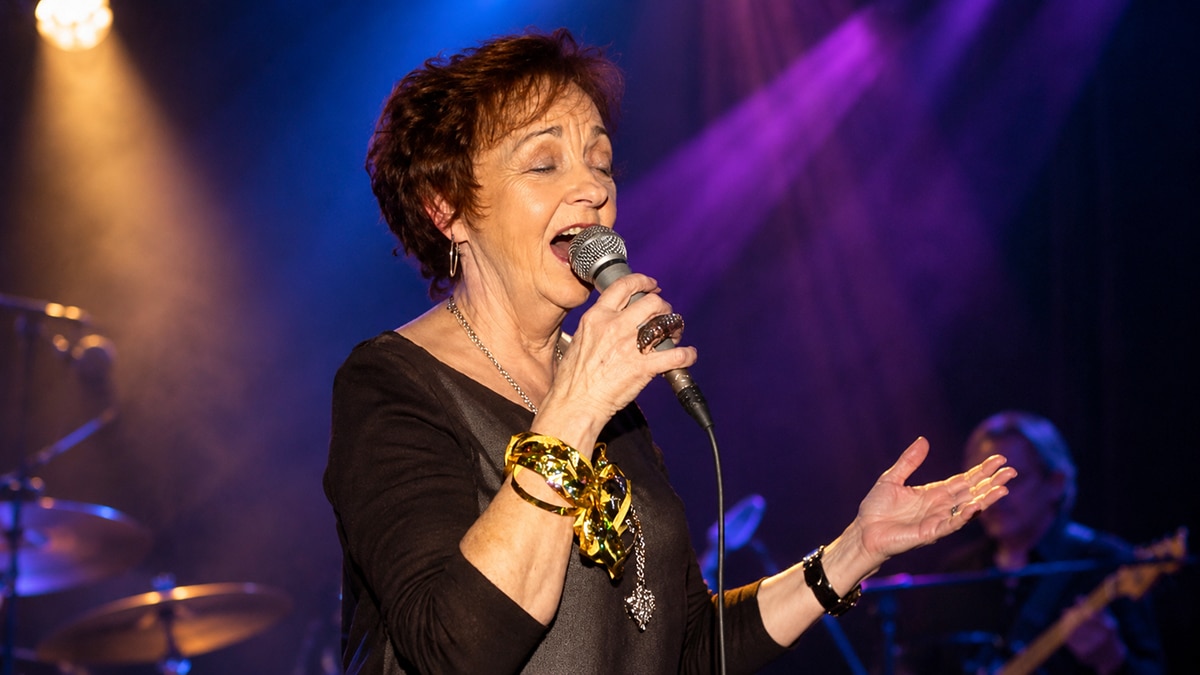
Making a Scene Presents Gerry Casey’s Interview with Gloria
In Ireland, the name Gloria carries a special kind of recognition. For generations of country and showband fans, it points to Gloria Smyth, later widely known as Gloria Sherry, the Navan-born singer whose recording of “One Day at a Time” became one of the defining Irish country hits of the late 1970s.
Born in County Meath in 1951, Gloria grew up in a musical family. Her father, Jimmy Smyth, led The Arcadians, and Gloria’s first taste of show business came early, dancing and playing accordion with the family band. Music was not a hobby waiting politely in the corner. It was part of the household, part of the working life, and part of the world she stepped into as a young performer.
After leaving school, Gloria worked as a hotel receptionist while continuing to play music on weekends. She was trained on several instruments, including accordion, piano, and trumpet, and eventually joined the Maurice Lynch Band, first making her name on the Irish dancehall circuit in the late 1960s and early 1970s. By the early 1970s, she had begun moving through the showband world as a featured vocalist, including time with The Cascades and later with Johnny McEvoy’s band.
Her years with Johnny McEvoy helped bring her to a wider country audience. During that period, she recorded singles including “Just the Way I Am” and “Happy Times,” and continued developing the warm, direct vocal style that would become her signature. By the mid-1970s, Gloria had recorded solo material and duets, while also building the stage experience that made her a familiar name in Irish country entertainment.
In 1976, Gloria left Johnny McEvoy’s band to pursue her own path. Working with her husband at the time, Don Sherry, she formed the group Mississippi and continued performing across the Irish country dance circuit. She also recorded under variations of the name Gloria, including Gloria Sherry and Gloria Darling, during a period when Irish country artists often moved between band identities, labels, and stage names with a frequency that would give any modern digital distributor a small nervous breakdown.
Her breakthrough came with “One Day at a Time,” the country-gospel song written by Marijohn Wilkin and Kris Kristofferson. Gloria recorded the song after meeting Wilkin during a Nashville recording trip, and the song transformed her career. Released in Ireland in the late 1970s, Gloria’s version reached number one on the Irish charts and remained in the Irish Top 30 for a record-breaking 90 weeks. It became the song most closely associated with her and one of the great Irish country chart stories of its era.
The power of “One Day at a Time” came from more than chart numbers. Its message of endurance, faith, and taking life one day at a time connected deeply with Irish audiences. The song was plainspoken, devotional, and emotionally direct, and Gloria delivered it with sincerity rather than showmanship. It was the right song, the right singer, and the right moment. Decades later, it remains the recording that defines her public legacy.
Although “One Day at a Time” was her only Irish number one, Gloria continued to chart with other recordings, including “I’ll Get Over You,” “Liffey Tinker,” “My Younger Days,” and “Pal of My Cradle Days.” She remained a popular figure on the Irish country scene through the years when the showband era was fading and the live circuit was shifting from dancehalls and ballrooms into hotels, cabaret rooms, and country venues.
Gloria and Mississippi continued performing into the 1990s, and Gloria later appeared in cabaret settings before announcing her retirement in 2001. Like many artists whose music becomes part of the fabric of a country’s memory, retirement did not erase her presence. She later returned to music in select settings, including performances with her sister Patrice, and her name remains firmly tied to the Irish country tradition.
Gloria Smyth’s story is also the story of Irish country music itself: family bands, dancehalls, showband lineups, Nashville influences, local radio, chart success, and songs that traveled far beyond the stage where they were first performed. She came up through a world where working musicians had to be adaptable, resilient, and ready to play wherever the road led. Gloria did all of that, and then found the one song that carried her voice into Irish music history.
Today, “One Day at a Time” remains more than a hit record. It is a communal memory. For many Irish listeners, it is a song they know by heart, a song that still fills rooms when it is sung, and a reminder of Gloria’s lasting place in Irish country music. Her legacy rests not only in the records she made, but in the way one sincere performance became part of the emotional soundtrack of a nation.
 |  Spotify |  Deezer |  Breaker |
 Pocket Cast |  Radio Public |  Stitcher |  TuneIn |
 IHeart Radio |  Mixcloud |  PlayerFM |  Amazon |
 Jiosaavn |  Gaana |  Vurbl |  Audius |
 Reason.Fm | |||
Find our Podcasts on these outlets

Subscribe to Our Newsletter
Discover more from Making A Scene!
Subscribe to get the latest posts sent to your email.


