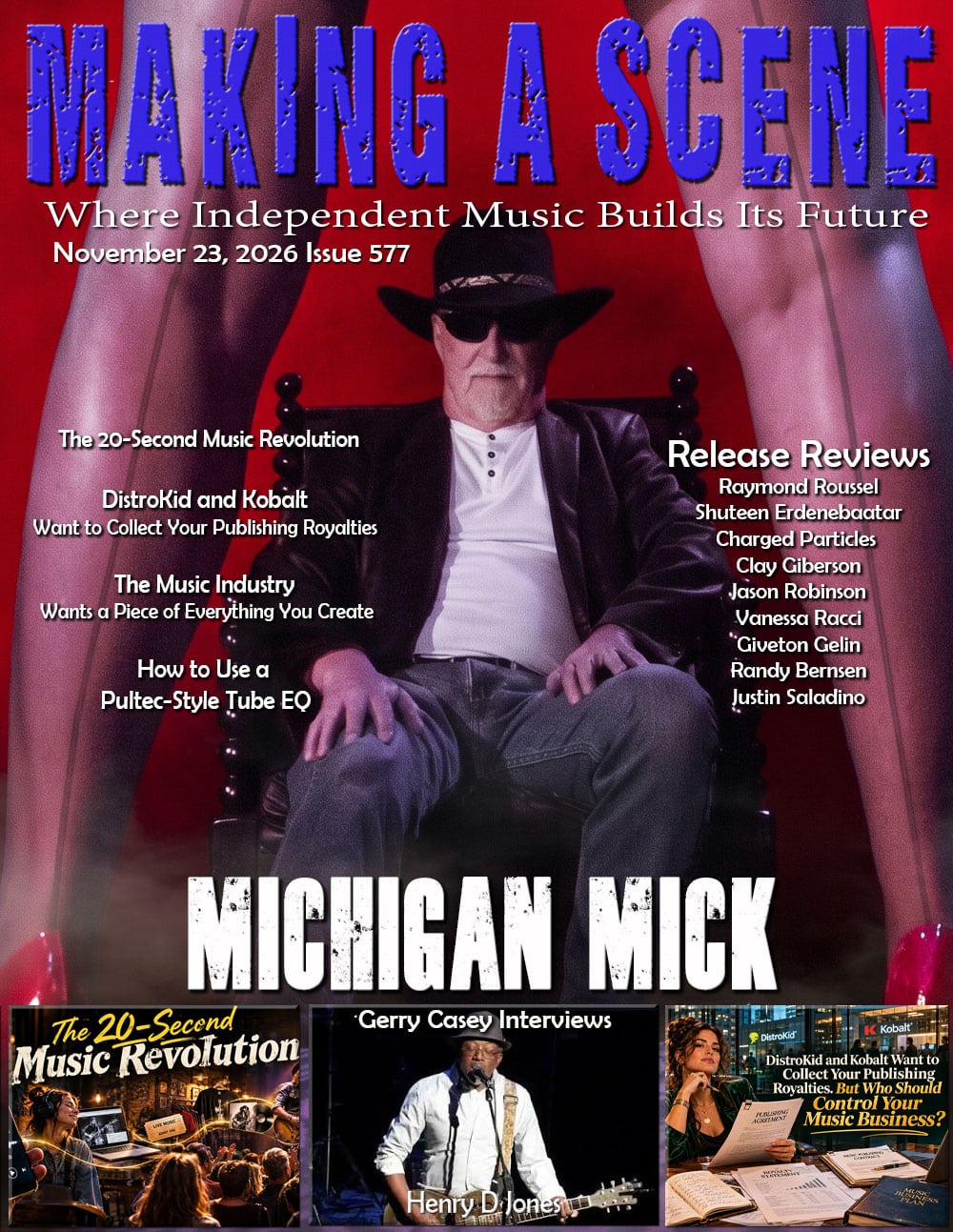

Gerry Casey Interviews Ritchie Malone of Status Quo




HOME PAGE
 |
 |
 |
 |
 |
 |
 |
 |
 |
 |
 |
 |
Making a Scene Presents Gerry Casey’s Interview Ritchie Malone of Status Quo
Status Quo are one of the most enduring and instantly recognizable bands in British rock history. For more than five decades, they have built their reputation on relentless touring, a distinctive twin-guitar attack, infectious boogie rhythms, and songs that have become woven into the fabric of British popular music.
The band’s roots stretch back to South London, where Francis Rossi and bassist Alan Lancaster first played together as schoolboys. Their early group went through several names, including The Scorpions, The Spectres, Traffic, and Traffic Jam, before finally becoming Status Quo in 1967. That same year, singer and guitarist Rick Parfitt joined the lineup, establishing the Rossi-Parfitt partnership that would become central to the band’s identity.
Status Quo first broke through in 1968 with “Pictures of Matchstick Men,” a psychedelic-leaning single written by Rossi. The song introduced the band to a wide audience, but the sound that ultimately defined Quo was still developing. By the early 1970s, the group had moved away from psychedelia and toward a tougher, more stripped-down style built on blues, rock and roll, boogie, and a hard-driving rhythmic pulse.
That transformation produced the sound for which Status Quo became famous: churning guitars, locked-in grooves, simple but powerful riffs, and a live energy designed to move a crowd. Rather than chasing musical fashion, Quo increasingly leaned into what worked for them, creating a style so recognizable that only a few bars are needed to identify the band.
The classic lineup of Francis Rossi, Rick Parfitt, Alan Lancaster, and drummer John Coghlan became known to fans as the “Frantic Four.” During the 1970s, that lineup helped create some of the band’s most celebrated records, including Piledriver, Hello!, Quo, On the Level, and Blue for You.
Songs such as “Caroline,” “Down Down,” “Rain,” “Roll Over Lay Down,” and “Mystery Song” helped establish Status Quo as one of Britain’s great live rock bands. Their 1977 album Rockin’ All Over the World added another song that would become inseparable from their name. The title track, written by John Fogerty, became one of Quo’s signature performances and a permanent fixture in their live shows.
The late 1970s and early 1980s brought another run of memorable releases. “Whatever You Want,” “What You’re Proposing,” “Living on an Island,” “Don’t Drive My Car,” and “Rock ’n’ Roll” showed that the band could expand its sound without losing the rhythmic drive at the heart of its music.
Over the years, Status Quo’s lineup changed, but the basic musical philosophy remained remarkably consistent. Rossi continued as lead guitarist, singer, and songwriter, while longtime members including keyboardist and multi-instrumentalist Andrew Bown and bassist John “Rhino” Edwards became important parts of the band’s evolving sound.
The band also proved that its catalog could survive outside the wall of electric guitars. In 2014, Status Quo released Aquostic (Stripped Bare), a collection that reworked classic songs in fully acoustic arrangements. The project gave familiar material a different perspective and highlighted the melodies and songwriting that sometimes sit underneath Quo’s famously heavy rhythmic attack.
The group’s later catalog continued to grow with albums including Heavy Traffic, The Party Ain’t Over Yet, In Search of the Fourth Chord, Quid Pro Quo, Bula Quo!, and Backbone. Released in 2019, Backbone was another important chapter, showing that Status Quo could still create new material decades into their career.
Their recording history stretches across an extraordinary range of eras. From the psychedelic pop of “Pictures of Matchstick Men” to the hard boogie of the 1970s, the arena-rock years, the acoustic experiments of the Aquostic projects, and later releases such as Driving to Glory, the band’s catalog reflects both change and remarkable continuity.
The loss of Rick Parfitt marked the end of one of British rock’s most recognizable guitar partnerships, but Status Quo continued forward. Irish guitarist Richie Malone had first stepped in during 2016 after Parfitt became ill and went on to become part of the band’s touring lineup.
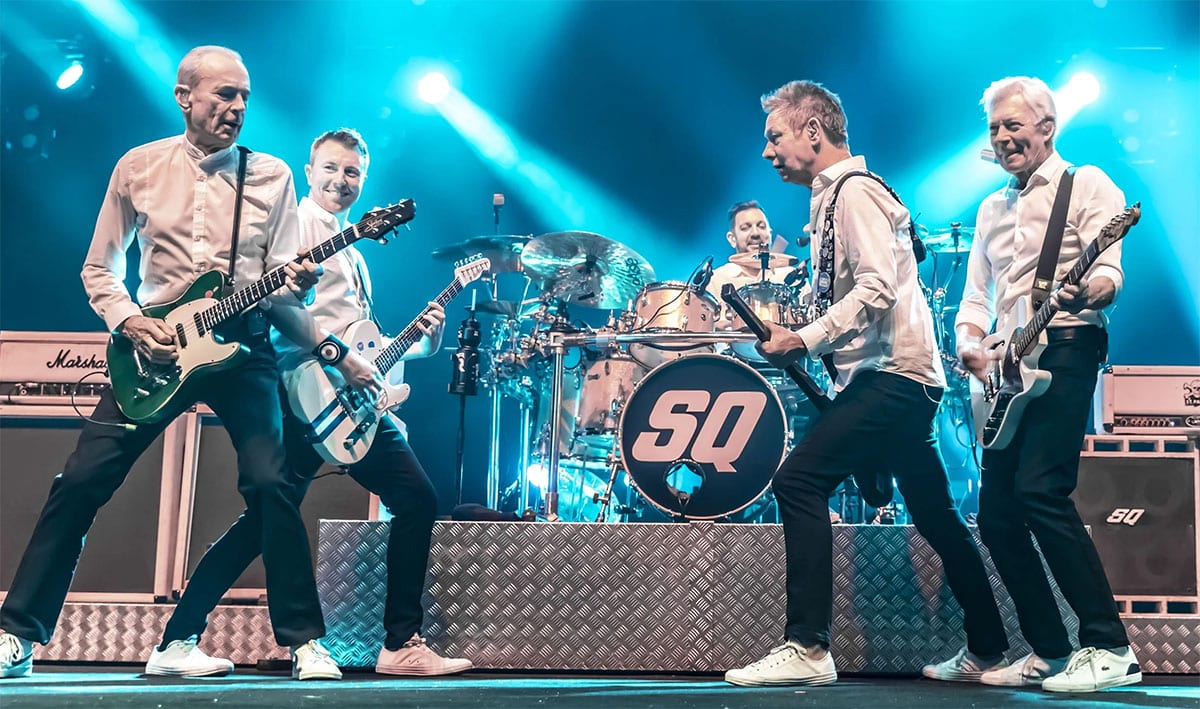
The current Status Quo lineup consists of Francis Rossi on lead guitar and vocals; Andrew Bown on keyboards, guitar, harmonica, bass, and vocals; John “Rhino” Edwards on bass, guitar, and vocals; Leon Cave on drums, guitar, and bass; and Richie Malone on guitar.
What has always separated Status Quo from many of their contemporaries is not complexity for its own sake, but commitment. Their music is built around groove, repetition, dynamics, and the physical relationship between a band and an audience. Quo understood early that a simple riff played with conviction can be more powerful than a hundred clever ideas fighting for attention.
That approach made them one of Britain’s great working rock bands. Decade after decade, they kept touring, recording, and playing songs that audiences wanted to hear again because those songs were made to be experienced in a room full of people.
Status Quo’s legacy is therefore about more than chart records or longevity. It is about the enduring appeal of direct, unpretentious rock and roll. They took blues and boogie, turned the guitars up, locked into the rhythm, and created a sound that became unmistakably their own.
More than half a century after the name Status Quo first appeared, the band remains a symbol of British rock at its most durable, energetic, and gloriously uncomplicated: guitars forward, rhythm section locked, heads down, and still rockin’ all over the world.
 | Spotify |  Deezer |  Breaker |
 Pocket Cast |  Radio Public |  Stitcher |  TuneIn |
 IHeart Radio |  Mixcloud |  PlayerFM |  Amazon |
 Jiosaavn |  Gaana |  Vurbl |  Audius |
 Reason.Fm | |||
Find our Podcasts on these outlets