
Eric Alexander FIFTH QUADRANT




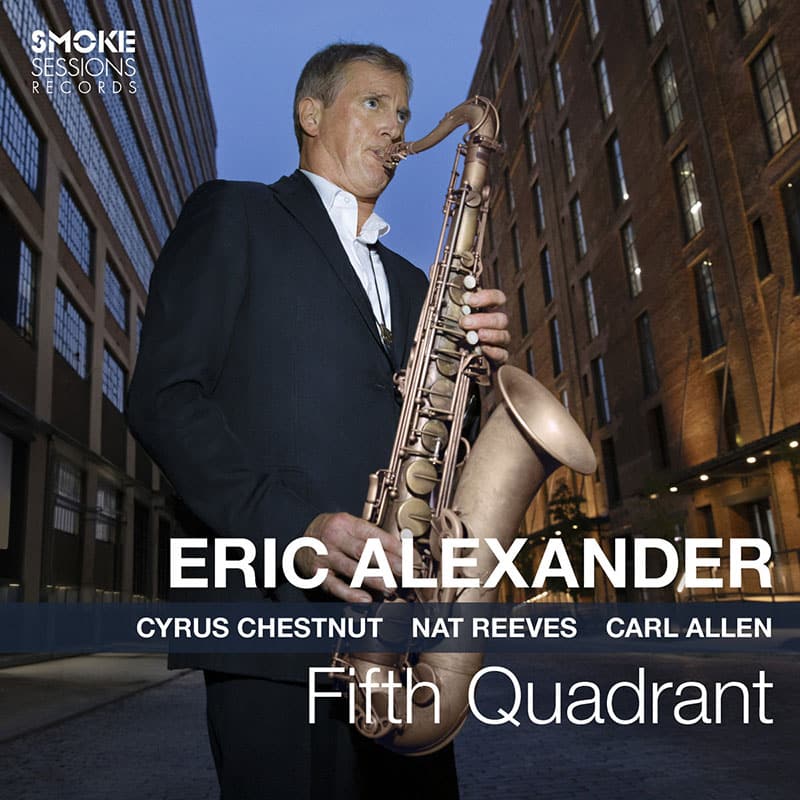
ERIC ALEXANDER
FIFTH QUADRANT
Smoke Sessions Records
Eric Alexander, tenor saxophone; Cyrus Chestnut, piano; Nat Reeves, bass; Carl Allen, drums.
This recording embraces a new quartet of old friends. Eric Alexander grew up listening to and loving Pop and soul music. Somehow, his love for that time in his life, along with the beautiful jazz music that influenced him later, finds its way into this album called, “Fifth Quadrant.”
You will hear great modern-composer-music like Stevie Wonder’s “Ribbon in the Sky” and Stanley Turrentine’s “Sugar.” Alexander’s quartet covers the Rodgers and Hammerstein “Might as Well Be Spring” and the Gordon Parks’ classic, “Don’t Misunderstand.”
Pianist Cyrus Chestnut and Eric Alexander have performed and recorded together in a number of settings over the years. Alexander says he recognized a kindred spirit in chestnut. One thing they both enjoy is an unsatiable appetite for great music, regardless of genre, style or era.
Harold Mabern was Alexander’s mentor and a vital collaborator throughout the first quarter of the saxophonist’s musical life. Eric recalls him stating:
“There’s so much good music out there and I’m not a music snob. If he heard a great song, Mabern could hear it outside the context within which it was originally presented, like John Coltrane did with “My Favorite Things,” Alexander reminded me.
Alexander is a prolific composer and offers the listener four original compositions starting with the title tune, “Fifth Quadrant.” It blusters on the scene with the power and swing punch of a Muhammad Ali.
He follows this with the big pop and R&B hit record, “One Hundred Ways,” colored by Cyrus Chestnut’s bright piano solo. It sparkles like a galaxy of stars. Eric Alexander’s smooth tenor saxophone delivers the melody. His improvisational solo displays excellence and excitement exploring every chord change and nuance of this James Ingram/Quincy Jones gold record.
Photography icon, Gordon Parks also was an incredible music composer. “Don’t Misunderstand” is proof of that! Parks originally wrote it for his own film, “Shaft’s Big Score” that was first performed by O.C. Smith and later by Nancy Wilson and a host of other artists. Alexander’s take on the jazz standard shows deep depth of emotion and tenderness blown through the bell of his horn. He also invites captivating solos from his group members.
“Newk” is a no-nonsense blues spit from the composer pen of Eric Alexander. The quartet swings hard on this tune and Alexander cuts loose, like a wild horse running free from the corral.
Alexander’s original composition titled “Be” perhaps sums up the total concept of this album. The composer suggests that this is a summation of his personal philosophy and musical perspective. During the arrangement, the drums of Carl Allen beautifully lift the music. His solo well represents the drama and intention of this tune.
Reviewed by Dee Dee McNeil