
AI-Powered Music Ads: Smarter Targeting, Better Results




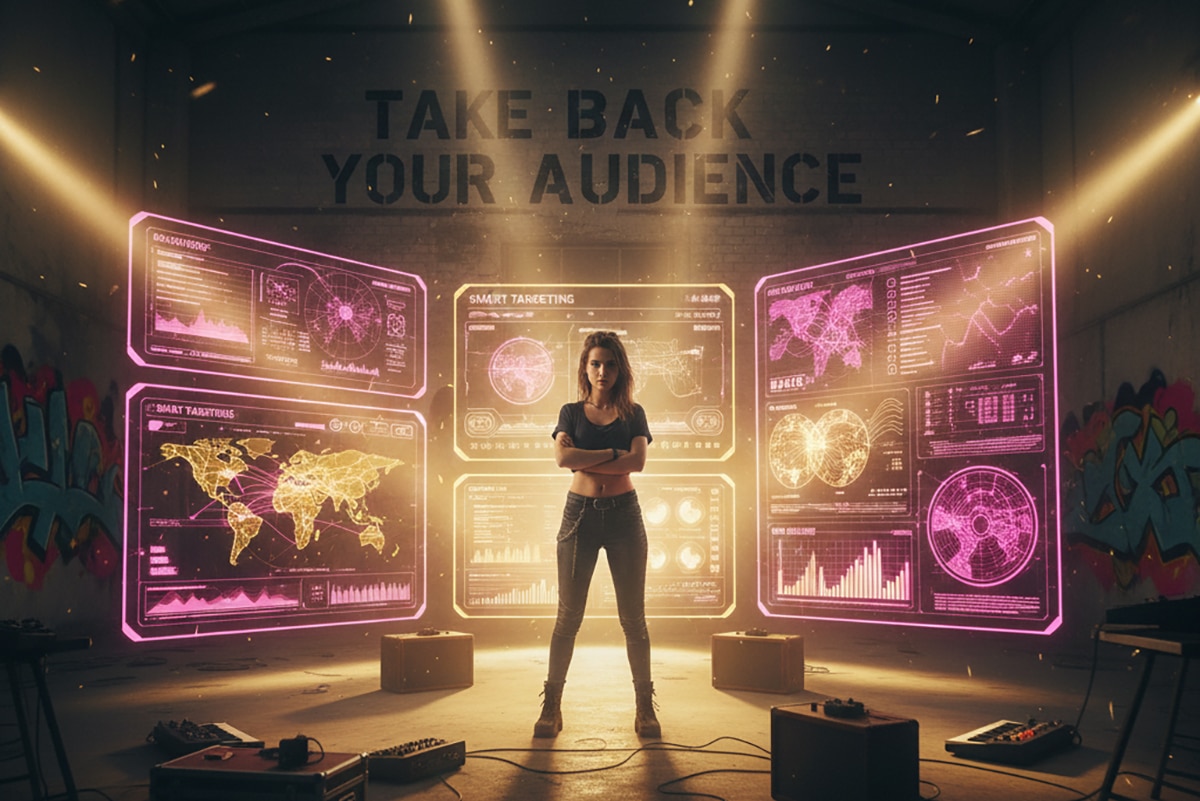
Making a Scene Presents – AI-Powered Music Ads: Smarter Targeting, Better Results
Listen to the podcast discussion for more insight into using AI for more effective social media advertising
When you hear people talk about AI in music marketing, it usually sounds like a bunch of tech hype. But the truth is actually much simpler. AI has changed ads on Facebook, Instagram, and TikTok in a way that finally helps indie musicians reach real fans without wasting money. You no longer have to sit there trying to guess interests, age groups, cities, or behaviors. The machines do the learning for you. AI watches who reacts to your music, who skips it, who follows, who saves, and who keeps repeating the song. Then it reshapes your entire ad delivery behind the scenes.
For years, indie musicians were told that ads were “too complicated,” or “too expensive,” or that you needed a whole marketing team just to keep up. But AI flipped that script. Now you can run a solid ad campaign with nothing more than your smartphone, one good video, a song, and a platform that uses machine learning to do the heavy lifting. Facebook and Instagram use Meta’s strong AI engine to learn your ideal fan automatically. TikTok uses Smart Targeting to find the people who will actually stick around. Even YouTube has AI behind its ad system. And if you combine that with analytics tools like Chartmetric and Cyanite, you can understand your fans better than any label ever could.
By the end of this article, you’re going to know exactly how AI-powered ads work, why they’re cheaper and more effective than old methods, and how to set them up even if you’ve never run a single ad in your life.
So let’s dig in and break this down in plain English.
How AI Changes the Way Ads Work for Musicians
For a long time, running ads for your music meant you had to pick everything by hand. You had to guess your audience’s age, location, hobbies, favorite artists, and even what time of day they might be online. Most indie musicians wasted money because they had no way of knowing who their real fans were. AI changed that forever.
Today, when you run ads on Facebook, Instagram, TikTok, or YouTube, the machine learning system inside each platform studies how people react. It watches tiny signals, like how long someone watches your video, whether they tap the screen, whether they share it, save it, or follow you after hearing your hook. AI doesn’t just look at likes. It looks at behaviors that show real interest. And one of the sneakier things these platforms look at is how often a person listens to music in general. TikTok has millions of “music-heavy” users. Meta has data on people who click on concerts, who follow bands, and who use music apps.
You can’t see this data. But the machine can. And it uses all of it to send your ad to people who look just like the ones who already reacted. The more people who interact with your ad, the smarter the system becomes. It slowly builds a fan profile for you, without you ever typing in a single detail.
This is why AI-powered ads often outperform the old “interest targeting” method. The machines simply know more about people than you ever could. And this matters even more when you’re pushing music, because music taste isn’t logical. It’s emotional. It’s unpredictable. But AI loves patterns. And with enough data, the platforms begin to see what kind of people connect with your sound.
A Simple Way to Understand AI Targeting: It Learns Like a DJ
Think of AI as a DJ who pays attention to the crowd. If the DJ plays a song and the crowd gets bored, the DJ knows to try something else. If the crowd jumps and vibes, the DJ sticks to that style. AI targeting works the same way. When you post your music ad, the machine tests it with small groups of people. If they react well, AI finds more people who look and act like them. If they ignore it, the machine tests a different group.
This learning process happens hundreds of times per second. That’s why ads start weak and get stronger. AI needs time to “feel the room.” When you let it learn, something magical happens. Your budget gets smarter. Your cost per click drops. Your cost per fan drops. And your real listeners go up.
This is why musicians who try to “force” the audience by choosing too many interests often block the machine from doing its job. It’s like telling the DJ what to play without letting him read the crowd. AI wants freedom. When you give it room to learn, it usually finds the exact people who are most likely to love your sound.
How Meta’s AI Learns Your Ideal Fan on Facebook and Instagram
Meta Ads Manager is one of the strongest AI-driven advertising engines in the world. You can access it at https://www.facebook.com/adsmanager. When you run a music ad through Meta, the system begins tracking certain behaviors that show strong interest. These include saves, shares, profile visits, reel replays, and time spent watching your video. Meta’s AI also notices who follows Spotify artists, who watches music reels, who clicks on concerts, and who engages with creative content in general.
You don’t have to know any of this data. The machine uses it behind the scenes. What you need to do is give Meta your best video. A great hook is important. Even three to five seconds can do the job. When your video ad starts running, Meta begins finding people who react in a positive way.
Here’s the cool part. Meta also gives you AI suggestions as you build your campaign. Sometimes you’ll see a button that says “Performance Goal Suggestions.” Other times it will say “Simplify Targeting.” When you click these, Meta usually encourages you to let the AI choose the audience for you. This is the “Advantage+” system. Meta’s Advantage+ Audience and Advantage+ Placements let the machine test your ad across Instagram Reels, Instagram Feed, Facebook Reels, Facebook Feed, and even Marketplace or Stories if needed.
In the old days, artists were told to pick one placement. But AI works best when it can choose for you. It tests every possible placement and sticks with the ones that bring the best fans for the lowest cost.
What It Feels Like to Set Up a Meta AI-Powered Music Ad
Most indie artists think creating a Meta ad is hard. But let me show you exactly how simple it becomes when AI does the brain work.
You start by going to the Ads Manager at https://www.facebook.com/adsmanager. When you open it, Meta asks what your goal is. If you’re a musician pushing a new song, the goal you want is called “Engagement” or “Traffic.” Engagement works well when you want saves and followers. Traffic works well when you want people clicking your link.
Next, Meta takes you to the ad set. This is where the AI really starts stepping in. When you scroll down to Audience, you will see something called “Advantage+ Audience.” This recommendation is the platform telling you to stop guessing and let the machine decide. When your audience is set to Advantage+, the system uses its giant data pool to target the people most likely to respond to your video.
After that, Meta suggests placements. The machine will push you toward “Advantage+ Placements.” Again, let it do the work. Manual placements usually cost more and perform worse.
Then Meta asks you for your budget. Even ten dollars a day can teach the machine a lot if your video is strong.
Finally, you upload your video, add your caption, add your link, and hit publish.
And that’s it. The AI takes over from there. It starts testing small pockets of people and learns who responds best. It adjusts your delivery automatically. It improves day by day. And by the time your ad hits its stride, it’s reaching the exact listeners who connect with your style.
How TikTok’s Smart Targeting Makes Music Ads Even More Powerful
TikTok Ads Manager has a very different vibe compared to Meta, and you can access it at https://ads.tiktok.com. If Meta is like a data scientist taking notes, TikTok is like a fast-moving street performer who instantly reacts to crowds. TikTok ads get smarter at lightning speed because TikTok’s entire platform revolves around short, powerful reactions. Even a tiny swipe or a one-second replay gives the machine clues about what people want.
The smartest way to run ads for your music on TikTok is to use something TikTok calls “Smart Targeting.” When you turn this on, TikTok decides who your audience should be. You don’t pick interests, ages, or behaviors. You let the machine scan millions of viewers and test your video until it finds the right fit.
When TikTok sees people rewatching your ad, tapping the screen, sharing the sound, hitting follow, or dropping comments, it quickly builds an audience that mirrors those people. TikTok’s AI is especially good at finding music lovers because the whole platform is built around songs, remixes, and sounds that get stuck in your head.
The TikTok Ads Manager also shows you AI-powered recommendations as you build your campaign. Sometimes it will suggest wider targeting. Sometimes it will suggest raising the budget. Sometimes it will tell you your video is strong enough to expand the delivery. When TikTok gives these suggestions, it’s based on pure machine-learned data from your performance.
This is all happening while you do nothing but watch your analytics.
How to Set Up a TikTok AI Music Ad Even If You’re New to Ads
Let’s walk through how simple this is.
You start by going to https://ads.tiktok.com and creating an account. When you click “Create,” the first thing TikTok asks for is your objective. Musicians usually pick “Traffic” because it sends people to your link, or “Engagement” because it pushes followers and video views.
Then TikTok takes you to the ad group. This is where the magic is. When you scroll to Targeting, you will see the option for Smart Targeting. You turn it on, and that’s when AI takes full control. TikTok starts learning from the first second your ad appears online.
You upload your video. You add your caption. Then you choose your budget. Even a small daily budget can teach the machine a lot. When the ad goes live, TikTok begins testing your video on different kinds of people to see who reacts best.
You don’t have to master targeting. TikTok does it for you. Your job is to make sure the video is interesting, the hook is strong, and the message is clear. The AI handles the rest.
Why AI Ads Work Better Than Keyword Targeting or Interest Targeting
Interest targeting used to be the main strategy musicians used on Facebook and Instagram. You picked interests like “Gibson,” “Guitar Center,” “Spotify,” “Billie Eilish,” or “Live Music.” But the truth is those interests were always messy. They put your ad in front of people who might not even care about new music at all.
AI targeting is different. It doesn’t care about what people say they like. It cares about what they actually do. If someone constantly watches guitar solos, AI knows. If someone saves tons of new indie artists on Instagram, AI knows. If someone hits follow every time they hear a new soulful voice on TikTok, AI knows that too.
This is why AI beats interest targeting. It studies real behavior. It changes your delivery based on the patterns it sees. And it never gets tired or distracted.
This is also why most musicians who switch to AI-powered campaigns see better results. Their costs drop. Their reactions go up. Their followers grow faster. And they stop wasting money trying to guess who their fans are.
Using AI to Understand Your Fans Before Running Any Ads
If you really want to get the most out of AI ads, you can go even deeper by looking at fan behavior before you run anything. Thankfully, there are powerful AI tools built for this exact purpose. One of the most talked-about tools is Chartmetric at https://www.chartmetric.com. This platform analyzes your music audience across streaming platforms. It shows where your listeners live, what genres they follow, and what playlists they connect with.
Then there’s Cyanite at https://www.cyanite.ai. Cyanite uses AI to understand your music’s emotion, energy, moods, and style. This is extremely valuable because it helps you pick the right video style for your ads. If Cyanite tells you your song is “high-energy electronic with warm emotional tones,” you know your visuals should match that vibe.
You can also use Musiio, which you can find at https://www.soundcloud.com/musiio. Musiio analyzes your track and breaks down its structure, genre, and moods. This helps when you want your ads to attract fans who enjoy similar music.
Then there are tools like ChatGPT at https://chat.openai.com. You can feed it your music style, your goals, your audience, and the platforms you plan to use. ChatGPT then helps you craft ad hooks, captions, and creative ideas that match the behavior of your fans.
All these tools help your ads hit harder. When you understand your fans before you even run ads, the AI platforms have an even easier time finding the perfect people.
Creating the Perfect AI-Friendly Video for Your Ads
AI-powered ads work best when your video teaches the machine as fast as possible. This doesn’t mean you need fancy cameras or crazy editing. What you need is a simple video that shows your face, your style, and your sound clearly. And you need a hook. The first three seconds decide everything because that’s when AI watches viewer reactions.
If your hook gets people to stop scrolling, the machine instantly marks your ad as strong and begins sending it to more people who look like those early responders.
You can use simple editing tools like Canva at https://www.canva.com to create quick captions and cool layouts. You can even add subtitles, and AI loves subtitles because they help viewers stick around longer. You can also use CapCut at https://www.capcut.com to edit your video for TikTok style. Both tools are free or very low-cost.
Some musicians use AI video tools like RunwayML at https://www.runwayml.com to spice up their visuals. You can also use InVideo at https://invideo.io. These kinds of AI-powered visual tools can help you make eye-catching scenes without expensive equipment.
The goal is to create a video that clearly shows who you are and what your song sounds like. When the video is clean, simple, and strong, AI has an easier time learning who your fans are.
How AI Learns From Every Single Second of Your Video
A lot of musicians think the platform only cares about likes. But AI doesn’t care about likes at all. It cares about behavior. Even the smallest actions tell the machine something important. If someone replays your video, that is a huge signal. If they watch more than 60 percent, that tells the machine your content is sticky. If they save your post, that tells the AI that your video is valuable.
AI also tracks negative signals. If someone scrolls past your video in under a second, the AI knows they didn’t connect with it. If too many people skip too fast, the machine slows down your delivery. This is why your first few seconds matter so much.
Every time AI sees positive signals, it expands your reach and pushes your video to more people who match those behaviors. This is how you eventually build a lookalike fan group without ever typing in a single target interest.
How AI Budgeting Makes Your Ads Cheaper Over Time
One of the coolest parts of AI-powered ads is how the machine learns how to spend your money. You don’t need to guess how much to spend on each placement, platform, or time of day. The machine figures that out for you.
Meta’s AI will automatically shift your budget to Facebook Reels if that placement is performing better than Instagram Feed. TikTok’s AI will push your ad to certain geographic areas if people there respond strongly. YouTube will move your ad toward music-heavy viewers who often watch new artists.
AI budgeting also lowers your cost because it avoids waste. Instead of spending five dollars to test something manually, the AI tests hundreds of possible combinations for you in micro-seconds.
You’re not paying for manual labor. You’re paying for automated learning.
Using AI-Enhanced Platforms to Track Your Ad Results
When your AI-powered ad starts running, you can use several platforms to track what’s happening. You can look inside Meta Ads Manager, TikTok Ads Manager, or YouTube Analytics. But you can also use outside analytics tools to get deeper insights.
Spotify for Artists at https://artists.spotify.com shows you where your listeners are coming from. You might see a spike in new listeners from Canada, the UK, or South America. That usually means your ads are hitting.
You can also use YouTube Studio at https://studio.youtube.com to see how people are reacting to your videos. AI-driven ads often bring more watch time and better retention.
Another great tool is ToneDen at https://www.toneden.io. ToneDen helps you create smart links and landing pages for your ads. It also gives you analytics that show how many people clicked, streamed your song, or followed you.
Feature.fm at https://www.feature.fm is another useful tool. It gives detailed data about your fan behavior and how that behavior relates to your ad campaigns.
When you combine these tools, you get a full picture of how AI-powered ads are shaping your music career.
What Happens When AI Gets Enough Data: Your Ads Hit “Flight Mode”
There’s a point in every AI-powered campaign when something clicks. You’ll notice your cost dropping. You’ll see more followers. You’ll find more real fans. This moment is what marketers call “flight mode.” It means the AI has collected enough data to understand your audience clearly.
When your ad hits flight mode, everything feels smoother. Your budget stretches farther. Your results get stronger. And sometimes you’ll see people commenting things like “I don’t know how this popped up on my feed, but I’m glad it did.”
That is the feeling of AI at work. It found your people. It found the listeners who truly vibe with your sound. And this moment happens every time the machine gets enough clean signals.
The best way to help your ad reach this point is to keep it running long enough. Some artists kill their ads too early. But AI needs a little time to learn. Once it sees enough positive reactions, the delivery becomes almost self-propelled.
How to Expand Your AI Success Into Bigger and Better Campaigns
Once your ads start working, you can expand in several ways. You can send ads to promote your music video. You can promote a live show and let AI find people in that city. You can push merch ads, ticket ads, and even fan club ads through token-based platforms like Patreon at https://www.patreon.com or Audius at https://audius.co.
You can even use Web3 platforms to reward fans who interact with your ads. Platforms like Opulous at https://www.opulous.com and Royal at https://www.royal.io help musicians give fans ownership in songs. If your AI-powered ads bring the right fans, some of them may turn into superfans who want to invest in your music. Remember to create a music industry middle class, you only have to find 1,000 fans that are willing to spend $100 a year on you as an artist.
Once you understand how AI ads work, you can scale your entire music brand with confidence.
The Future of AI Ads for Musicians
We’re heading into a future where AI will handle almost every part of advertising. Soon you’ll upload a video, describe your song, and let AI handle your entire rollout. Meta already has automated campaign builders. TikTok is testing fully automated ad flows. YouTube’s AI keeps improving every year.
We will also see AI-powered fan prediction tools. Imagine a system that tells you which cities are about to break for your music before it even happens. Tools like Chartmetric are already moving in that direction. Soon AI will help you plan tours, pick merch colors, and decide the best time to drop your next single.
What this means for indie musicians is simple. You suddenly have the power that record labels used to have. You don’t need a marketer. You don’t need a big budget. You just need to understand how to work with the machines.
And once you do, you can grow faster than ever before.
Final Thoughts
AI-powered ads changed the entire music marketing world. They took something confusing and expensive and made it simple and affordable. When you use Meta Ads Manager or TikTok’s Smart Targeting, the machine learns your ideal fans for you. When you use analytics tools like Chartmetric or Cyanite, you understand your audience on a level most artists never reach.
You don’t need a team. You don’t need connections. You don’t need a huge budget. You just need a clear video, a strong song, and a willingness to let AI do what it does best. This is the new era of indie music marketing. AI isn’t here to replace musicians. It’s here to help musicians break the system that held them back.
And now you have the roadmap to use it.
 |  Spotify |  Deezer |  Breaker |
 Pocket Cast |  Radio Public |  Stitcher |  TuneIn |
 IHeart Radio |  Mixcloud |  PlayerFM |  Amazon |
 Jiosaavn |  Gaana |  Vurbl |  Audius |
 Reason.Fm | |||
Find our Podcasts on these outlets
Buy Us a Cup of Coffee!
Join the movement in supporting Making a Scene, the premier independent resource for both emerging musicians and the dedicated fans who champion them.
We showcase this vibrant community that celebrates the raw talent and creative spirit driving the music industry forward. From insightful articles and in-depth interviews to exclusive content and insider tips, Making a Scene empowers artists to thrive and fans to discover their next favorite sound.
Together, let’s amplify the voices of independent musicians and forge unforgettable connections through the power of music
Make a one-time donation
Make a monthly donation
Make a yearly donation
Buy us a cup of Coffee!
Or enter a custom amount
Your contribution is appreciated.
Your contribution is appreciated.
Your contribution is appreciated.
DonateDonate monthlyDonate yearlyYou can donate directly through Paypal!
Subscribe to Our Newsletter
Order the New Book From Making a Scene
Breaking Chains – Navigating the Decentralized Music Industry
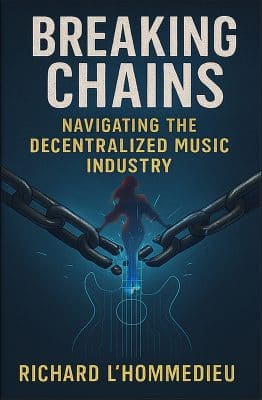
Breaking Chains is a groundbreaking guide for independent musicians ready to take control of their careers in the rapidly evolving world of decentralized music. From blockchain-powered royalties to NFTs, DAOs, and smart contracts, this book breaks down complex Web3 concepts into practical strategies that help artists earn more, connect directly with fans, and retain creative freedom. With real-world examples, platform recommendations, and step-by-step guidance, it empowers musicians to bypass traditional gatekeepers and build sustainable careers on their own terms.
More than just a tech manual, Breaking Chains explores the bigger picture—how decentralization can rebuild the music industry’s middle class, strengthen local economies, and transform fans into stakeholders in an artist’s journey. Whether you’re an emerging musician, a veteran indie artist, or a curious fan of the next music revolution, this book is your roadmap to the future of fair, transparent, and community-driven music.
Get your Limited Edition Signed and Numbered (Only 50 copies Available) Free Shipping Included
Discover more from Making A Scene!
Subscribe to get the latest posts sent to your email.


