

AI Isn’t Replacing Musicians—It’s Replacing the Music Industry Middlemen




Making a Scene Presents – AI Isn’t Replacing Musicians—It’s Replacing the Music Industry Middlemen
Listen to the Podcast Discussion to gain more insight on AI and Web3 Replacing the bloated Music Industry Middleman Structure
There’s a strange truth hiding in plain sight in the music world right now, and the only people who seem scared of it are the ones who have the most to lose. If you listen to big labels, legacy execs, and certain industry talking heads, they want you to believe that AI is coming after the artists. They want you nervous, shaking, and convinced that a robot is going to take your guitar, steal your mic, and drop an album on Spotify before you can tune your instrument.
But here’s the reality they won’t say out loud. AI isn’t replacing musicians. It’s replacing the middlemen who were never needed in the first place. It’s replacing the gatekeepers who built their careers on slowing things down and taking a cut. It’s replacing the bloated systems that fed off artist fear. The machine isn’t killing creativity. It’s killing bottlenecks.
And deep down, the old industry knows it.
You can feel it in how defensive they’ve become. Every time a new AI tool drops, the same talking heads pop up online trying to spark a panic. But the panic isn’t about music quality. It’s about losing control. For decades, big companies like Universal Music Group, Sony Music Entertainment, and Warner Music let artists believe they were the only path forward. They wrapped the music world in red tape, complex contracts, outdated distribution systems, and rules that only served the people at the top.
But AI and Web3 have started burning those rules to the ground. And artists are finally getting the power back.
This is a deep dive into how that shift is happening and why the people screaming about “AI danger” aren’t worried about music. They’re worried about losing the power they never deserved.
The Fear Story the Industry Keeps Pushing
The industry’s fear story is simple. If artists believe AI makes them irrelevant, then artists cling harder to the old system. They sign contracts they shouldn’t. They give away rights they don’t need to give up. They look for the safety of a label deal. They chase the approval of gatekeepers. They become dependent on the very people who hold them back.
That fear narrative is the oldest trick in the book. Labels used it during the MP3 era. They used it when YouTube showed up. They used it when streaming hit the scene. They always try to frame new technology as a threat. But the threat is never to the artists. It’s always to the system.
AI isn’t any different. You can hear the panic in every public statement the majors release. They want regulations. They want restrictions. They want to slow down progress. They want to be the ones who decide which AI tools are “safe” for artists. They want control because they built their entire empire on controlling access.
But that empire is cracking. And it’s cracking fast.
The reason is simple. AI puts power directly in the hands of independent musicians. It gives them speed. It gives them skills. It gives them freedom. It removes the excuses the industry used to keep artists trapped. It hands artists the tools the labels don’t want them to have.
And once you see how these tools work together, you can’t unsee it.
AI Isn’t Replacing Creativity—It’s Replacing the Bottlenecks
Let’s start with the biggest lie: the idea that AI harms creativity. If anything, AI expands creativity. It opens doors. It removes technical walls. It gives every artist, beginner or pro, the power to execute ideas at the speed they appear.
For example, Suno at https://www.suno.com lets you sketch song ideas in minutes. It doesn’t replace your songwriting. It speeds up your brainstorming. It gives you a place to experiment without waiting on a bandmate’s schedule or a studio session. It turns your imagination into a rough demo instantly. That’s power.
iZotope’s Neutron 5 at https://www.izotope.com and Ozone 12 at https://www.izotope.com give you mixing and mastering assistants that can analyze your tracks and show you what’s missing. They don’t replace engineering. They teach it. They’re like having a professional sitting next to you every day, giving advice and catching problems early.
Sonible smart:EQ at https://www.sonible.com gives you tone-shaping abilities that used to require a decade of training. Even if you’ve never mixed before, this plugin helps your vocal sit better, helps your drums feel alive, and helps your mix breathe. It’s not taking your job. It’s giving you a tool the industry never wanted indie artists to access.
ChatGPT at https://www.openai.com helps with writing, planning, marketing, social media, email pitches, release strategies, and creative ideas. It doesn’t write your story. It helps you tell your story with clarity and confidence. It takes the stress out of running the parts of your career that used to require a manager, a publicist, or a label rep.
The big question becomes obvious. If an indie artist can write faster, record better, mix cleaner, master stronger, design smarter, and market harder with a handful of AI tools… then what exactly do the middlemen do?
And this is where the grip of the industry starts slipping.
The Old Music Industry Was Built on Bottlenecks
To understand why AI is scaring the old industry so badly, you have to understand how the system was built. The traditional music industry didn’t survive because it supported artists. It survived because it controlled access. It survived by slowing things down and charging artists to go faster. It survived by making everything confusing so artists felt helpless.
For example, A&R departments at major labels like Universal or Sony used to act like they had some mystical ability to discover talent. But artists don’t need discovery now. Artists build their own fanbases on TikTok, Instagram, Audius, YouTube, or Discord. The crowd discovers talent long before any A&R rep even hears the name.
Playlist pitching used to be locked behind a system of gatekeepers. Spotify editorial playlists felt like holy ground only insiders could reach. The average indie artist could pitch a hundred times and never hear back. But AI-powered audience analysis from tools like Chartmetric at https://www.chartmetric.com or Musiio at https://www.musiio.com shows you exactly where your fans are, what they listen to, and how to reach them without begging for playlist favors.
Publicists used to control the narrative. They told you what your story was supposed to be. They decided when your career was “newsworthy.” Today, artists can write better press releases with ChatGPT, build better content with AI tools, and reach fans directly without a media gatekeeper deciding what’s important.
Even sync licensing—one of the last big money spaces—was built on middlemen. Companies sat between artists and music supervisors, filtering who could even get heard. But AI search engines are coming fast, tools that can match songs to moods, scenes, and emotions instantly. When that becomes common, sync gatekeeping collapses. The middle layer disappears.
The entire old structure was a maze designed to justify middlemen. But when AI clears the maze, the middle is exposed for what it is: unnecessary weight.
Web3 Took the Lock Off the Gate, and AI Tore the Gate Down
AI is only one half of the revolution. The other half is Web3. And here’s where the shift becomes unstoppable.
Web3 brings something the old industry fears more than speed, more than creativity, and more than AI tools. It brings ownership. Real ownership. On-chain. Transparent. Immutable. Direct.
Platforms like Audius at https://www.audius.co let you upload music without a label or distributor taking a cut. They don’t own your masters. They don’t hide your fan data. They don’t lock you inside a system designed to keep you dependent.
Sound.xyz at https://www.sound.xyz lets you mint your songs as digital collectibles. Fans buy, trade, and support your releases. You set the price. You keep the control. There is no label scraping 80 percent off the top.
Catalog at https://www.catalog.works lets you mint 1-of-1 digital records. It turns your music into scarce, collectable art pieces—something the old industry could never grasp without squeezing it to death.
Royal at https://www.royal.io lets artists share on-chain royalties with their fans. That means fans literally become partners in your success. They are invested. They promote the release with you, not just watch from afar.
Blockchain splits eliminate fight-after-revenue drama. No more “your check is delayed.” No more “accounting is still processing.” No more “we have to wait until the quarterly statement.” Splits are instant. Transparent. Fair.
Suddenly, you don’t need a label to pay you. You don’t need a distributor to track your earnings. You don’t need an accountant to make sense of the mess.
AI gives artists independence in creation. Web3 gives artists independence in ownership.
Together, they remove every excuse the industry used to keep artists trapped. This is why the system is fighting so hard. They’re not fighting for artists. They’re fighting for survival.
The Music Industry Is Shifting, and the Old Power Players Are Cracking
When you look at the big labels, the big publishers, the big radio networks, and the old music companies, you start to notice cracks forming. They see what’s happening. They see artists using AI to become self-sufficient. They see artists using Web3 to control their catalogs. They see artists using fan data tools to skip the entire marketing department. They see artists mixing professional-level songs in their bedrooms using plugins like Neutron 5, Ozone 12, and smart:EQ.
They see the power moving away from their offices and into the hands of the people who actually make the music. That scares them. So they fight back with narratives. They talk about “AI risk.” They talk about “AI replacing real artists.” They talk about “protecting creativity.” They talk about “ethical concerns.”
But behind closed doors, they’re not worried about ethics. They’re worried that artists no longer need them. They’re worried that AI and Web3 are wiping out the parts of the industry that survive by standing between musicians and their fans.
And here’s the rebellious truth they don’t want spoken: the music industry is not collapsing. It’s transforming. The people collapsing are the people who never needed to be there in the first place.
What AI and Web3 Really Mean for Indie Musicians
If you’re an indie musician, this era should feel like a breath of fresh air. For the first time in history, the tools to run your own career are actually in your hands. Not halfway. Not in theory. Fully.
You can sketch a demo with Suno.
You can record at home.
You can mix better with Neutron 5.
You can master stronger with Ozone 12.
You can fine-tune tone with smart:EQ.
You can write content and pitches with ChatGPT.
You can run a marketing strategy with AI dashboards.
You can mint your music on Web3 platforms.
You can sell digital ownership.
You can collect royalties instantly.
You can reach fans without gatekeepers.
The entire label department is sitting in your laptop.
And no matter how loudly the old industry screams about “AI danger,” they can’t change the fact that AI gives you superpowers they never wanted artists to have. This is the era where an artist can be fully independent, not because they’re struggling but because they’re equipped. For the first time ever, independence isn’t a disadvantage. It’s an upgrade.
The Future Is Not About AI Replacing Artists—It’s About Artists Replacing the Machine
When you look ahead, the question isn’t whether AI will replace musicians. That fear story is dead. The real future is about musicians replacing the machine the industry built around them. A machine that fed on their work. A machine that needed them more than they needed it. A machine that collapsed the second artists were given the tools to run things on their own.
AI didn’t break music. It broke the monopoly on music. Web3 didn’t kill the industry. It killed the middlemen who stood in the middle of everything.
What dies next are the roles that depended on keeping artists in the dark. What survives are the roles focused on helping artists grow. What thrives are the creators who embrace the shift instead of fighting it.
We’re stepping into a world where musicians aren’t treated like products. They’re treated like the bosses of their own careers.
And that’s the future the old industry fears most.
Don’t Wait for Permission
You are living in the most powerful era ever for independent musicians. This is not the time to step back. This is not the time to hesitate. This is not the time to wait and see what happens. The shift is happening with or without you.
If you’re an artist, you cannot afford to sit on the sidelines. The tools are right in front of you. The opportunities are endless. The barriers are crumbling. The middlemen are evaporating. The excuses are gone.
Use Suno at https://www.suno.com.
Use Neutron 5, Ozone 12, and smart:EQ from https://www.izotope.com and https://www.sonible.com.
Use ChatGPT at https://www.openai.com.
Use Audius at https://www.audius.co.
Use Sound.xyz at https://www.sound.xyz.
Use Catalog at https://www.catalog.works.
Use Royal at https://www.royal.io.
Use Chartmetric at https://www.chartmetric.com.
Use Musiio at https://www.musiio.com.
Use Cyanite at https://www.cyanite.ai.
Use Lately.ai at https://www.lately.ai.
Don’t wait for the labels to “catch up.” Don’t wait for execs to “figure out” how to support you. Don’t wait for permission you never needed.
AI is not the enemy. AI is the tool that frees you. Web3 is not a fad. Web3 is the operating system of the next music economy. And you are not replaceable. You are unstoppable.
The industry isn’t scared of the machine. The industry is scared of you with the machine. Use it. Build with it. Own your future. The gatekeepers had their chance. It’s your time now.
 |  Spotify |  Deezer |  Breaker |
 Pocket Cast |  Radio Public |  Stitcher |  TuneIn |
 IHeart Radio |  Mixcloud |  PlayerFM |  Amazon |
 Jiosaavn |  Gaana |  Vurbl |  Audius |
 Reason.Fm | |||
Find our Podcasts on these outlets
Buy Us a Cup of Coffee!
Join the movement in supporting Making a Scene, the premier independent resource for both emerging musicians and the dedicated fans who champion them.
We showcase this vibrant community that celebrates the raw talent and creative spirit driving the music industry forward. From insightful articles and in-depth interviews to exclusive content and insider tips, Making a Scene empowers artists to thrive and fans to discover their next favorite sound.
Together, let’s amplify the voices of independent musicians and forge unforgettable connections through the power of music
Make a one-time donation
Make a monthly donation
Make a yearly donation
Buy us a cup of Coffee!
Or enter a custom amount
Your contribution is appreciated.
Your contribution is appreciated.
Your contribution is appreciated.
DonateDonate monthlyDonate yearlyYou can donate directly through Paypal!
Subscribe to Our Newsletter
Order the New Book From Making a Scene
Breaking Chains – Navigating the Decentralized Music Industry
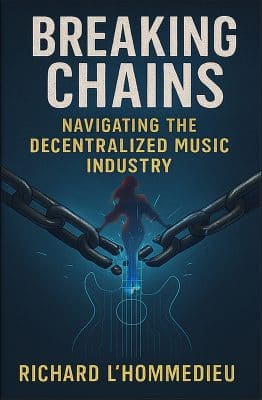
Breaking Chains is a groundbreaking guide for independent musicians ready to take control of their careers in the rapidly evolving world of decentralized music. From blockchain-powered royalties to NFTs, DAOs, and smart contracts, this book breaks down complex Web3 concepts into practical strategies that help artists earn more, connect directly with fans, and retain creative freedom. With real-world examples, platform recommendations, and step-by-step guidance, it empowers musicians to bypass traditional gatekeepers and build sustainable careers on their own terms.
More than just a tech manual, Breaking Chains explores the bigger picture—how decentralization can rebuild the music industry’s middle class, strengthen local economies, and transform fans into stakeholders in an artist’s journey. Whether you’re an emerging musician, a veteran indie artist, or a curious fan of the next music revolution, this book is your roadmap to the future of fair, transparent, and community-driven music.
Get your Limited Edition Signed and Numbered (Only 50 copies Available) Free Shipping Included
Discover more from Making A Scene!
Subscribe to get the latest posts sent to your email.


