
AI Audience Targeting: Finding Your True Fans




Making a Scene Presents – AI Audience Targeting: Finding Your True Fans
Listen to the podcast discussion to gain more insight into using AI to find your Potential Fans!
How Indie Artists Use AI to Locate Real Listeners Before Spending a Dime on Ads
If you’re an indie artist trying to grow your fanbase, you already know the truth that no one likes to say out loud. Posting nonstop on social media doesn’t automatically bring fans. Boosting random posts doesn’t work. Throwing a few dollars at an ad without a plan is basically donating your money to the algorithm gods.
But here’s the good news. In 2025, indie musicians finally have the upper hand.
AI has changed the game.
Instead of guessing who your fans are, AI tools can show you exactly who they are, where they hang out, what other artists they listen to, what moods they gravitate toward, and even what type of content actually makes them stop scrolling. This isn’t magic. It’s data — organized, simplified, and turned into real-world marketing insight.
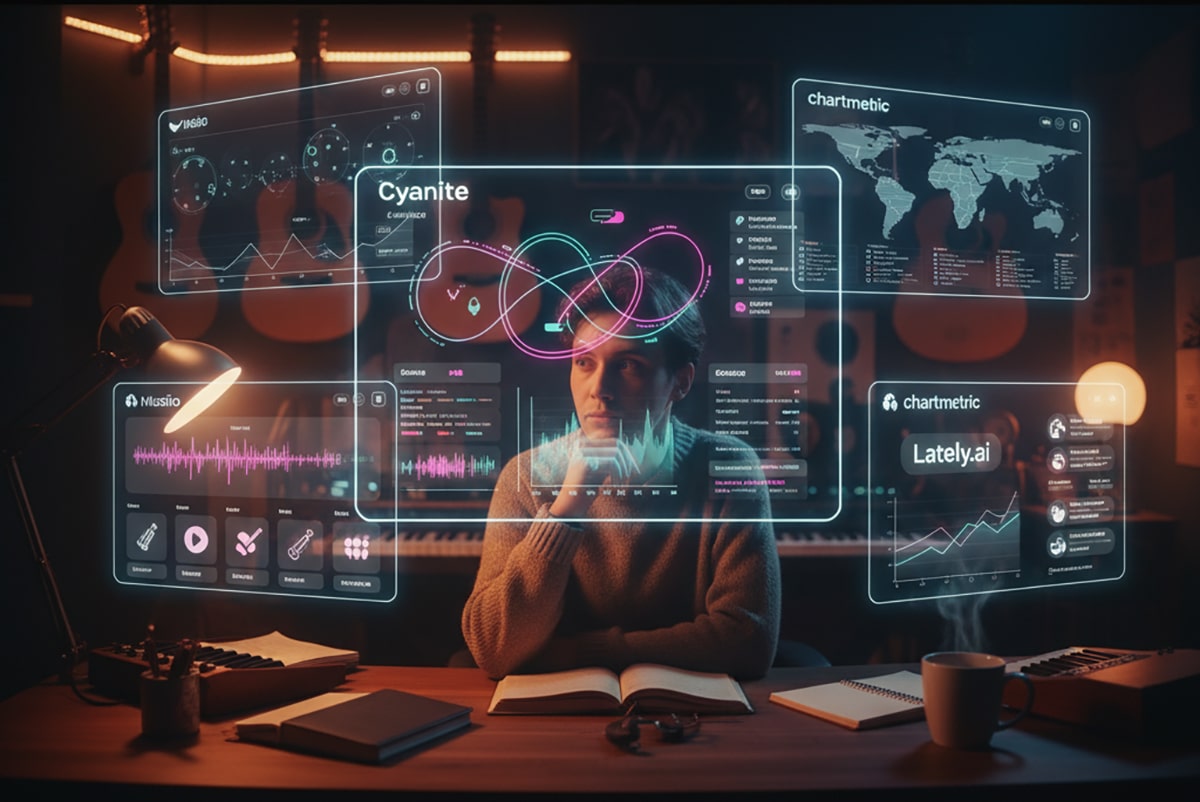
This article will walk you step-by-step through how artists with limited marketing knowledge can use Cyanite, Chartmetric, Musiio, and Lately.ai to discover their true fans before spending a single dollar on ads. You’ll understand who you should target, how to talk to them, and which platforms are most likely to help you grow.
By the end, you’ll have a clear picture of how to build smarter ads, smarter content, and a smarter fanbase — without guessing and without wasting money.
Let’s get into the real story.
Why AI Audience Targeting Matters for Indie Musicians
Most indie artists still try to market the old-school way. They boost a post to “people who like music.” They run an ad to a broad audience. They hope the algorithm magically delivers their sound to someone who cares. But the reality is simple: when your message goes to the wrong people, you pay more and get less.
Imagine trying to sell a blues-rock album to people who only listen to hyperpop. Or trying to push your new Americana single to teenagers who only stream EDM. AI kills that guesswork. It identifies the people who already like artists similar to you and shows you how to reach them before spending money.
When you know your audience, everything becomes cheaper and more effective.
Your ads perform better.
Your posts get more engagement.
Your content feels like it hits exactly where it should.
AI gives indie musicians the kind of audience insights that labels used to hide behind locked doors. Now you can access them with a single login.
The Core Tools You’ll Be Using
Before we dive in, here are the main AI platforms we’ll explore. They each handle a different part of understanding your audience.
Cyanite – https://cyanite.ai
AI music tagging and mood analysis. Helps you understand what your song “sounds like” to a machine and what audiences match those characteristics.
Chartmetric – https://chartmetric.com
The most powerful fan analytics platform on the planet for music. Shows you who listens to artists like you, which playlists matter, what platforms your listeners use, and where your fans live.
Musiio (by SoundCloud) – https://www.musiio.com
AI audio analysis. Identifies similar-sounding artists and tracks so you can locate their audiences and target them more precisely.
Lately.ai – https://www.lately.ai
AI social content analysis. Shows you which types of posts attract your audience and how to create content they want to engage with.
These four platforms work together like a complete brain for your marketing strategy. Cyanite tells you what your music communicates. Musiio tells you who else sounds like you. Chartmetric tells you where those fans exist. Lately.ai tells you how to talk to them.
Let’s break down how to actually use all of this.
Step One: Use Cyanite to Understand the DNA of Your Song
Cyanite is the starting point because it looks at your music with the cold, emotionless honesty that human fans can’t provide. It takes your song and breaks it down into tags like mood, energy, genre blends, emotional arcs, and musical characteristics. These tags match your music with the listeners who gravitate toward those traits.
When you upload your track to Cyanite, the AI creates an emotional and stylistic profile. If you make blues-rock with a soulful vocal and mid-energy groove, Cyanite will identify that. If your music leans toward indie folk with warm acoustic tones and nostalgic moods, it will say that too.
This helps because your marketing becomes rooted in what your music actually is, not what you think it is. Artists are often too close to their work. AI removes that bias.
Once you have that profile, you can match your track to similar songs in Cyanite’s database. These songs already belong to an audience. And since they sound and feel like your track, those audiences are your first targets.
If people who love Marcus King are gravitating toward tracks with similar vocal tones and blues influences as your song, now you know exactly who your ads should target. No guessing. No wasting money. Just pure data-driven accuracy.
Upload your next track to Cyanite and pay attention to the top matches. Those matched artists become the backbone of your marketing.
Step Two: Use Musiio to Discover Even Deeper Artist Matches
Where Cyanite focuses on mood, emotion, and audio fingerprints, Musiio digs deeper into the sonic DNA itself. It listens to your track and finds artists and songs whose audio characteristics closely resemble yours.
This matters because fans usually follow sound more than genre labels. For example, two rock artists can both be classified as “rock,” but only one might share your specific guitar tone, vocal timbre, BPM, and emotional delivery.
Musiio acts like a supercharged audio detective. It finds the people in the industry who sound like you, which means their audiences are already primed for your music.
Why does this help with marketing?
If Musiio tells you that your track is extremely similar to John Mayer’s blues period, Marcus King’s solo work, and Gary Clark Jr.’s more soulful tracks, it instantly gives you three powerful targeting paths.
You can target fans of these artists in ads.
You can study what kind of content engages those fans.
You can find playlists that feature those artists.
You can understand which platforms their fans use most.
Musiio takes away every layer of confusion. You no longer say “my music is for everyone.” Now you say “my music is for listeners who love gritty blues-rock guitar with soulful vocals and roots-influenced rhythms.” That clarity is marketing gold.
Step Three: Use Chartmetric to Find Out Where Your Fans Actually Are
Now that you know what your song sounds like and which artists you resemble, you switch to the real powerhouse: Chartmetric.
Chartmetric is the key to discovering your audience’s behavior, platform preferences, ages, locations, engagement patterns, and even the playlists where they live. Labels pay fortunes for this level of insight. You get it for the cost of a subscription.
Here’s what Chartmetric shows you when you look up the artists who resemble your sound.
You’ll see which playlists consistently drive their streams.
You’ll see which social platforms their fans hang out on.
You’ll see their gender and age groups.
You’ll see what cities and countries show the most engagement.
You’ll see listener spikes and trends.
You’ll see what similar artists share that audience.
Studying the fanbases of your sound-alike artists gives you a perfect blueprint for your own growth.
If Chartmetric shows that fans of your similar artists primarily stream on Spotify and YouTube, then you don’t waste time running ads on TikTok as your first move. If it shows that 70% of the audience is 25-34, you don’t target teenagers. If it shows that most engagement happens in Chicago, Atlanta, and Austin, those cities become your prime marketing and touring regions.
Chartmetric teaches you not just who your fans are but how they behave. That gets you closer to them than most indie artists ever get.
Step Four: Use Lately.ai to Understand How to Speak to Your Future Fans
Now that you know your sound, your similar artists, and your target fan demographics, you need one more ingredient: content that actually connects.
This is where Lately.ai comes in. Lately analyzes your previous posts and content to identify patterns in what performs well. It also studies the content of artists similar to you and shows what types of posts their audiences respond to.
This matters because even the right audience won’t engage with boring content. You need to speak the language your fans understand.
If Lately shows that your audience loves behind-the-scenes videos but barely reacts to static images, you adjust immediately. If it shows that your captions perform better when they ask questions or tell stories, you follow that pattern. If it shows that certain keywords keep audiences hooked longer, you add them to your strategy.
Lately makes sure you’re not just reaching the right fans but speaking to them in a way that feels natural and relatable.
Putting It All Together: How AI Builds a True Fan Profile for You
When you combine Cyanite, Musiio, Chartmetric, and Lately, you get a complete 360-degree view of your audience that most indie artists never even dream of having.
Cyanite shows the emotional and sonic personality of your song.
Musiio shows which artists you truly sound like.
Chartmetric shows where those artists’ fans exist and what they do.
Lately.ai shows how to create content that resonates with them.
This entire system helps you create smarter ads, stronger content, better branding, and a clearer understanding of who you’re actually talking to.
Your future fans stop being a mystery.
They become a blueprint you can follow.
How to Use These Insights to Build Targeted Ads
Once your AI data has identified your fanbase, you use this information to create ads that actually reach the right people. You can open Facebook Ads Manager, TikTok Ads Manager, or Spotify Ad Studio and enter the similar artists that Cyanite and Musiio discovered. Then you narrow your demographic targeting to match Chartmetric’s data.
If Chartmetric shows your ideal listeners are women aged 24-34 in Austin, Denver, and Chicago, who follow artists like Marcus King and Gary Clark Jr., then your ad settings should reflect that exact group.
This is the difference between spending $50 on random impressions and spending $50 on people who are statistically likely to fall in love with your music.
AI takes you from guessing to precision.
Why This Method Saves Money and Builds Stronger Fans
Indie artists often burn money on ads because they target everyone. AI flips that equation. When you only target the people who are naturally inclined to like your sound, your ad cost drops dramatically.
Your click-through rate improves.
Your cost per view drops.
Your engagement rises.
Your followers grow with real people who care.
Your streams come from the right audience.
Your social content feels like it actually belongs in their feed.
When your message hits the right person, everything becomes smoother. Instead of cold, uninterested traffic, you attract warm listeners who feel like you’re already speaking their language.
This is how long-term fanbases are built.
AI Isn’t Replacing Your Creativity — It’s Protecting It
Some musicians fear that AI will replace human creativity. But in audience targeting, AI isn’t stealing your art. It’s making sure your art finds the people who will appreciate it most.
You’re still the creator. You’re still the storyteller. AI just helps guide the spotlight so it shines on the right crowd.
Think of AI not as a machine dispatcher but as a compass. It points you toward people who already love the sound you make. That means less frustration, more results, and a smoother path toward building a sustainable music career.
How to Start Building Your First AI-Powered Fan Targeting System Today
Start by uploading one of your strongest songs to Cyanite at https://cyanite.ai. Study the emotional tags and similar track matches. Then take the same song to Musiio at https://www.musiio.com and review the similar artists it identifies.
Next, open Chartmetric at https://chartmetric.com and look up the artists Musiio matched you with. Study their fans, their playlists, and their platform behaviors. Write down the age groups, locations, and engagement patterns.
Finally, use Lately.ai at https://www.lately.ai to study which types of posts work for your audience. Create content based on what the data tells you. Then build ads based on the real fan profile you now understand.
This process turns your marketing from random guesswork into a laser-focused strategy.
 |  Spotify |  Deezer |  Breaker |
 Pocket Cast |  Radio Public |  Stitcher |  TuneIn |
 IHeart Radio |  Mixcloud |  PlayerFM |  Amazon |
 Jiosaavn |  Gaana |  Vurbl |  Audius |
 Reason.Fm | |||
Find our Podcasts on these outlets
Buy Us a Cup of Coffee!
Join the movement in supporting Making a Scene, the premier independent resource for both emerging musicians and the dedicated fans who champion them.
We showcase this vibrant community that celebrates the raw talent and creative spirit driving the music industry forward. From insightful articles and in-depth interviews to exclusive content and insider tips, Making a Scene empowers artists to thrive and fans to discover their next favorite sound.
Together, let’s amplify the voices of independent musicians and forge unforgettable connections through the power of music
Make a one-time donation
Make a monthly donation
Make a yearly donation
Buy us a cup of Coffee!
Or enter a custom amount
Your contribution is appreciated.
Your contribution is appreciated.
Your contribution is appreciated.
DonateDonate monthlyDonate yearlyYou can donate directly through Paypal!
Subscribe to Our Newsletter
Order the New Book From Making a Scene
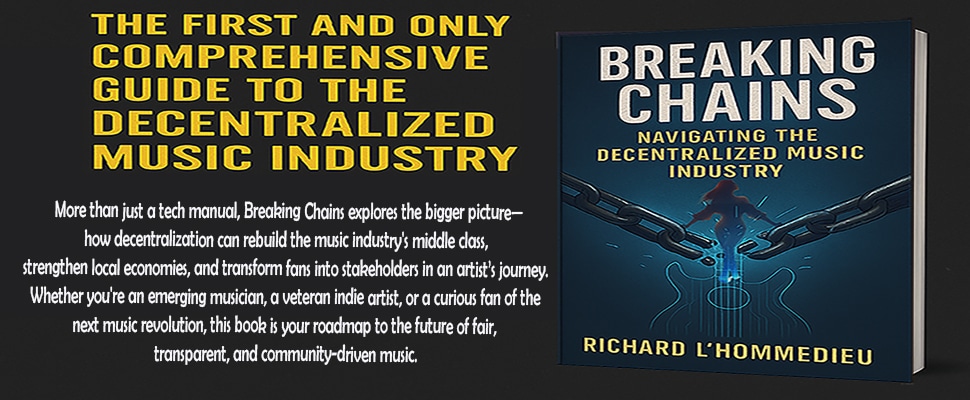
Breaking Chains – Navigating the Decentralized Music Industry
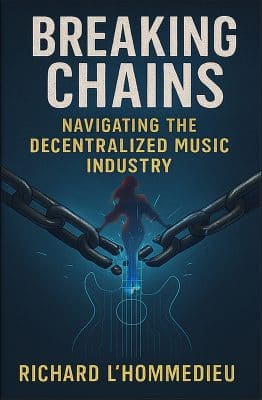
Breaking Chains is a groundbreaking guide for independent musicians ready to take control of their careers in the rapidly evolving world of decentralized music. From blockchain-powered royalties to NFTs, DAOs, and smart contracts, this book breaks down complex Web3 concepts into practical strategies that help artists earn more, connect directly with fans, and retain creative freedom. With real-world examples, platform recommendations, and step-by-step guidance, it empowers musicians to bypass traditional gatekeepers and build sustainable careers on their own terms.
More than just a tech manual, Breaking Chains explores the bigger picture—how decentralization can rebuild the music industry’s middle class, strengthen local economies, and transform fans into stakeholders in an artist’s journey. Whether you’re an emerging musician, a veteran indie artist, or a curious fan of the next music revolution, this book is your roadmap to the future of fair, transparent, and community-driven music.
Get your Limited Edition Signed and Numbered (Only 50 copies Available) Free Shipping Included
Discover more from Making A Scene!
Subscribe to get the latest posts sent to your email.


