
Beyond the Stereo Master: How Loopsmith Opens a New Revenue Door for Independent Musicians




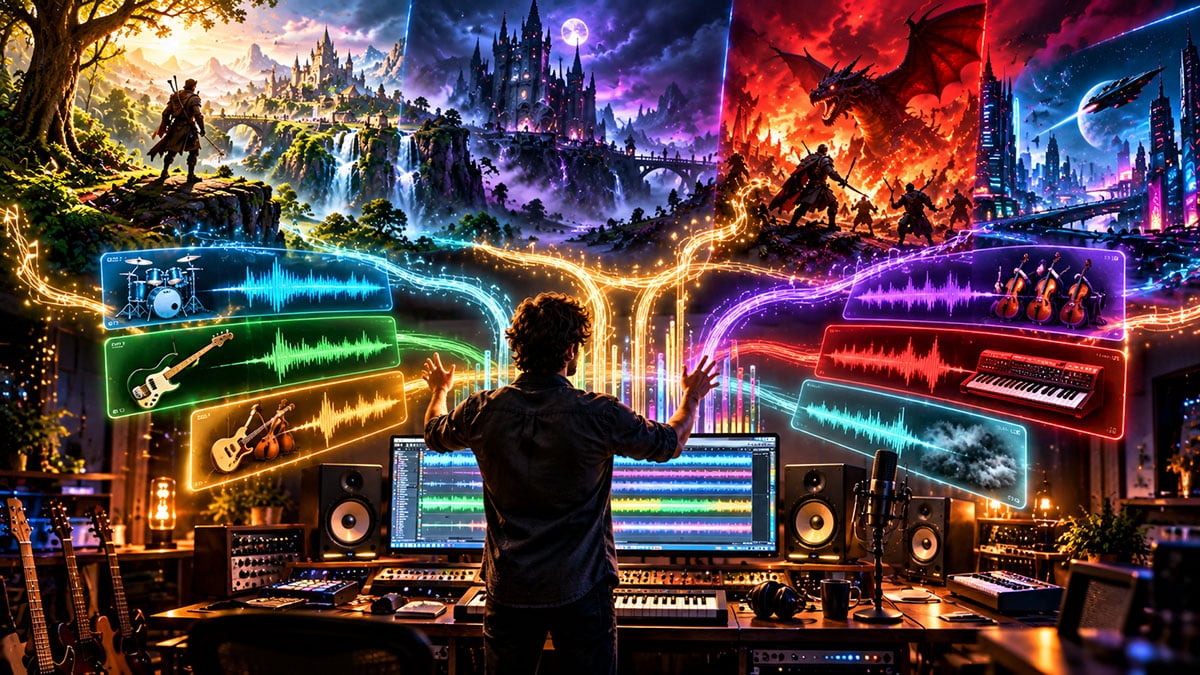
Making a Scene Presents – Beyond the Stereo Master: How Loopsmith Opens a New Revenue Door for Independent Musicians
Video games don’t just need music. They need music that can think on its feet. A new update to Loopsmith is making it easier for independent composers and recording engineers to enter the interactive audio business, turning familiar studio skills into a specialized service that game developers actually need.
Your Next Recording Client Might Not Be a Band
Somewhere out there, an independent musician is sitting in a home studio, staring at a completed instrumental track and wondering what to do with it. The recording sounds great. The guitars are in tune, the drums are punchy, the arrangement has some real emotional movement, and the mix is ready for the world. Unfortunately, the streaming world is already drowning in music, and another three-minute instrumental track is unlikely to make anyone’s mortgage payment disappear.
Meanwhile, somewhere else, an independent video game developer is trying to create the perfect musical atmosphere for a fictional world. Maybe it’s an abandoned space station, a haunted forest, or a medieval village where the local blacksmith seems suspiciously interested in selling enchanted poultry. The developer needs music that makes this imaginary place feel alive, but there is a problem. A conventional recording isn’t designed to respond to what a player does.
The developer doesn’t simply need a song. The developer needs a musical system.
This is where the worlds of recording technology, interactive entertainment, and independent music business begin to overlap. It’s also where a relatively modest piece of software called Loopsmith becomes interesting.
On October 23, 2026, Austin Haynes Music released version 1.21.0 of Loopsmith, a Windows application designed to help composers, sound designers, and game developers create seamless musical loops and prepare adaptive soundtracks. The update improves its connection to popular game development environments, expands testing capabilities, and makes it easier to prepare musical transitions that react to what happens during gameplay.
At first glance, that might seem like another piece of specialist software intended for people who speak fluent computer programming and keep a collection of mysterious game controllers beside their keyboards. But look beyond the technical language and a much more interesting opportunity appears.
Independent musicians already possess many of the skills needed to create professional game music. They understand arrangement, harmony, recording, editing, mixing, tempo, and musical transitions. What they may not understand is how to turn those skills into audio that a game can control in real time.
That missing piece is important because the music business has spent decades teaching independent artists to think about their recordings as finished products. Write the song, record it, mix it, master it, upload it, and hope somebody finds it among the millions of competing releases. The video game industry offers a different possibility: the recording can become the raw material for an interactive experience, and the artist can be paid not only for the music but also for the specialized work required to make it function.
That’s the part of this story that deserves our attention at Making a Scene. We’re not particularly interested in celebrating another software release simply because somebody added new buttons to an interface. We are interested in whether those buttons can help working musicians build a business that doesn’t depend entirely on streaming algorithms, record labels, or the generosity of a digital platform.
Loopsmith provides a useful opportunity to explore that question.
The Difference Between a Song and a Musical World
To understand why interactive audio matters, imagine an ordinary instrumental recording. The introduction lasts fifteen seconds, the main theme plays for a minute, the music builds to a dramatic climax, and everything resolves with a beautiful final chord. When someone presses Play, the recording unfolds exactly as the artist intended.
That fixed arrangement works perfectly well for albums, films, commercials, podcasts, and countless other uses. But video games introduce something traditional recordings aren’t built to handle: the person listening can change what happens next.
Imagine a player walking through a peaceful forest. Gentle acoustic guitar, soft strings, and distant percussion create a relaxed atmosphere. The player might spend thirty seconds exploring or wander around for twenty minutes searching for a treasure chest that was sitting directly behind them the entire time. The music must continue without sounding like a broken record, and it must remain interesting even when the game refuses to move forward.
Now imagine the player encounters an enemy. The peaceful music needs to become more intense, preferably without an awkward interruption that sounds like somebody changed radio stations in the middle of a guitar solo. When the danger disappears, the soundtrack should return to a calmer mood, and ideally the transition should make musical sense.
A traditional recording doesn’t know that the enemy has appeared. It doesn’t know that the player entered a cave, discovered a secret room, or defeated the final boss. It simply plays until the file ends.
An adaptive soundtrack behaves differently. The game can tell the music system that something has changed, and the music responds according to rules established by the composer and audio team.
This doesn’t mean the computer is necessarily composing new music on the spot. In many cases, the musician has already recorded the musical material, prepared alternate arrangements, and created transitions that the game can select when needed.
Think of it as building a collection of musical possibilities instead of delivering one fixed performance. The composer still makes the creative decisions, but the game determines when particular pieces of that arrangement should appear.
For an independent musician, this distinction changes the nature of the product being sold. Instead of delivering a single finished stereo master, the artist may be delivering an entire set of coordinated musical assets, along with the information needed to make those assets work inside the game.
That is a more specialized service, and specialized services can create opportunities to charge for work that goes beyond composing a single cue.
Meet Loopsmith: A Practical Tool Built Around a Familiar Problem

Developer: Austin Haynes Music
Windows application designed for seamless loops, synchronized stems, adaptive arrangements, and game-ready exports.
$79 one-time purchase, as advertised October 26, 2026.
Free demonstration: three tracks, with unlimited exports of those tracks.
Loopsmith was developed by game composer Austin Haynes to address two problems that repeatedly appear when preparing music for games. The first is making recordings repeat smoothly without unwanted clicks, gaps, or abrupt changes. The second is making the music react to events happening inside a game without requiring the composer to build every technical connection from scratch.
Those problems sound simple until somebody hands you a beautiful recording with a long reverb tail and asks you to make it repeat forever without an audible join.
Most musicians have encountered some version of this challenge while editing drum loops, creating sample libraries, or producing electronic music. If the end of a recording doesn’t line up properly with the beginning, the repeated section may produce a click, a sudden change in volume, or an unnatural interruption in the room sound.
Game audio makes the problem more demanding because players may hear the same loop hundreds of times. An editing mistake that seems harmless during a quick studio preview can become an extraordinary annoyance after an hour of gameplay.
Loopsmith attempts to reduce this problem by offering loop detection, manual adjustment, listening tests, and techniques that preserve the natural decay of the recording. It can also prepare audio and supporting setup information for several game engines and interactive audio environments. According to the developer, the software can handle aligned stems, multiple musical sections, alternate performances, short accents known as stingers, and different ways of moving between musical states.
The interesting point is that Loopsmith doesn’t pretend to replace the recording studio. The musician still creates the composition, records the performances, chooses the instruments, and shapes the production. Loopsmith works farther down the production chain, helping prepare those recordings for a particular commercial use.
That places it in a category of software that independent artists should pay more attention to: tools that help turn something they already know how to create into a deliverable that another industry is willing to purchase.
There is also an important pricing correction worth making. Earlier information circulating about the product described a $49 purchase and a demonstration limited to five exports. The official product page checked for this article instead advertises $79 as a one-time purchase, including Loopsmith 1 updates, and a demonstration that allows three tracks with repeated exports. KVR Audio’s current product listing also shows $79. The official website should remain the source for pricing and license details before buying.
That is still a relatively modest entry cost compared with many professional audio tools, especially for a musician who already owns a suitable Windows computer and a capable digital audio workstation. But the real question is not whether the software is affordable. It is whether learning to use it creates a service that somebody wants to pay for.
Why a Perfect Loop Is More Difficult Than It Sounds
Anyone who has edited audio knows that cutting a recording at the wrong point can produce a click. The sudden jump in waveform amplitude creates an unwanted transient, and that transient becomes particularly obvious when a short section repeats over and over.
The usual advice is to cut at a zero crossing or use a short crossfade. That can solve many simple editing problems, but musical loops often contain effects and sustained sounds that require more careful treatment.
Consider a piano chord played inside a large reverberant space. The pianist stops playing, but the sound doesn’t immediately disappear. The instrument continues to resonate, and reflections from the room or artificial reverb continue well after the final note. If the recording is cut at the end of the musical phrase, those reflections can disappear abruptly when the loop starts again.
The listener may not consciously identify the problem as a missing reverb tail. They simply experience an unnatural interruption. In atmospheric game music, where the same passage may repeat for an extended period, that interruption can destroy the illusion of a continuous musical environment.
One solution is to overlap the end of the recording with the beginning of the next repetition. The outgoing sound continues to decay while the new musical phrase begins. Another approach is to fold the tail into the audio so a playback system that supports only a single repeating file can still produce a smoother result.
Loopsmith supports these kinds of workflows and includes checks intended to identify audible problems at the loop boundary. The developer also says it can preserve the actual reverb or instrument decay supplied in the source recording rather than generating an artificial replacement.
For a recording engineer, this is familiar territory. The principles involve editing, timing, signal continuity, dynamics, and careful listening. The difference is that those familiar skills are being used to create an asset that may have to run reliably for hours inside an interactive application.
This is the first place where an independent recording studio could expand its services without completely reinventing itself.
A studio that already provides recording, mixing, mastering, and instrumental production could add seamless game-loop preparation to its offerings. Clients might include game composers who don’t want to handle technical editing themselves, independent developers purchasing production music, or small studios that need help preparing finished soundtrack material.
The engineer would still need to learn the delivery specifications expected by each client, but the underlying work is not fundamentally different from preparing alternate mixes, stems, or edited versions for film and television licensing.
The important business lesson is that the same recording skills can be sold into different markets when the musician understands what those markets need.
The New Loopsmith Update Is Really About Making Music Talk to Games
The most important improvements in Loopsmith 1.21.0 aren’t necessarily the ones a musician would notice first. They’re the features that make it easier for the music and the game to communicate.
According to the October 23 announcement, exports for Unity now include a test scene alongside a ready-made game object. The scene provides controls for testing requests that a game might send to the musical system. Godot receives additional test scenes covering musical sections, random clips, and music associated with different locations.
The update also expands area-music functionality for FMOD Studio and Wwise, improves the way musical stingers can land on the next beat or bar, and adds an initial set-player implementation for GameMaker. Musical sections can communicate timing events such as beats, bars, and loop boundaries in several supported environments. These changes follow version 1.20.0, which added individual stem-volume controls for FMOD and Wwise exports and expanded timing information available to Unreal Engine.
For musicians unfamiliar with game technology, all those product names can make the process sound more intimidating than it needs to be. Unity, Godot, GameMaker, and Unreal Engine are environments used to build games. They handle things like graphics, player movement, interactions, and the logic that makes a game function.
FMOD Studio and Wwise serve a somewhat different purpose. They are audio systems that help developers manage sounds and music within games. They can control what plays, how multiple sounds are mixed, and how audio changes in response to events.
Loosely speaking, a game engine operates the world while an audio system helps manage what that world sounds like. In practice, the division isn’t always that simple because modern game engines also have their own increasingly capable audio tools.
This is where Loopsmith fits. Rather than forcing musicians to learn every detail of several different systems before preparing useful audio, it attempts to automate portions of the technical delivery process.
A composer can create musical sections and transitions, prepare them in Loopsmith, and export supported setups that developers can test or integrate into their projects. The exact capabilities depend on the destination, so an export for Unity won’t necessarily offer every feature available in Wwise or Unreal.
It’s important to understand that Loopsmith doesn’t eliminate the need to test the music inside the actual game. Somebody still has to make sure the game sends the right commands, the musical changes occur when expected, and the playback system works properly on the intended devices.
But reducing repetitive preparation work can make interactive scoring more accessible to a musician who understands audio far better than programming.
That is a meaningful improvement, particularly for small development teams that don’t have a separate audio programmer sitting around waiting for something to do.
Vertical Layering: Making One Recording Behave Like Several Arrangements
One of the central ideas behind adaptive game music is something called vertical layering. The term sounds like it belongs in a particularly unpleasant construction manual, but the musical concept is easy to understand.
Imagine recording an instrumental track with drums, bass, acoustic guitar, electric guitar, synthesizers, and percussion. Instead of delivering only the completed stereo mix, the producer also creates separate, synchronized groups of instruments known as stems.
Each stem begins at the same point and shares the same musical timing. This allows the playback system to combine them in different ways without the instruments drifting out of sync.
During a quiet section of a game, the music might consist of soft synthesizer pads and acoustic guitar. As the player approaches danger, the system gradually introduces bass and percussion. When the action becomes intense, drums and distorted guitars join the arrangement.
The game hasn’t necessarily changed to a different song. It has changed the arrangement of the same musical composition.
That flexibility is especially valuable because the transitions can happen without interrupting the underlying musical flow. The player experiences a natural increase in energy rather than a sudden switch between unrelated recordings.
For a producer who already works with multitrack sessions, creating alternate stems should feel familiar. The trick is understanding how those stems will interact when the game decides which ones should play.
A drum track that sounds excellent in the full mix might feel too aggressive when combined only with a quiet ambient layer. A bass part that depends on a particular guitar rhythm might sound strange when that guitar disappears. A melodic phrase might clash with a sound effect that the game triggers during an important moment.
The composer therefore needs to think about how the music behaves when elements are removed or introduced.
This is where interactive composition becomes an artistic skill rather than merely an editing exercise. The musician is designing arrangements that remain convincing across several possible combinations.
Loopsmith supports aligned stems and can prepare them for compatible playback systems. It also supports stem-specific volume handling in FMOD and Wwise, making it possible to build more flexible arrangements from recorded material.
From a business perspective, vertical layering creates an opportunity to deliver something more substantial than a single finished track. A composer can provide the composition, its synchronized layers, and the supporting arrangements needed to make those layers respond to gameplay.
That additional work has value, provided the client needs it and the fee reflects the time and skill involved.
Horizontal Re-Sequencing: Changing the Music Without Breaking the Mood
Another important technique is horizontal re-sequencing, which allows a game to move between different musical sections or recordings depending on what happens during gameplay.
Imagine a fantasy adventure where the player moves from a peaceful village into an abandoned castle. The village music might feature acoustic instruments, while the castle music uses dark orchestral textures and unsettling electronic sounds.
A basic system could simply stop the village recording and start the castle recording. Technically, that works. Musically, it may sound like someone disconnected the speakers during the middle of a performance.
A more sophisticated approach allows the current phrase to reach an appropriate transition point before introducing the next section. The music might change at the end of a bar, after a short connecting passage, or at another location chosen by the composer.
The result can feel intentional rather than mechanical.
Loopsmith’s support for musical sections, switcher states, and transition information is designed to help prepare these kinds of arrangements. Its section system can accommodate different lengths, tempos, and meters, and the developer describes workflows where a composed bridge connects one musical section to another.
For a musician, the exciting part is that the composition no longer needs to follow a fixed timeline.
A player who spends twenty minutes exploring a castle might hear variations of the same atmosphere for the entire visit. Another player might rush through the castle in two minutes and trigger the next musical section almost immediately.
The composer has to make both experiences feel natural.
That creates some fascinating artistic problems. A conventional film composer generally knows when a dramatic scene begins and ends. A game composer often knows what kinds of events are possible but cannot predict precisely when a player will trigger them.
The music must therefore be flexible enough to accommodate decisions made by someone who might be genuinely exploring the world or simply spending an embarrassing amount of time jumping into walls.
For composers, this demands a different approach to musical storytelling. Themes must be recognizable, transitions must be flexible, and the emotional structure of a composition must survive changes in timing.
These are creative skills that an independent musician can develop, demonstrate, and eventually sell.
Stingers: Those Little Musical Moments That Make Games Feel Big
Every musician has experienced the power of a perfectly placed musical accent. A dramatic drum hit, an orchestral stab, or a sudden brass flourish can turn an ordinary visual moment into something memorable.
In game audio, these short musical events are often called stingers.
Imagine a player discovering a hidden treasure chest. The moment the chest opens, the game plays a short musical flourish that rewards the discovery. The sound might last only a second or two, but it helps communicate that something important has happened.
Now imagine a battle sequence where the player defeats a powerful enemy. A dramatic musical accent can reinforce the victory, even while the main background music continues.
The technical challenge is timing.
If a musical accent is triggered at an arbitrary moment, it can collide with the rhythm or harmony of the background recording. A triumphant brass chord that arrives halfway through an unrelated musical phrase can sound less like victory and more like two marching bands meeting at a traffic intersection.
Loopsmith 1.21.0 expands support for timing stingers to the next beat or bar in compatible playback environments. This allows the game to request an accent while the musical system determines an appropriate rhythmic moment for it to occur.
The musician still needs to compose the accent. The software helps prepare the timing behavior that allows it to become part of an interactive score.
This matters commercially because game projects often require far more than extended background music. They may need short musical confirmations, success cues, discovery moments, location changes, introductions, endings, and transitions between gameplay states.
A composer who understands these requirements can offer a broader musical service.
Instead of quoting only for twenty minutes of finished music, the artist can discuss an interactive package that includes the main compositions, alternate arrangements, transitions, stingers, and the technical preparation necessary to make everything work together.
There is a meaningful difference between supplying background music and helping design the way music supports an interactive experience. That difference should be reflected in the project agreement.
The Recording Studio Already Has Much of What It Needs
One reason this opportunity is attractive is that independent musicians may not need to purchase a completely new studio setup to begin learning interactive music production.
A recording studio with a capable computer, a digital audio workstation, virtual instruments, monitoring equipment, and basic mixing tools already has much of the creative infrastructure needed to compose and prepare game audio.
The additional investment is largely in learning the production methods and delivery standards used by interactive projects.
Most experienced engineers already know how to edit audio without clicks, manage tempo maps, print alternate mixes, organize stems, and prepare deliverables for different clients. Those skills translate naturally into game music preparation, although the technical requirements can be more demanding.
A composer familiar with cinematic arranging may already understand how to build tension, establish atmosphere, develop themes, and create emotional transitions. Those abilities are directly relevant to game scoring.
Even musicians who primarily work in blues, rock, folk, jazz, or electronic music may have useful skills that developers need. Game soundtracks aren’t limited to giant orchestras and science-fiction synthesizers.
A game set in the American South might benefit from authentic acoustic blues, slide guitar, or roots music. A detective adventure might call for smoky jazz arrangements. A racing game may need energetic rock instrumentals, while a small narrative game could rely on restrained acoustic performances.
An independent musician doesn’t have to abandon their musical identity to work in interactive entertainment. In some cases, that identity may be exactly what makes their work attractive.
A guitarist who understands blues phrasing, for example, might produce a soundtrack with character that a generic sample-library arrangement would struggle to match. A drummer who knows how to create tension through rhythm could develop adaptive percussion layers for a game built around action and movement.
The challenge is learning to think beyond the finished mix.
A songwriter accustomed to delivering one master recording must begin considering which parts of the arrangement can repeat, which layers can appear independently, and how the composition should respond when the listener controls the timing.
The good news is that these aren’t completely foreign concepts. Musicians have been arranging different versions of the same song for generations. Interactive game music simply gives those arrangement decisions a new technical purpose.
What a Real Interactive Music Project Might Look Like
Consider a fictional independent developer creating a small adventure game called The Forgotten Lighthouse. The game follows a character exploring an isolated coastal village, investigating strange events, and eventually entering an abandoned lighthouse.
The developer needs an original score, but the budget isn’t large enough to hire a full-time audio department. A musician with a home studio could potentially provide the entire musical package.
The first step would be a discussion about the game itself. How many locations need distinct music? Which scenes change according to player behavior? How long might players spend exploring each environment? Are there battles, puzzles, discoveries, or moments that require short musical accents?
Those questions are important because the amount of music required cannot be estimated simply by looking at the game’s running time.
A film that lasts ninety minutes has a fixed sequence of events. A video game may allow the player to spend an unpredictable amount of time in each location, and the soundtrack must accommodate that freedom.
For the fictional lighthouse project, the composer might create a coastal exploration theme built around acoustic guitar, piano, and atmospheric synthesizers. The musician could then develop a darker arrangement using low strings and subtle percussion for the lighthouse interior.
Rather than producing only two completed recordings, the musician could prepare synchronized stems and additional musical sections. The game could introduce darker elements as the player approaches the lighthouse, then shift into a more intense arrangement when the character discovers something threatening.
A separate musical transition could connect the exploration theme to the danger theme. Short stingers might accompany important discoveries, and an ending cue could provide a satisfying resolution when the player completes the game.
In a traditional production workflow, the composer might deliver a folder full of WAV files and leave the developer to figure out how the music should behave.
A more complete service could include the prepared loops, organized stems, transition assets, and supported engine or middleware exports. The composer might also create a demonstration showing the music responding to simulated gameplay events.
That demonstration is particularly important because it allows the developer to hear the value of the work.
A client may not immediately understand terms such as vertical layering or horizontal re-sequencing. But when a demonstration moves smoothly from peaceful exploration into a dramatic encounter, the result explains itself.
The musician is no longer selling only an attractive soundtrack. The musician is offering an audio experience designed to fit the game.
For a small development team, that difference can reduce the amount of integration work required and improve the final product.
For the musician, it creates room to negotiate compensation based on the full scope of the service rather than treating every project as another conventional song commission.
How Much Could an Independent Musician Charge?
This is where musicians need to resist the temptation to confuse a new technical skill with an automatic income stream.
Buying Loopsmith doesn’t mean game developers will suddenly appear at your studio door carrying bags of money. It means you may be better equipped to offer a service that some developers need. Finding those developers, understanding their budgets, proving your capabilities, and negotiating reasonable terms remain separate parts of the business.
Pricing interactive music work is complicated because projects vary enormously in scope. A developer who needs three simple looping tracks has very different requirements from a team building a large adaptive soundtrack with multiple environments, synchronized stems, and extensive musical transitions.
It is also important to distinguish composition fees from technical preparation fees. Creating an original score requires creative development, revisions, recording, production, and mixing. Preparing that score for an interactive environment involves additional editing, organization, testing, and possible integration support.
Those activities can be priced together as a package or separated in the agreement so both parties understand what is included.
Consider a purely illustrative proposal for a small independent game. A musician might quote $1,200 for original compositions and production, another $400 for interactive arrangements and loop preparation, and $300 for integration support and testing. That produces a hypothetical $1,900 project before expenses and taxes.
These figures are not verified market rates or evidence of what Loopsmith users actually earn. They’re simply an example of how an artist could separate creative work from technical services instead of quietly absorbing additional labor into the original composition fee.
The actual quote should reflect the musician’s experience, the hours required, the number of revisions, the client’s budget, the complexity of the deliverables, and the rights being licensed.
This becomes particularly important when a client asks for music to be delivered in multiple forms. A conventional soundtrack might require a stereo master, while an adaptive soundtrack could require numerous stems, transitions, musical sections, and carefully prepared endings. The resulting delivery package may take considerably more time to create and verify.
A well-written agreement should address those requirements before production begins. Otherwise, a project that initially looks like three finished compositions can gradually become three compositions, twelve stems, eight transitions, six stingers, several rounds of revisions, and a late-night troubleshooting session because a developer changed the gameplay logic two days before release.
That isn’t a business model. It’s an unpaid internship with better headphones.
The Most Important Part of the Contract Is Who Owns the Music
At Making a Scene, we believe independent artists should build businesses around assets they own and control. Interactive game composition fits that philosophy, but only when the contracts are structured carefully.
A game developer may want exclusive rights to the soundtrack because the music is part of the game’s identity. That request isn’t automatically unreasonable. A distinctive musical theme can become closely associated with a game, and the developer may need assurance that it won’t appear in a competing project.
However, exclusivity and copyright ownership aren’t necessarily the same thing.
An artist who owns the composition and recording may be able to grant a license allowing the developer to use the music in the game while retaining underlying ownership. Depending on the agreement, the license can define the permitted platforms, territory, duration, exclusivity, and uses in trailers, advertising, promotional material, and future releases.
The developer gets the rights needed for the project, while the artist retains whatever rights haven’t been licensed away.
Another arrangement might involve a complete copyright assignment or a legally valid work-made-for-hire agreement. These can transfer significant control away from the composer, and their consequences should be understood before signing. Whether commissioned music qualifies as a work made for hire depends on the circumstances and applicable law; simply placing the phrase in a contract doesn’t make every commissioned recording qualify.
That distinction matters because a game soundtrack may develop value outside the game itself.
The music could potentially be released as a standalone soundtrack, performed live, licensed for other productions, or used in promotional content. Whether those opportunities remain available depends on the contract, ownership of the composition and master, and any third-party rights involved.
The agreement should also clarify what happens to synchronized stems, editable project files, interactive arrangements, and other deliverables. A developer may legitimately need certain source assets to maintain the game, but providing those assets doesn’t have to mean surrendering every possible use of the underlying music.
There is also the question of future work. If the developer produces downloadable content, a sequel, a remaster, or a version for additional platforms, the original agreement should make clear whether those uses are already covered or require new permission and compensation.
For a composer building a long-term business, these details are more important than the novelty of the software used to create the soundtrack.
The goal should be a fair arrangement that allows the developer to commercialize the game while making sure the musician is paid appropriately for the creative work, technical preparation, and rights granted.
A qualified entertainment attorney can be worth the expense when the agreement involves substantial exclusivity, ownership transfers, or future commercial uses.
Game Soundtracks Can Create More Than One Revenue Stream
The opportunity becomes even more interesting when musicians begin thinking about game audio as one part of a larger independent music business.
A composer may receive an upfront fee to create music for a game. Depending on the agreement, the same music might also support a soundtrack release, a physical collector’s edition, licensed merchandise, or future live performances.
A successful soundtrack can introduce listeners to an artist they might never have discovered through traditional music platforms. A player who spends many hours inside a game may develop a strong emotional connection to its music because that music becomes associated with moments they personally experienced.
The composer can potentially turn that interest into a direct relationship with listeners.
Imagine a player finishing The Forgotten Lighthouse and discovering that the musician responsible for the score also maintains an artist website. The player visits the site to hear the soundtrack, learns about the artist’s other recordings, and decides to purchase an expanded album containing alternate arrangements and unused compositions.
The musician has gained something more valuable than a passive streaming listener. The artist has an opportunity to build a direct relationship with a person who genuinely cares about the music.
That relationship can support future soundtrack releases, concerts, commissions, memberships, or other products, provided the game licensing agreement permits those uses.
The important word is direct. If the artist can invite listeners to join a permission-based mailing list or fan community, the relationship doesn’t have to remain trapped inside a game marketplace or streaming service.
This doesn’t mean a game developer should hand over private player information to the composer. Any fan connection should be based on voluntary participation and appropriate privacy practices. A soundtrack credit, artist website link, or approved promotional collaboration can provide a straightforward way for interested players to discover the musician.
For independent artists, that is a much healthier approach than treating every commercial use of their work as a transaction that begins and ends with a single payment.
Where AI Fits Into Interactive Music Production
Artificial intelligence is beginning to change how musicians and developers approach complex production workflows, and Loopsmith offers an interesting example of how AI can support technical work without necessarily replacing the person creating the music.
The developer’s current documentation describes support for AI-enabled development applications using the Model Context Protocol, or MCP. This allows compatible tools to interact with Loopsmith on the user’s computer and assist with export and integration workflows.
The Loopsmith documentation specifically mentions tools such as Claude, Codex, and Cursor in the context of compatible applications that can help connect prepared music to game projects.
The important distinction is that this feature concerns workflow automation and software integration. It doesn’t establish that Loopsmith generates original compositions or replaces musicians with AI-produced soundtracks.
In practical terms, a composer might use AI-assisted programming tools to help connect musical states to events in a game. The musician prepares the recordings and decides how the music should behave, while software assists with the technical instructions needed to make those decisions work inside the application.
That is a much more useful model for working musicians than another promise that artificial intelligence will produce an endless stream of supposedly professional music at the touch of a button.
There are still risks. AI-generated code can contain mistakes, and an incorrect integration can produce timing problems, missing audio, or unpredictable behavior. A game that works correctly during a brief desktop test may behave differently when compiled for another device.
AI assistance should therefore be treated as a productivity tool, not as proof that a project has been tested.
For an independent composer who isn’t a programmer, however, carefully supervised AI assistance may reduce some of the technical barriers to offering interactive music services.
The economic advantage is not that AI eliminates the musician’s creative work. It is that the musician may spend less time wrestling with repetitive setup tasks and more time delivering a better project.
Understanding the Competition: FMOD, Wwise, and Unreal
Loopsmith isn’t the only way to prepare interactive music, and independent artists should understand what it does in relation to the larger audio production ecosystem.
FMOD Studio is a dedicated environment for creating interactive audio systems. It allows developers to build events, work with musical transitions, organize mixing behavior, and connect audio to gameplay. A skilled FMOD user can create sophisticated adaptive soundtracks directly inside the software.
Wwise offers another established environment for interactive audio, with tools for controlling music, sound effects, mixing, and playback behavior. Both systems are used to help audio designers bridge the gap between finished recordings and game behavior.
Unreal Engine includes its own interactive audio capabilities, including MetaSounds, a node-based system for designing audio behavior and connecting sound to events in the game world. Epic Games describes MetaSounds as supporting dynamic audio generation and sample-accurate control.
Loopsmith occupies a different position. It focuses on preparing recorded musical assets and generating or transferring supported playback setups, potentially reducing the manual work required to build those arrangements.
That distinction is useful for a musician choosing what to learn.
A composer who intends to work deeply inside large game projects may eventually need substantial experience with FMOD, Wwise, Unreal, or another game audio environment. An artist who primarily wants to offer seamless loops, adaptive arrangements, and game-ready deliverables may benefit from starting with a more focused preparation tool.
There is no reason these approaches have to compete. A musician can use Loopsmith to prepare material while continuing to learn the systems into which that material will be delivered.
The costs and licensing arrangements of those systems also deserve attention.
According to FMOD’s published licensing information, qualifying commercial games with development budgets under $600,000 and developers earning less than $200,000 in annual revenue or funding may use its free Indie license. Other projects can require paid licensing. Wwise also advertises a free Indie tier for qualifying projects, with eligibility and licensing terms determined by the project’s circumstances.
These costs generally concern the software’s use within the developer’s project, not simply the act of composing music. Nevertheless, composers offering integration services should establish who is responsible for licensing, registration, and technical compliance.
The last thing a small studio needs is an unexpected software licensing dispute because everyone assumed someone else had handled the paperwork.
Why Testing Matters More Than Another Shiny Plugin
One of the most practical aspects of the Loopsmith update is the attention given to testing.
Game audio is unusual because the musician cannot always predict when a musical event will happen. A transition might be triggered at almost any point during playback, and the system needs to respond without audible problems.
That means a composition can sound beautiful when played straight through while still failing as an interactive soundtrack.
A transition might occur too early, leaving an unfinished musical phrase. A percussion layer might enter out of time. A loop could produce an abrupt change in volume, or an ending might play twice because of an unexpected game event.
Some of these problems aren’t obvious until the music is placed inside a working interactive system.
The new test scenes for Unity and Godot are intended to make it easier to simulate the requests a game might send to the soundtrack. By allowing users to trigger musical changes and inspect their behavior, the composer can identify problems before the finished files are delivered.
For a professional service provider, that capability has value because clients aren’t simply buying files. They’re buying the expectation that those files will behave properly.
A studio that consistently delivers well-organized, tested assets can develop a reputation for reliability. In a field where technical surprises can delay development, reliability can be a genuine competitive advantage.
Of course, testing in Loopsmith isn’t a substitute for testing inside the final game. The actual integration, gameplay logic, target hardware, and audio settings can all affect the result.
But catching problems during preparation is better than discovering them during a frantic release-week troubleshooting session when everyone involved has stopped sleeping and started blaming the sound engineer.
Building a Game Audio Portfolio Without Waiting for Permission
For an independent musician interested in this field, the smartest first investment may be time rather than money.
Before purchasing additional tools or announcing a new game-audio production company, an artist can begin by exploring existing instrumental recordings. A composition with a clear tempo, recognizable musical sections, and separate instrument tracks provides a useful starting point.
The musician can experiment with building a seamless loop from one section, then create an alternate arrangement that uses fewer instruments. A more intense arrangement can be developed from the same musical material, followed by a short transition connecting the two versions.
The result can become a small interactive demonstration. Instead of presenting a developer with a conventional audio player, the musician can show how the composition changes between exploration, tension, and action.
This is also where Loopsmith’s free demonstration becomes useful. Its three-track allowance makes it possible to explore the software’s workflow and evaluate whether the exports meet a particular need before purchasing a license.
The next step is learning enough about a game engine or audio environment to understand what developers expect. Nobody needs to become an expert programmer overnight, but a musician who can communicate intelligently about musical states, timing, stems, and playback requirements will have an advantage over someone who simply sends WAV files and hopes for the best.
Finding actual clients requires a different kind of effort.
Independent game developers gather around project communities, development events, game jams, and specialized online platforms. itch.io is one place where independent games and development communities are represented, while the Global Game Jam provides opportunities for collaborative development and learning.
A musician can also use professional networks and direct outreach to connect with developers whose projects would benefit from a particular musical style. The strongest pitch isn’t a generic message announcing that the artist makes music for games. It is a relevant demonstration showing how that artist’s work could improve a specific kind of interactive experience.
A blues guitarist might create an adaptive soundtrack demonstration for a fictional mystery game set in the Mississippi Delta. An electronic musician could build a synchronized, layered score for a futuristic racing game. A jazz composer might create evolving atmospheric arrangements for a detective adventure.
These projects don’t have to be commercially released games. They can be portfolio demonstrations that prove the musician understands the special requirements of interactive music.
The goal is to demonstrate a service rather than simply claim expertise.
A developer who hears an ordinary instrumental recording may appreciate the composition. A developer who sees that same recording respond smoothly to gameplay events can begin imagining how it might function inside a project.
That’s when a creative portfolio becomes a business development tool.
The Hidden Costs That Musicians Shouldn’t Ignore
Although Loopsmith’s advertised $79 one-time price is relatively accessible, the actual cost of entering the interactive music market includes more than software.
The first expense is learning. Preparing professional adaptive audio requires understanding musical structure, technical playback behavior, file organization, and at least some of the production workflow used by developers.
The second expense is testing. Musicians may need to install development environments, learn basic integration procedures, and spend time verifying how their audio behaves under different conditions.
The third expense is project management. Game development schedules can change, and music often needs to be adjusted when levels, gameplay mechanics, or narrative sequences are revised.
A developer might ask for additional musical intensity states, shorter transitions, or changes to instrumentation after hearing the soundtrack in context. Unless the original agreement clearly defines revisions and additional work, these requests can consume hours that weren’t included in the original estimate.
There is also the question of software compatibility. Loopsmith is currently Windows-only, and musicians using macOS will need to consider that limitation. The developer lists tested integrations with Unity 6, Godot 4.7, Unreal Engine 5.8, FMOD Studio 2.03, Wwise 2025.1, and GameMaker LTS 2026, while explaining that other versions may work but aren’t necessarily verified.
That means a musician should confirm the destination software and version before committing to a particular delivery workflow.
It is also worth remembering that a one-time purchase doesn’t guarantee updates forever. The developer currently advertises updates within the Loopsmith 1 series, not necessarily every future major version.
And while the official description provides extensive information about the application’s capabilities, this article is not a hands-on performance benchmark. We have verified the advertised features and release details, but we haven’t independently tested every export pathway or measured how much production time Loopsmith saves.
That distinction matters because musicians deserve practical information rather than another round of software marketing dressed up as independent journalism.
A Smarter Role for the Making a Scene Artist Ecosystem
The opportunity represented by interactive game audio connects naturally to a larger idea we have been developing at Making a Scene: independent artists should treat their recordings as reusable business assets rather than disposable files uploaded to a streaming platform.
A song can exist as a stereo master, an instrumental, a collection of stems, an alternate arrangement, a synchronization license, or a set of interactive game assets. Those are different commercial uses built from the same underlying creative work.
The Making a Scene Artist Ecosystem is being developed around the idea that the artist should maintain an authoritative record of their music, rights, collaborators, business relationships, and revenue opportunities.
Interactive game audio suggests another useful direction for that system.
Imagine an independent composer who finishes an instrumental composition and registers it in their Artist Source of Truth. That record contains the authoritative title, writers, publishers, master ownership, recording details, and other relevant metadata.
The artist then prepares several game-ready versions. Instead of treating those versions as unrelated recordings, the system could link them to the underlying composition and master while recording their individual purposes.
An exploration loop might be associated with a battle arrangement, several synchronized stems, a short victory stinger, and an ending cue. All of those assets would connect back to the original work and its rights information.
This would make it easier to understand which assets were created, which versions have been delivered, and which licenses govern their use.
The next logical step would be connecting those assets to a licensing workflow. The artist could maintain records of game developers, project inquiries, approved uses, delivery requirements, contractual terms, and payments.
A future interactive-audio export profile could help musicians organize their technical deliverables according to the needs of particular game engines or audio systems. It could also preserve validation results, version histories, and delivery notes, reducing the possibility of sending the wrong file when a client requests revisions.
For the existing Sync Asset Factory concept, interactive game music represents a logical extension. The system already recognizes that one completed master can generate different commercial deliverables. Game audio introduces longer-running loops, alternate musical states, synchronized stems, and transition cues that serve a different licensing market.
These would be potential future capabilities, not claims that the Artist Ecosystem already provides a fully integrated Loopsmith workflow.
Just as importantly, the system shouldn’t need to recreate everything Loopsmith does. The better approach may be to support the business workflow around established production tools while allowing musicians to choose the technical software that fits their projects.
That means keeping the music, rights information, client relationships, and commercial history under the artist’s control while allowing specialized applications to perform specialized production tasks.
Artificial intelligence could help with organization, metadata validation, delivery checklists, contract preparation, and understanding client specifications. Used properly, these tools could make a small independent studio behave more like a well-organized commercial production company without requiring the artist to hire a separate administrative staff.
There is real business potential in that approach because it reduces the friction between creating music and getting paid for its commercial use.
The Bigger Opportunity Isn’t Selling More Songs
There is a tendency in the modern music business to judge almost every new technology by asking whether it will help an artist generate more streams.
That is understandable because streaming dominates so much of the conversation around recorded music. Unfortunately, it can also create a remarkably narrow picture of what a musician’s work is worth.
A recording doesn’t have to become a streaming hit to generate commercial value.
Music can support games, films, advertisements, podcasts, live events, educational products, physical media, digital experiences, and countless other applications. Each of those uses has different technical requirements, licensing considerations, and revenue possibilities.
Interactive game music is particularly interesting because it rewards a combination of creative talent and technical understanding.
A good composer can create memorable themes. A good producer can build arrangements that sound convincing across multiple instrument combinations. A good recording engineer can prepare those arrangements so they work reliably in different playback conditions.
The musician who combines those capabilities can offer something more valuable than a folder of finished recordings.
That doesn’t mean every artist should immediately abandon traditional songwriting to chase game development contracts. Musicians should pursue markets that suit their skills, interests, and available time.
But for independent instrumental composers, producers, and recording engineers, game audio represents a legitimate area worth investigating.
Tools like Loopsmith may lower some of the technical barriers to entering that market. They don’t eliminate the need to learn the craft, find customers, or negotiate fair contracts, but they can make the process of preparing specialized deliverables more approachable.
The strongest business opportunities often emerge when someone recognizes that an existing skill can solve a problem in another industry.
For independent musicians, that realization can be worth far more than another promise of effortless streaming success.
Making a Scene Assessment: Sell the Skill, License the Music, Keep the Relationship
The significance of Loopsmith 1.21.0 isn’t that it suddenly makes every bedroom producer a professional video game composer. Software can’t replace the musical judgment required to create a compelling soundtrack, and automation can’t guarantee that a developer will hire you.
Its value lies in helping musicians prepare recordings for a type of commercial application that demands more than a conventional stereo master.
The October update improves practical integration and testing workflows, particularly for composers working with popular game development environments. Those improvements can help bridge the gap between creating music in a familiar recording studio and delivering assets that function inside an interactive game.
For the independent artist, the commercial opportunity extends beyond the software itself.
A musician who learns how to produce seamless loops, synchronized stems, adaptive arrangements, and musical transitions can develop a specialized service for game developers. That service may lead to original composition commissions, technical preparation work, integration support, and licensing opportunities.
If the musician manages the contracts carefully, the underlying music may also remain an asset that can support future releases and other commercial uses.
This is precisely the kind of opportunity that deserves attention when we talk about building a music industry middle class.
Working musicians shouldn’t have to become famous before their knowledge and creative work can support a sustainable business. They should be able to develop useful skills, find clients who need those skills, charge fairly for their time, and build lasting value from the music they create.
The real promise of interactive audio isn’t that every game soundtrack will become a hit. It is that a musician can develop another professional service, serve another kind of customer, and create another potential source of income without surrendering control of everything they’ve recorded.
For the independent composer staring at that finished instrumental track, the next opportunity might not involve uploading the song to another streaming platform.
It might involve opening the original multitrack session, preparing a few carefully designed musical variations, and discovering that a recording they thought was finished has an entirely new commercial life ahead of it.
And considering how many musicians already own the equipment and possess the skills to begin exploring this field, that seems like a considerably more productive use of studio time than spending another afternoon trying to persuade an algorithm that their music deserves to be heard.
Subscribe to Our Newsletter
Discover more from Making A Scene!
Subscribe to get the latest posts sent to your email.


