

Fixing Weak Performances Without Re-Recording: Ethical AI Editing




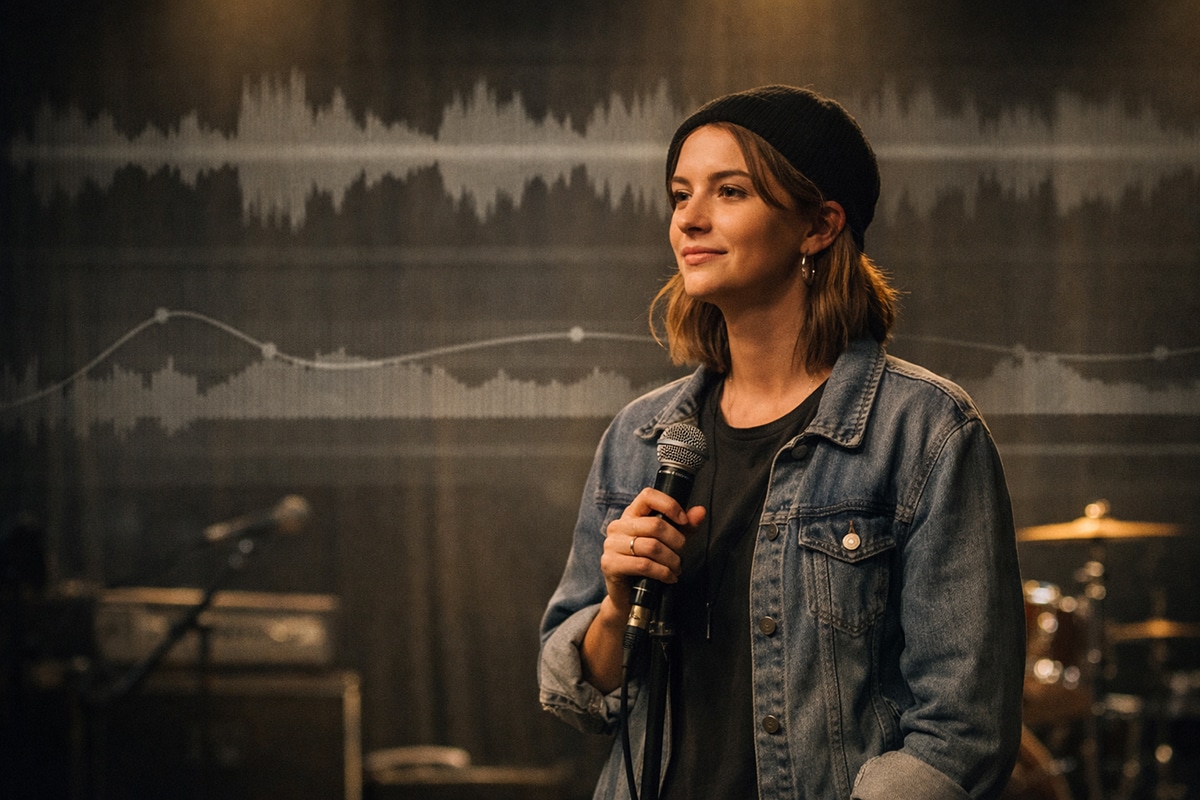
Making a Scene Presents – Fixing Weak Performances Without Re-Recording: Ethical AI Editing
Listen to the podcast Discussion to gain more insight in using AI Editing Ethically
There is a quiet fear that sits in the back of a lot of recording sessions. It shows up right after the take feels emotionally right, but technically messy. The singer rushed a line. The guitar player dug in too hard on the chorus. The drummer pushed the fill just enough to make the groove wobble. Everyone in the room knows the truth: the performance means something, but it is not quite holding together.
For decades, the answer was simple and brutal. Do it again. And again. And again. Until the life drained out of it, or the clock ran out, or the artist walked away frustrated, convinced they just “didn’t have it today.”
AI-assisted editing has changed that moment forever. But it has also created a new problem. When does fixing become faking? When does help become replacement? And how do independent artists use these tools to protect real performances instead of erasing them? This is not about perfection. It is about respect. Respect for the human moment that happened in the room, respect for the listener, and respect for the artist’s long-term independence. Ethical AI editing is not a shortcut. It is a craft. And when used correctly, it can turn fragile, emotional takes into release-ready recordings without betraying the performance that made them worth saving in the first place.
The Real Problem With Weak Performances Isn’t Skill
Most “weak” performances are not bad performances. They are human performances recorded under pressure. Home studios remove some stress, but they add new ones. Artists are often recording themselves, acting as performer, engineer, and producer all at once. Fatigue sets in. Objectivity disappears. Muscles tighten. Timing slips.
In traditional studio culture, weak moments were treated like failures. In reality, they are information. A rushed lyric often means excitement or nerves. An uneven vocal level often means emotional emphasis. A tempo drift often means the song is breathing instead of marching.
The goal of ethical AI editing is not to iron these things flat. It is to shape them just enough that the listener hears intention instead of distraction. When listeners stop noticing the mistakes, they start feeling the song.
That distinction matters, especially for independent artists whose income depends on trust. Fans support artists they believe in. They buy merch, tickets, direct downloads, and memberships because the music feels honest. If AI editing turns performances into plastic, that trust erodes. But when AI protects emotional truth while improving clarity, it strengthens the artist–fan relationship and supports real revenue.
Editing Has Always Been Ethical—The Tools Just Changed
There is a myth that ethical questions only appeared when AI entered the studio. That is not true. Engineers have been editing performances since the first tape splice. Comping vocals, tightening drum hits, riding faders, compressing dynamics—none of this was ever considered cheating. It was considered production.
What AI changes is scale and speed. Tasks that once took hours of careful listening can now happen in minutes. That makes intention more important than ever. When tools are powerful, restraint becomes the skill. The ethical line has never been about whether editing happens. It has always been about whether the edit still represents something the artist could plausibly perform. Ethical AI editing preserves the identity of the performance. Unethical editing replaces it with a simulation.
Timing Correction That Respects Feel
Timing is the most emotionally sensitive part of a performance. Micro-timing is where groove lives. Push and pull are not mistakes; they are style. The danger of AI timing correction is that it can remove that style in seconds.
Ethical timing correction starts with listening, not clicking.
When AI-assisted tools analyze timing, they are not making artistic decisions. They are measuring deviation from a grid or reference. The engineer’s job is to decide what not to fix. A slightly late vocal phrase that leans into the chorus might be the hook. A guitar strum that drags just before the lyric lands might be tension doing its job.
Tools like Celemony Melodyne or Synchro Arts VocAlign allow you to nudge timing without snapping it to perfection. The ethical move is to correct only what distracts the ear. Fix the note that pulls the listener out of the song. Leave the timing that pulls them in. For independent artists, this matters economically. A performance that feels human connects better on streaming platforms, but it connects even more in direct-to-fan spaces. When a fan buys a live ticket or a limited edition release, they are buying belief. Timing that breathes builds belief.
Vocal Leveling Without Killing Emotion
One of the most common problems in home recordings is uneven vocal dynamics. The singer leans in on intimate lines and backs off on powerful ones. In the room, it feels right. On playback, words disappear and others jump out. Old-school solutions required heavy compression, automation, or endless retakes. Over-compression flattened emotion. Automation took time many indie artists simply did not have.
AI-assisted vocal leveling changes that workflow dramatically. Tools can analyze loudness phrase by phrase and apply subtle gain changes that feel like a skilled engineer riding the fader in real time. The ethical line here is subtle. Vocal leveling should not equalize emotion. A whisper should still feel smaller than a shout. Ethical leveling reduces unintended volume changes while preserving intentional ones.
When used correctly, AI leveling protects the singer’s expression. When abused, it turns vocals into static, lifeless objects. From a business standpoint, this kind of clarity directly affects revenue. Clear vocals translate better across phones, cars, earbuds, and cheap speakers. That means fewer skipped songs, stronger fan engagement, and better conversion when listeners are asked to support directly.
Dynamic Shaping as Translation, Not Control
Dynamics are not about loudness. They are about storytelling. A chorus that hits harder matters because the verse held back. A bridge that drops in intensity matters because it creates contrast. AI-assisted dynamic shaping can help manage peaks and valleys without crushing them. Smart compressors and adaptive dynamics tools respond differently to different parts of the performance, reacting more like a human engineer than a static machine.
The ethical question is not whether dynamics should be shaped. It is whether they are being reshaped to fit the song or to fit an algorithm. When dynamic processing is used to meet platform loudness targets while preserving internal contrast, it serves the artist. When it is used to make everything loud all the time, it serves no one. Ethical AI dynamics keep the emotional arc intact while ensuring the recording translates across systems. That balance is especially important for indie artists releasing music independently, where a bad master can quietly kill momentum.
The Slippery Slope: Where Ethics Break Down
There is a clear moment where editing stops being supportive and starts becoming deceptive. AI can now do more than clean up a performance. It can generate parts that never existed, lock timing so tightly that human feel disappears, synthesize vocals that the singer never sang, and correct pitch so aggressively that the original voice is no longer recognizable. That is where the ethical line is crossed. When the finished recording no longer reflects a performance the artist actually gave, the recording stops being documentation and starts being fabrication. If a singer could not reasonably recreate that vocal on stage, something fundamental has gone wrong.
This is not just a philosophical concern about “art versus technology.” It is a practical, real-world problem that affects careers. Fans are more perceptive than the industry often gives them credit for. Even if they cannot name the tool being used, they can feel when something is overly polished, unnaturally perfect, or emotionally disconnected. As AI becomes more common, listeners will get better—not worse—at hearing when it has been pushed too far. Over time, overused AI processing will develop a recognizable sound, just like over-tuned vocals and crushed dynamics did in earlier eras. And when that happens, audiences will start rejecting it.
Live shows make this gap impossible to hide. A recording that promises perfection but delivers something radically different on stage creates disappointment, even if the live performance is solid. That disconnect quietly damages trust. And trust, especially for independent artists building sustainable careers, is not a soft value—it is currency. It is what turns listeners into ticket buyers, merch supporters, members, and long-term fans. Ethical AI editing protects that currency by keeping recordings honest and believable. Unethical editing spends it recklessly, trading short-term polish for long-term credibility.
In the end, the risk is not that AI will ruin music. The risk is that artists will use it to erase themselves. The artists who last will be the ones who use AI to support real performances, not replace them—because audiences will always choose connection over perfection, even when they can’t quite explain why.
AI as a Performance Safety Net, Not a Crutch
The healthiest way to think about AI editing is as a safety net, not a replacement for skill or effort. It exists to catch small slips so the artist can stay focused on expression instead of fear. Instead of stopping a session every time a note is rushed or a phrase lands unevenly, AI-assisted tools allow the creative momentum to continue. Sessions can end with confidence and satisfaction instead of fatigue and self-doubt, which matters more than most people realize.
When artists know they do not need absolute perfection in every take, something powerful happens. They relax. They take risks. They sing or play into the emotion of the song instead of constantly monitoring themselves for mistakes. That freedom almost always leads to stronger, more honest performances. And ironically, those performances often need less editing, not more, because the musical intent is clearer from the start.
This creates a healthy feedback loop. AI editing supports the performance, which reduces pressure, which improves the performance, which reduces the need for heavy editing. In this way, ethical AI editing does not replace musicianship or discipline. It actively encourages both by removing fear from the process and putting focus back where it belongs—on feel, communication, and connection.
Why This Matters for Indie Artist Independence
Independent artists do not have infinite studio budgets, endless time, or teams of editors refining every take behind the scenes. Most are writing, performing, recording, editing, and releasing their own music—often in the same room. AI-assisted editing changes that reality by giving independent artists access to a level of production polish that was once locked behind expensive studios and large support staffs. That access is powerful. But access without a guiding philosophy can be dangerous.
The goal of using AI is not to sound like everyone else on the playlist. It is not to chase whatever texture or vocal sheen happens to be trending this month. The real goal is much simpler and much harder: to sound like yourself, clearly. AI should remove friction between the artist and the listener, not overwrite identity in the name of perfection. When AI editing becomes about conformity instead of clarity, the artist disappears.
Used ethically, AI editing becomes a force multiplier instead of a compromise. It allows artists to finish songs and release music faster without sacrificing honesty or emotional truth. Faster releases create more moments of connection with fans. More moments of connection build familiarity and trust. And trust is what turns casual listeners into people who show up—at shows, at the merch table, inside membership communities, in licensing conversations, and through direct sales.
This is not about chasing trends or gaming algorithms. It is about building a sustainable creative practice where the music supports the artist’s life instead of draining it. Ethical AI editing helps close the gap between inspiration and income, allowing art and livelihood to grow together rather than compete.
Drawing Your Own Ethical Line
Every artist and producer has to decide where their line is, because ethical AI editing is not a single rule you follow—it is a mindset you carry into every decision. No tool can define that line for you. Only intention can. The same piece of software can either protect a performance or quietly erase it, depending on how and why it is used.
The best way to stay grounded is to ask a few simple, honest questions while you work. Does this edit clarify the performance, or does it replace something the artist actually did? Does it help the listener feel the song more deeply, or does it just remove imperfection for the sake of polish? Most importantly, could I stand behind this recording on stage without feeling like I am apologizing for it?
When the answers to those questions feel honest—when the recording still feels like a truthful extension of the artist rather than a manufactured version—you are almost certainly on the right side of the line. That line is not about technology at all. It is about integrity, and integrity is what listeners ultimately hear, even if they cannot explain it in technical terms.
The Future Is Not Perfect—It Is Intentional
AI will continue to get better, faster, and more convincing. Editing will keep getting easier, cheaper, and more automated. But the real danger is not that music will suddenly become fake. The real danger is that artists will forget why people listen in the first place. Listeners do not show up for perfection. They do not build emotional attachments to flawless timing or mathematically perfect pitch. They connect to intention, vulnerability, and a recognizable human voice trying to communicate something real.
That is exactly what ethical AI editing is meant to protect. Used wisely, it acts as a quiet support system, preserving the emotional core of a performance while removing distractions that get in the way of connection. It allows independent artists to compete sonically with major releases without sanding down their identity or smoothing away the rough edges that make them unique. It helps the music translate without changing what the music is.
Used recklessly, however, AI editing turns songs into interchangeable content—optimized, efficient, and emotionally disposable. In that world, tracks may perform briefly, but they do not last. They do not build loyalty. They do not invite listeners into a relationship. The distinction is not subtle, and audiences will increasingly feel it as AI-heavy production becomes more common.
Ultimately, the choice artists face is not about which tools they use. It is about the values they carry into the studio. For artists building careers based on ownership, trust, and direct support from their fans, those values are not optional. They are the foundation. Without them, no amount of technology can create a sustainable career.
 |  Spotify |  Deezer |  Breaker |
 Pocket Cast |  Radio Public |  Stitcher |  TuneIn |
 IHeart Radio |  Mixcloud |  PlayerFM |  Amazon |
 Jiosaavn |  Gaana |  Vurbl |  Audius |
 Reason.Fm | |||
Find our Podcasts on these outlets
Subscribe to Our Newsletter
Discover more from Making A Scene!
Subscribe to get the latest posts sent to your email.


