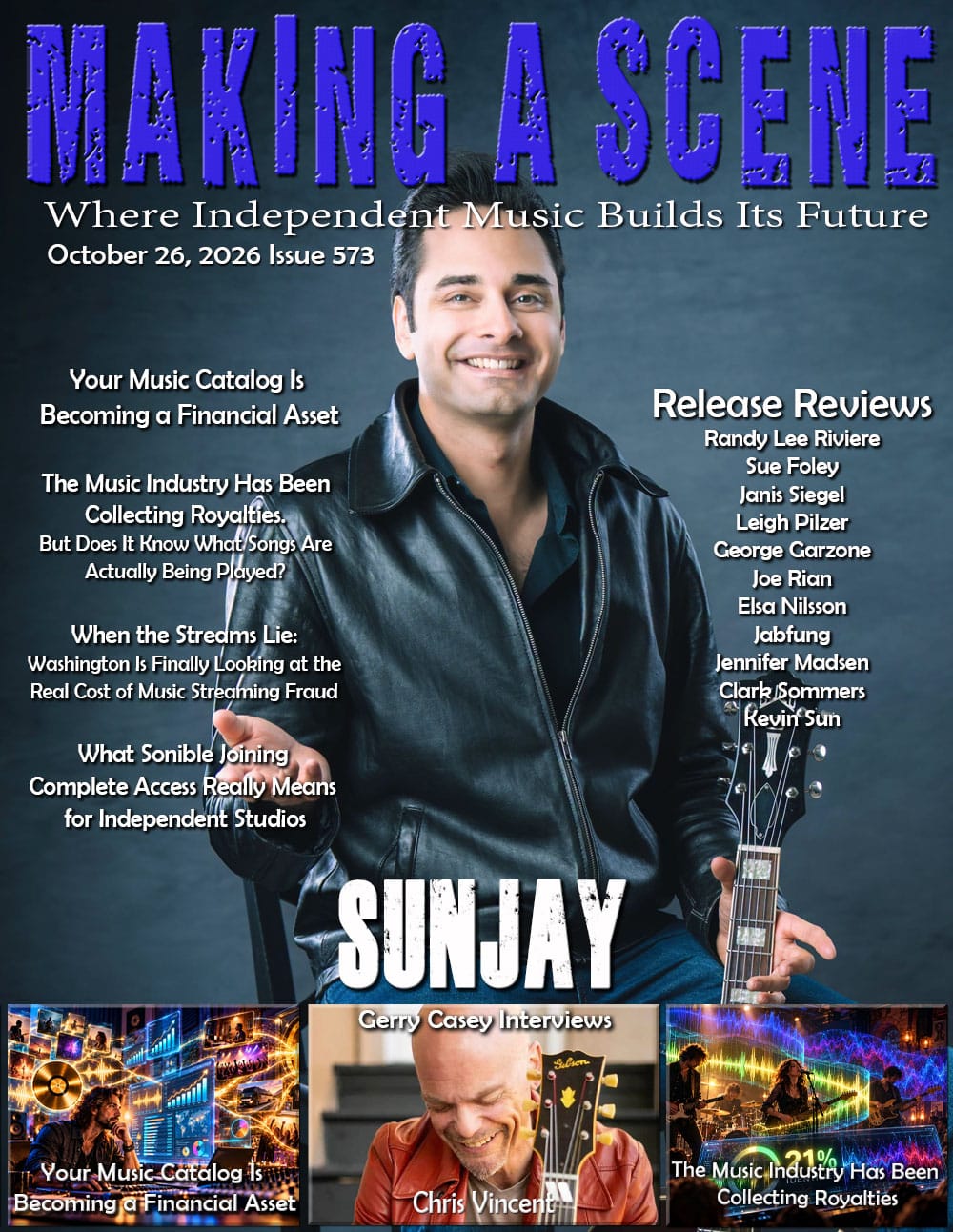

Record Labels Aren’t Evil—They’re Just Optional Now





Making a Scene Presents – Record Labels Aren’t Evil—They’re Just Optional Now
Listen to the Podcast Discussion and Gain More Insight into the New Music Industry
For most of modern music history, record labels were not just powerful. They were necessary. If you wanted to record, distribute, promote, or even be taken seriously, you needed a label. That reality shaped everything artists were taught to believe about success. Get signed. Give up control. Hope for the best. But here is the truth nobody in the industry likes to say out loud anymore. Record labels did not suddenly become bad. They simply stopped being mandatory.
Today, labels are no longer gatekeepers. They are service providers. And that single shift changes everything. This is not about hating labels. It is about understanding power, choice, and ownership in a world where technology finally caught up with creativity. If you are an independent artist trying to build something real, sustainable, and fair, this is the most important mindset shift you can make.
The Old Deal: Why Labels Controlled Everything
To understand why labels mattered so much, you have to remember what the music business used to look like. Recording music was expensive. Studios cost money. Tape cost money. Pressing vinyl or CDs cost a lot of money. Shipping those records to stores cost even more money. Marketing meant radio, print ads, and physical promotion teams. None of that was accessible to regular people.
Record labels stepped into that gap. They paid for everything upfront. In exchange, they owned the recordings, controlled distribution, and decided who got promoted and who did not. This was not evil. It was infrastructure. Without labels, most music never would have left the garage. But there was a catch. The money labels spent was not a gift. It was a loan. Artists had to pay it back before they saw a dime. Many never did. Ownership stayed with the label. Control stayed with the label. Careers rose and fell based on decisions artists did not make.
For decades, this was the only game in town.
The DIY Cracks Start Showing in the 1990s
The first real cracks in that system appeared in the 1990s. Cheap multitrack recorders, early digital audio workstations, and home studios started showing up in bedrooms and basements. Artists could record themselves without booking expensive studio time. At the same time, independent labels, zines, college radio, and touring networks grew stronger. Punk, indie rock, hip hop, and electronic scenes proved you did not need mainstream approval to build an audience.
Artists began doing things themselves because they had to. Labels still controlled distribution and promotion, but the idea that artists could function outside the system no longer sounded crazy. This was no freedom yet. It was friction. But friction created movement.
The 2000s: Distribution Falls Apart
Then the internet kicked the door in. MP3s, file sharing, and digital downloads blew up the physical distribution model. Suddenly music could travel instantly, without trucks, warehouses, or stores. Labels lost their strongest leverage overnight. Platforms like CD Baby and TuneCore showed artists they could upload music themselves and reach the same stores as major labels. Social media replaced some marketing. Email lists replaced street teams. Websites replaced press kits.
The industry panicked. Artists adapted. This era taught a generation of musicians something important. You could release music without permission. You could talk directly to fans. You could build a career piece by piece. But something was still missing. Artists could distribute, but they did not truly own their relationship with fans. Platforms still sat in the middle. Algorithms replaced A&R.
The gatekeepers changed, but they did not disappear.
Streaming: Convenience With a Cost
Streaming platforms showed up with a simple promise. Upload your music, sit back, and let the algorithm do the heavy lifting. In theory, your songs could reach anyone, anywhere, at any time. Access, scale, and simplicity all wrapped into one neat package.
What they did not promise was fair pay, clear rules, or long-term stability.
As streaming took over, music stopped being treated like something people actively chose and started being treated like background noise. Songs became filler for playlists, workouts, and study sessions. Artists were no longer seen as creators with careers. They were treated like content suppliers feeding an endless machine. The more you uploaded, the more you might earn. The less you released, the faster you disappeared.
At the same time, the most valuable asset in the modern music business—fan data—was quietly locked away. Streaming platforms knew who listened, where they lived, what they skipped, and what they replayed. Artists did not. The relationship between musician and fan was filtered through dashboards, algorithms, and vague monthly statements.
Money followed the same pattern. Revenue was no longer about connection or loyalty. It was about volume. Millions of streams mattered more than a few thousand dedicated fans. Consistency mattered more than meaning. Once again, artists were told the solution was scale, not ownership.
This is where record labels slid back into the picture. Not as saviors, but as specialists. They negotiated better rates. They understood the playlist game. They knew how to push songs through systems artists could not see or control. Independent musicians were reminded, once again, that maybe they still needed help.
But something fundamental had changed.
Distribution was no longer the real problem. Music could already reach the world. The real issue was who controlled the relationship, the data, and the long-term value created by that reach. The core problem was not exposure. It was ownership.
And once you see that clearly, you can never unsee it.
AI Enters the Picture: Scale Without Surrender
Artificial intelligence did not show up in the music industry to replace artists or strip creativity from the process. It showed up to remove bottlenecks. The slow, repetitive, exhausting parts of building a career that used to drain time, money, and energy are now easier to manage.
For decades, marketing required teams. You needed a publicist to write press releases, a marketer to plan campaigns, a designer to create visuals, and someone else to manage ads and data. Most independent artists never had access to that kind of support, which meant they either did nothing or tried to do everything themselves and burned out. Today, marketing is less about manpower and more about systems. AI tools help artists communicate more clearly, more consistently, and with far less friction. They make it possible to show up regularly without turning music into a full-time administrative job.
Platforms like ChatGPT help artists write social posts, newsletters, press releases, and ad copy in minutes instead of hours. That does not mean the voice stops being yours. It means you start with a strong draft instead of a blank page. You can focus on tone, intent, and connection instead of fighting writer’s block every time you need to promote a release or a show.
Visual content works the same way. Tools like Canva let artists create clean, professional graphics without hiring a designer for every single announcement. Album teasers, tour posters, lyric cards, and social posts become repeatable instead of stressful. The goal is not perfection. It is consistency. Advertising has also shifted. AI-driven platforms like Meta Ads and Spotify Ad Studio allow artists to test ideas, target specific audiences, and measure results without massive budgets. Instead of guessing, you can see what works. Instead of spending blindly, you can adjust and improve over time.
This is not about taking shortcuts or gaming the system. It is about efficiency. AI does not replace taste, judgment, or creativity. It removes unnecessary friction so artists can spend more time making music and less time drowning in logistics. For the first time, independent musicians can operate like small companies without becoming corporate. They can think strategically without losing their soul. And that balance is what makes long-term, artist-owned careers possible.
Fan Identification: Knowing Who Actually Cares
One of the biggest lies carried over from the old music industry was the idea that reach equals success. Bigger numbers were treated like proof of progress. More followers. More streams. More impressions. But reach by itself does not pay rent, fund tours, or build careers. It never really did.
What actually matters is knowing who your fans are, where they live, and how they choose to support you. A thousand real fans who show up, buy merch, and tell their friends are worth more than a hundred thousand passive listeners who barely notice your name. Connection beats volume every time.
This is where the conversation gets uncomfortable for the traditional industry. In today’s music economy, owning your fan data is often more valuable than owning the music itself. Songs can be streamed anywhere. Files can be copied endlessly. But the relationship between an artist and a fan cannot be duplicated by a platform. That relationship is the real asset.
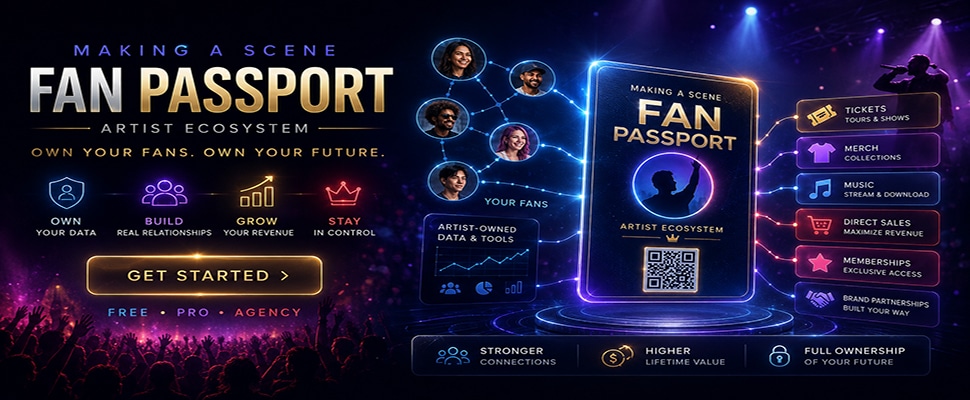
This is also where the idea of a fan passport starts to matter.
A fan passport is not a gimmick. It is a simple way to track and reward real-world support over time. Instead of treating every listener the same, it recognizes participation. Attending shows. Buying merch. Supporting a release. Showing up consistently. Each action becomes a signal, not just a transaction.
AI-powered analytics help artists see patterns that once required full marketing teams and expensive consultants. Instead of guessing, you can start understanding behavior. Not just how many people listened, but who stayed, who returned, and who took action. A fan passport gives that data context. It turns activity into a story.
Email platforms, customer relationship systems, ticketing data, and fan passport activity begin to connect the dots. You can see who buys merch more than once. Who comes to every show in their city. Who travels to see you. Who opens emails. Who supports crowdfunding. Who has been with you for years, not weeks.
This information is worth more than a viral spike. It is worth more than playlist placement. It is even worth more, in the long run, than individual songs. Music brings people in, but fan data shows you who stayed. A fan passport helps you recognize and respect that loyalty.
This is not about tracking people for the sake of control. It is about acknowledgement. Fans want to feel seen. Artists need clarity. A fan passport creates a shared history between both sides, one that platforms cannot own or erase.
This is power. Not the loud kind. The quiet, durable kind.
And for the first time, it belongs to the artist, not the platform standing in the middle.
Web3: Ownership Becomes Real
Web3 is not about hype, speculation, or chasing trends. At its core, it is about structure. It is about building systems where the rules are clear, visible, and enforced automatically instead of being buried in contracts nobody fully understands.
Smart contracts are a big part of that shift. In simple terms, a smart contract is just code that follows rules you define ahead of time. It decides who gets paid, when they get paid, and how revenue is split. There is no waiting months for statements. No guessing where the money went. No mystery math that only accountants can decode. When money comes in, the rules execute. Automatically. This changes the power dynamic. Artists no longer have to trust that payments will be handled fairly. They can design fairness into the system from the start.
NFTs fit into this same idea, but they are often misunderstood. They are not just digital collectibles meant to sit in a wallet and do nothing. At their best, NFTs are programmable access. They can represent an album, a concert ticket, a backstage pass, a membership, or proof that someone supported you early. They can unlock experiences, rewards, or long-term benefits instead of just ownership of a file. In other words, NFTs are not about replacing music. They are about deepening the relationship around it.
Platforms like Sound.xyz show how artists can release music directly to fans while keeping control over pricing, access, and ownership. Instead of feeding a platform and hoping for algorithmic luck, artists can build smaller, more intentional communities around their work. Platforms like Mirror demonstrate how creators can publish ideas, releases, and campaigns in a way that ties writing, funding, and community together without relying on traditional intermediaries.
The important thing to understand is this. None of this exists to eliminate record labels. Labels can still be useful. They can still offer services, reach, and expertise. What Web3 replaces is dependency.
Artists no longer have to give up ownership just to participate. They no longer have to choose between control and opportunity. With the right structure in place, they can collaborate on their own terms, keep what they build, and walk away when a partnership stops making sense. That shift does not make labels irrelevant. It makes artists sovereign.
The New Role of Labels
So where does that leave record labels today?
Right where they should be. Not as rulers of the system, but as participants in it. Labels now sit alongside artists as partners, vendors, and specialists. They are no longer the starting line of a career. They are one of many tools an artist can choose to use. A good label can still be valuable. Experience matters. Infrastructure matters. Relationships matter. When a label brings real expertise, clear accounting, and respect for ownership, it can accelerate growth instead of controlling it. The difference now is that this help can be negotiated, scoped, and walked away from if it stops serving the artist.
A bad deal is no longer unavoidable. Artists are no longer trapped by a lack of alternatives. They can release music on their own. They can market directly. They can build fan relationships without permission. That reality changes the balance of power before a contract is even discussed. Labels that survive in this environment will do so by adapting. They will respect ownership instead of demanding it. They will offer real, measurable value instead of vague promises. And they will compete for artists by proving their worth, not by locking people into long-term control.
The most important shift is this. Artists no longer need permission to exist. They do not need to be chosen to be valid. They can build, release, connect, and earn on their own terms. And once permission disappears, negotiations are no longer about desperation. They are about alignment.
That changes everything.
The Call to Action: Choose Ownership First
If you are an independent artist, the most important decision you will make is not who signs you. It is what you own. Ownership is the difference between a career and a gamble. Own your recordings so your work does not disappear when a deal ends. Own your data so you understand who your fans actually are. Own your relationships so no platform can step between you and the people who support you. Own your pace so growth happens on your terms, not on someone else’s timeline.
Labels still have a place in this future, but that place has changed. Use them when they help. Walk away when they do not. A label should amplify momentum that already exists, not replace the work of building it. When ownership stays with the artist, every partnership becomes a choice instead of a risk.
The future of music is not anti-label. It is pro-choice.
More importantly, the future of record labels depends on the rise of a real music industry middle class. An ecosystem where artists are not desperate, uninformed, or disposable, but stable, educated, and sustainable. This middle class feeds the label system with artists who understand their business, know their numbers, and are prepared for the scale, pressure, and responsibility that come with operating at that level.
In this new structure, labels are no longer talent lotteries. They are growth partners. They work with artists who already function like businesses, who understand ownership, contracts, and long-term strategy. That makes labels better, too. Fewer broken careers. Fewer bad deals. More alignment on both sides.
For the first time in history, artists can build something solid before anyone else gets involved. They can arrive at the table prepared instead of hopeful. That changes the entire tone of the conversation.
And that choice now belongs to you.
 |  Spotify |  Deezer |  Breaker |
 Pocket Cast |  Radio Public |  Stitcher |  TuneIn |
 IHeart Radio |  Mixcloud |  PlayerFM |  Amazon |
 Jiosaavn |  Gaana |  Vurbl |  Audius |
 Reason.Fm | |||
Find our Podcasts on these outlets
Subscribe to Our Newsletter
Discover more from Making A Scene!
Subscribe to get the latest posts sent to your email.


