
Music and Social Change: Why We Need the Rebel Spirit Back in Music




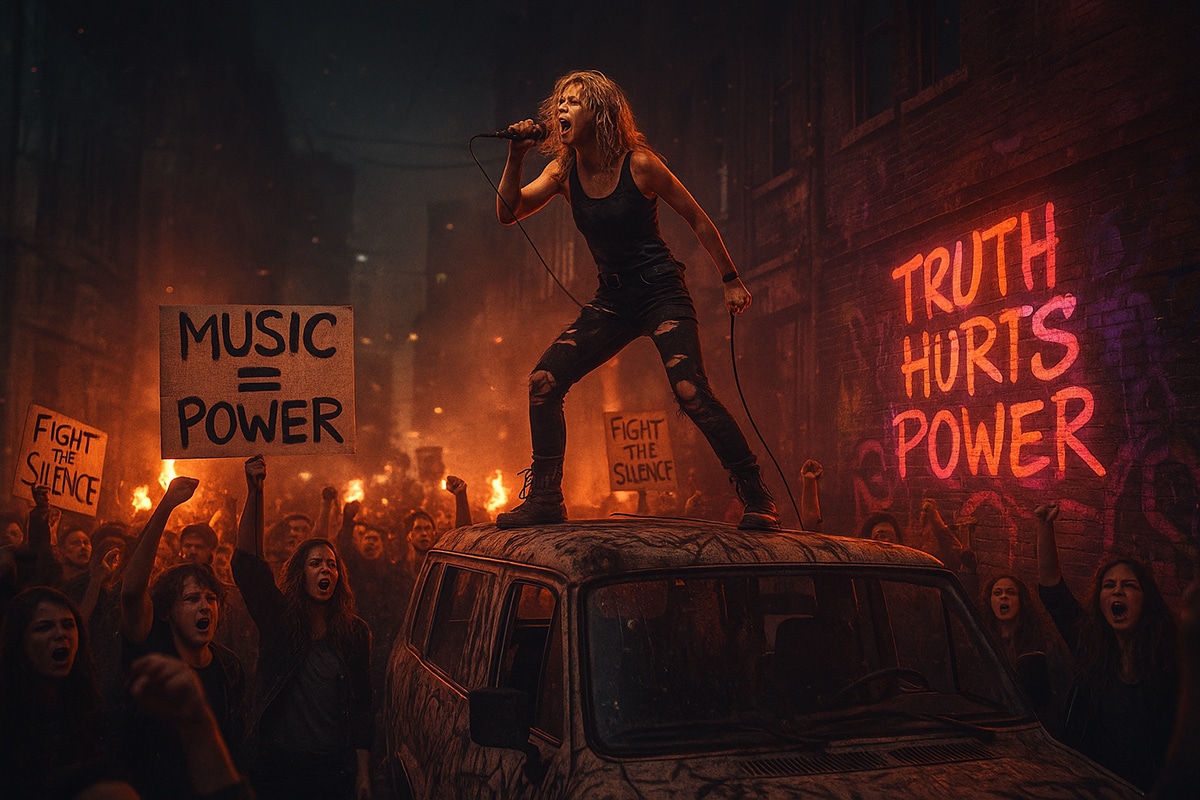
Making a Scene Presents – Music and Social Change: Why We Need the Rebel Spirit Back in Music
Introduction: Music Was Never Just Entertainment
Music isn’t background noise. It isn’t just party soundtracks, workout playlists, or marketing jingles. At its core, music has always been a weapon, a rallying cry, and a spark for social change. It’s the heartbeat of revolutions, the whisper of resistance, and the shout of freedom. From enslaved people encoding escape routes in spirituals, to punk rockers screaming against conformity, to hip-hop calling out police brutality, music has always spoken for the people when politicians and corporations wouldn’t.
But somewhere along the line, the music industry got domesticated. What was once dangerous, raw, and rebellious was polished, packaged, and sold back to us by corporations. Streaming services turned songs into data points. Record labels turned artists into brands. And too many musicians accepted the role of entertainer instead of truth-teller.
The result? A music culture that’s often more concerned with viral dances and brand deals than with speaking truth to power. But the rebel fire hasn’t gone out. It’s still in the DNA of music. And in a time of climate chaos, rising inequality, police brutality, censorship, and endless wars, we need musicians to step back into their role as cultural warriors.
This isn’t about nostalgia. This is about survival. History shows that music has always been the oxygen for movements. And if we’re serious about changing the world, then it’s time for musicians to reclaim their power.
Ancient Roots: Music as a Voice for the Voiceless
Before recorded history, music was already shaping resistance. In ancient cultures, drums weren’t just instruments — they were signals, used to call warriors, communicate across villages, and stir people to action.
In ancient Greece, theater used music to slip political criticism past authorities. Troubadours in medieval Europe wrote songs that mocked kings and lords, hiding rebellion inside melody. Even when rulers banned certain instruments, people kept finding ways to sing their truth.
The message is clear: music has always been dangerous to the powerful because it cuts through walls, spreads fast, and lodges itself in memory. You can burn books, but you can’t kill a song once people are singing it together.
The Spirituals: Survival, Resistance, and Secret Codes
Nowhere is the rebellious power of music more obvious than in the spirituals sung by enslaved Africans in America. On the surface, these were religious hymns. But listen deeper, and you hear escape plans, coded directions, and messages of freedom.
“Wade in the Water” wasn’t just about baptism. It told runaways to move through rivers so bloodhounds couldn’t track their scent. “Follow the Drinking Gourd” pointed enslaved people to the Big Dipper and the North Star, guiding them to freedom.
When every aspect of life was controlled, music became the one place enslaved people could express themselves. And they turned it into both survival and rebellion. The spirituals remind us: music can hold the key to liberation, even when speech is banned.
Folk Music and the Struggles of the Working Class
In the 1930s and 40s, America was reeling from the Great Depression. Factories shut down, workers were starving, and people felt abandoned by the system. Out of this pain rose voices like Woody Guthrie, who sang not for fame but for the working class.
“This Land Is Your Land” sounds like a happy sing-along today, but Guthrie actually wrote it as a response to “God Bless America,” which he thought ignored poor people’s suffering. Verses often left out of schoolbooks attacked private property and exposed inequality.
His songs gave strength to union workers striking for fair pay. They gave hope to farm workers facing eviction. Folk music became the voice of everyday people demanding dignity.
The Civil Rights Movement: Freedom Songs and Soul Power
In the 1950s and 60s, music became inseparable from the fight for Civil Rights. Freedom songs like “We Shall Overcome” echoed at marches, sit-ins, and rallies. The simple lyrics and melodies allowed everyone to sing along, uniting thousands of voices into one powerful force.
But the movement wasn’t only powered by church choirs. Artists like Nina Simone, Sam Cooke, and Mahalia Jackson brought the fire of protest into mainstream music. Simone’s “Mississippi Goddam” was a furious response to the murder of Medgar Evers and the Birmingham church bombing. Sam Cooke’s “A Change Is Gonna Come” carried deep hope, even though Cooke himself was killed before he could see the movement’s biggest victories.
Civil rights leaders knew the power of music. Dr. Martin Luther King Jr. often asked Mahalia Jackson to sing before he spoke because he knew her voice would prepare the crowd for action.
This era proved once again: music doesn’t just accompany change — it makes change possible.
Vietnam, Rock, and Youth Rebellion
By the late 1960s, America was sending thousands of young men to die in Vietnam. Students, workers, and soldiers themselves began questioning why. Music became their weapon of defiance.
Bob Dylan sang “Blowin’ in the Wind” and “Masters of War.” Joan Baez stood on protest lines. Creedence Clearwater Revival blasted politicians with “Fortunate Son,” a song about the wealthy dodging the draft while poor kids bled overseas.
And then came Woodstock in 1969. More than a music festival, it was a counterculture gathering that said: we will not inherit the world you built. Hendrix’s guitar-shredding version of the “Star-Spangled Banner” wasn’t just performance. It was a scream of protest, war and chaos pouring out of six strings.
Music didn’t stop the war alone. But it gave a generation its anthem and its courage.
Punk: No Compromise, No Permission
In the 1970s and 80s, punk exploded as a reaction to bloated corporations, economic inequality, and political corruption. This wasn’t music polished for radio. It was raw, DIY, and aggressive.
The Clash sang about racism and unemployment. Dead Kennedys ripped into corporate greed with “Holiday in Cambodia.” Black Flag screamed about alienation. Punk wasn’t just music. It was a culture of resistance.
Punk showed musicians that you don’t need permission to start a movement. All you need is honesty, volume, and community.
Hip-Hop: The Streets Speak Truth
Born in the Bronx in the 1970s, hip-hop started as block parties and community gatherings. But it quickly became the voice of a generation abandoned by the system.
Grandmaster Flash’s “The Message” laid bare poverty, crime, and inequality: “Don’t push me, ‘cause I’m close to the edge.” Public Enemy shouted “Fight the Power,” calling out racism, police brutality, and political corruption. N.W.A. put “F*** tha Police” in the face of a system that brutalized Black communities daily.
Hip-hop went global because the struggle it described was universal. From Paris to Johannesburg, young people picked up the beat to fight their own battles.
Global Resistance: Apartheid and Beyond
Music didn’t only power American struggles. In South Africa, artists like Miriam Makeba and Hugh Masekela risked exile to sing against apartheid. Their voices reached the world, making it impossible to ignore the brutality of racial segregation.
International musicians joined in. Stevie Wonder dedicated songs to the cause. Peter Gabriel wrote “Biko” in honor of anti-apartheid activist Steve Biko. The global boycott of South Africa wasn’t just economic — it was cultural, and music was at its heart.
When Nelson Mandela walked free in 1990, it was a victory for both political struggle and musical solidarity.
The Silence of the Mainstream
If music has such a powerful legacy of rebellion, why does mainstream music today feel so empty? Why are chart-toppers more about luxury brands than liberation?
The truth is, corporations figured out that rebellious music sells — but only when sanitized. Record labels learned how to profit off the look of rebellion while cutting out the substance. Streaming platforms turned songs into data points, rewarding “safe” content that keeps advertisers happy.
But while the mainstream might be quiet, the underground is still alive. Indie artists, punk collectives, DIY rappers, and global activists are still making protest music. The problem is reach. The noise of the mainstream drowns them out.
Why We Need Music Activism Now
The world is on fire — literally. Climate collapse threatens humanity. Billionaires get richer while millions starve. Police violence, censorship, and war keep escalating.
And people are hungry for voices that tell the truth. Politicians aren’t trusted. Media is fractured. But music still has the power to cut through. A lyric can slip past propaganda. A song can unite strangers into allies. A beat can move people from despair into action.
This isn’t about making every song a protest song. It’s about artists reclaiming their power to speak out, to challenge, and to demand better.
Modern Examples: Activism in Today’s Music
Don’t let anyone tell you protest music is dead. It’s alive — you just won’t find it on the front page of Spotify.
-
Kendrick Lamar used “Alright” as a rallying cry for Black Lives Matter.
-
Billie Eilish has spoken about climate change and the emptiness of consumer culture.
-
Killer Mike blends activism with hip-hop, pushing for justice system reform.
-
Pussy Riot risked imprisonment in Russia for protesting authoritarianism.
-
Ani DiFranco has spent decades weaving feminism and activism into folk-punk.
These artists prove the fire is still burning. But we need more voices, louder voices, and communities that refuse to be silenced.
How Musicians Can Reignite the Flame
So how do we bring activism back into music in a real way?
-
Write songs that matter. Don’t just chase streams. Say something real.
-
Build communities. Punk scenes weren’t about sales — they were about belonging. Hip-hop built global movements from block parties. You can do the same.
-
Use independent tools. With decentralized platforms, NFTs, and direct-to-fan tools, you don’t need corporate permission anymore. The Decentralized Music Industry is the perfect vehicle since it can’t be shut down and it can’t be controlled by the mainstream.
-
Be fearless. The industry will always try to water you down. Refuse. Speak truth even when it costs you.
The Rebel Call to Action
Music history is proof: every revolution has a soundtrack. Every fight for freedom has an anthem. Every generation finds its voice through song.
Right now, we’re at a breaking point. The planet, the people, the future all of it hangs in the balance. Politicians won’t save us. Corporations won’t save us. But music can awaken us, inspire us, and give us the courage to fight.
If you’re a musician, you have a choice. You can play it safe, or you can step into the tradition of Nina Simone, Woody Guthrie, Joe Strummer, Kendrick Lamar, and so many others who refused to shut up.
The industry wants you to shut up and sing love songs. But the world needs you to scream, to chant, to rage, to uplift.
Music has always been the soundtrack of revolution. Now it’s your turn to pick up the mic and play your part.
 |  Spotify |  Deezer |  Breaker |
 Pocket Cast |  Radio Public |  Stitcher |  TuneIn |
 IHeart Radio |  Mixcloud |  PlayerFM |  Amazon |
 Jiosaavn |  Gaana |  Vurbl |  Audius |
 Reason.Fm | |||
Find our Podcasts on these outlets
Subscribe to Our Newsletter
Discover more from Making A Scene!
Subscribe to get the latest posts sent to your email.


