The Future of Fan Data: How Web3 and AI Empowers Fan Analytics




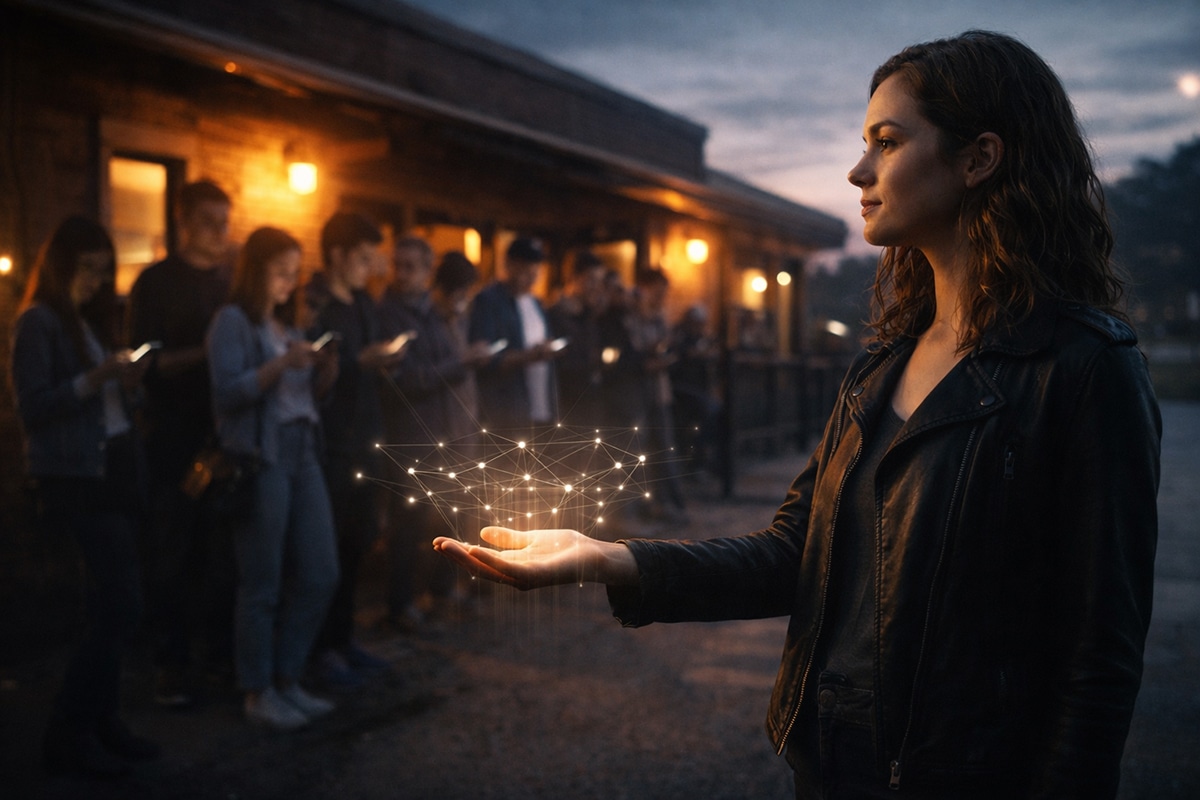
Making a Scene Presents – The Future of Fan Data: How Web3 and AI Empowers Fan Analytics
Listen to the Podcast Discussion to Gain More Insight into Owning your Fan Data and using AI to make good Decisions!
The music industry has never had a problem collecting data. It has always had a problem giving it back to artists.
For decades, fans have been tracked, sorted, scored, and monetized. Streams get counted. Tickets get scanned. Emails get opened. Merch gets shipped. But almost all of that information disappears into platforms, promoters, labels, and tech companies that sit between artists and the people who actually support them.
If you are an independent artist, you already know how this feels. You can see your Spotify numbers, but you don’t know who those listeners are. You can sell out a room in a city, but you don’t get the attendee list. You can move merch on tour, but you don’t know which buyers will show up again next time. You are surrounded by “analytics,” yet somehow blind to your own audience.
That broken system is not an accident. It was designed when artists were treated as content suppliers and fans were treated as anonymous traffic. What is changing now is not just technology. What is changing is who owns the relationship.
This is about the future of fan data, and why Web3 and AI together finally give independent artists something they have never had before: a direct, living, intelligent fan database that they control. Not in theory. Not someday. Right now.
This is the data layer that powers fan passports, direct-to-fan business models, smarter touring, better merch decisions, and ultimately a real Music Industry Middle Class.
Why Fan Data Has Always Been Broken for Artists
Before we talk about wallets, blockchains, or AI, we need to be honest about why fan data feels so frustrating today.
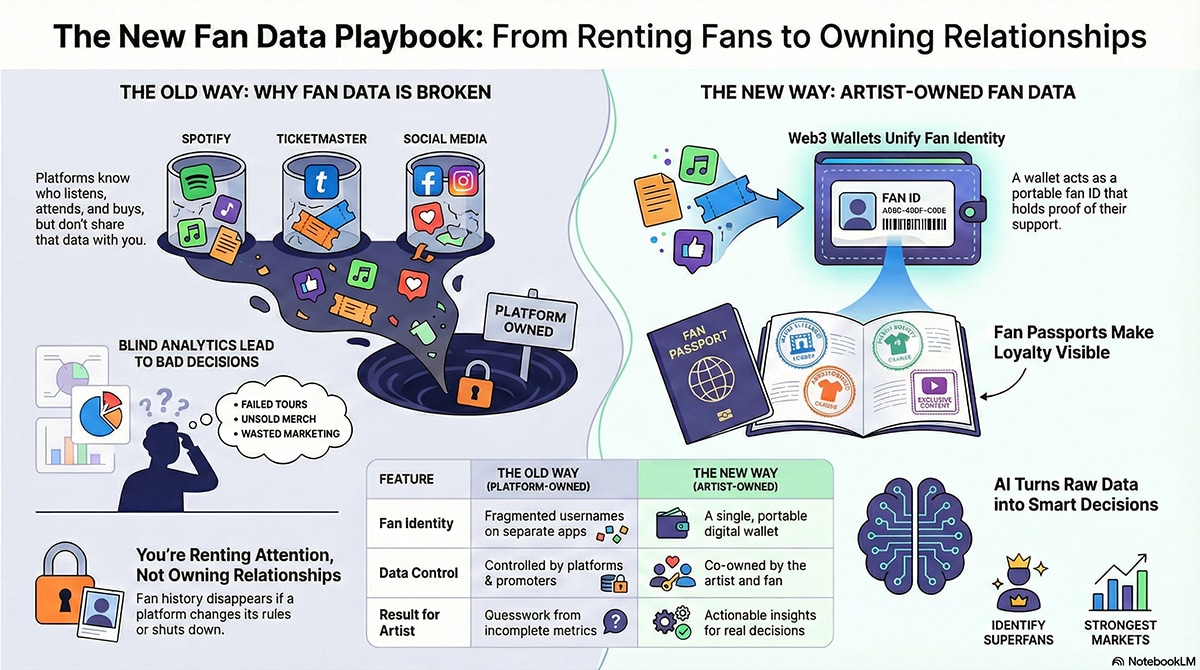
In the traditional music industry, fan data lives in silos. Streaming platforms know who listens, but they don’t share identities. Ticketing platforms know who attends shows, but they keep the emails. Social platforms know who engages, but the algorithm decides who sees what next. Merch platforms know who buys, but they don’t talk to your streaming stats or your tour history.
As an artist, you end up with fragments. A mailing list here. A follower count there. A spreadsheet from one tour stop. None of it connects. None of it tells a full story. And none of it belongs to you in a way that survives platform changes, policy shifts, or shutdowns.
This is why so many artists make bad decisions even when they are “doing well.” They tour cities where streams look high but ticket sales flop. They press merch that doesn’t move. They chase social growth that doesn’t convert. It is not because artists are bad at business. It is because the data they are given is incomplete by design. Fan data should answer simple questions. Who supports me consistently? Where do they live? How do they show up? What do they buy? What do they respond to? Traditional platforms are not built to answer those questions for artists. They are built to monetize attention at scale.
Web3 changes that foundation.
What Web3 Actually Means for Fan Data (Without the Hype)
Web3 is usually explained in a way that feels more like a computer science lecture than something made for working artists. That alone turns a lot of musicians off before the idea ever has a chance to make sense. So instead of starting with blockchains, tokens, or technical jargon, it helps to start with the one thing that actually matters: ownership.
At its core, Web3 introduces ownership-based identity instead of platform-based identity. Right now, your fans exist mostly as usernames inside platforms you do not control. They are a Spotify listener, an Instagram follower, a Ticketmaster customer, or an email address inside someone else’s database. Each platform sees only a slice of that person, and none of them give you the full picture.
With Web3, that changes. Instead of being defined by accounts on other people’s platforms, fans can be represented by a digital wallet they control. That wallet becomes their persistent identity across experiences. It is not tied to one app, one service, or one company’s rules.
This is where a lot of confusion comes in, so it is important to slow down here. A wallet is not “just crypto.” You do not need to think of it as money first. Think of it as a portable fan ID. A wallet can hold proof of actions and participation. It can show that a fan attended a specific show. That they collected an album or a song. That they bought merch. That they joined a membership. That they supported a campaign or unlocked special access.
Each of those actions becomes a verifiable record that lives with the fan, not inside a platform’s private database. And because that record is not dependent on a single company staying alive, changing policies, or deciding to lock you out, it becomes durable.
This is the real shift: the wallet becomes the fan database.
Instead of your fan data being scattered across streaming dashboards, ticketing portals, merch platforms, and social media insights, it begins to anchor around one consistent identity. When a fan connects their wallet to your website, your merch store, your ticketing system, or your fan passport, you are no longer guessing who they are or starting from scratch each time.
You are seeing the same identity show up again and again across different moments of support. The fan reminding you, without saying a word, “I was here before.”
That connection happens by choice. No scraping email addresses. No tracking cookies following people around the internet. No rented lists that disappear when a service shuts down. Just direct, permission-based connection between artist and fan.
For artists who have never truly had access to real fan data, this is not a small improvement. It is a fundamental change in how relationships work. When someone supports you, that support does not vanish into a platform’s black box. It becomes part of a shared record that you and your fans build together over time.
That record is the foundation for everything else. Touring decisions start to make sense. Merch choices get clearer. Communities feel more intentional. And for the first time, artists are not just broadcasting to an audience. They are building a living, growing relationship they actually own.
The Wallet as the New Fan Database
In the old world, a “fan database” usually meant an email list, and even that was only true if you were diligent, lucky, and consistent. In reality, most artists were juggling a messy collection of platforms that never talked to each other. Streaming services knew listeners but not buyers. Ticketing systems knew attendees but kept the names. Merch platforms knew customers but had no idea who went to shows. Social media knew who engaged, but only inside its own walls.
Nothing connected. Nothing persisted. And the moment a platform changed its rules or shut an artist out, years of audience history could disappear overnight.
In a Web3-enabled world, the fan wallet becomes the anchor point that solves this problem. Not because it holds money, but because it holds proof of participation. The wallet is where a fan’s history lives in one place, across time and across experiences.
A fan attends your show, and that ticket can be issued as a digital asset tied to their wallet. That attendance is no longer just a scanned barcode that vanishes after the night ends. A fan buys your album as an NFT or digital collectible, and that ownership lives in their wallet instead of a platform account. A fan joins your membership, unlocks a gated experience, supports a campaign, or earns a fan passport stamp, and each of those actions adds another layer to their record.
Over time, all of that activity accumulates under a single identity. Not a username. Not an email address trapped inside a service. A consistent, portable identity the fan controls and chooses to share.
From the artist’s side, this changes everything. You are no longer staring at anonymous metrics and trying to reverse-engineer meaning from numbers on a dashboard. Instead, you start to see patterns of real human behavior emerge. You can recognize who shows up repeatedly, not just who clicked once. You can see who supports releases consistently, who travels for shows, who buys merch, and who participates in ways that go far beyond passive listening.
This is not surveillance, and it is not about spying on fans. It is a consent-based connection. Fans choose to connect their wallet because it gives them something in return: access, recognition, continuity, and value. Artists benefit because, for the first time, they can actually see the shape of their community instead of guessing at it.
This is where fan passports come in. They take all of that participation and turn it into something visible, meaningful, and usable. Instead of fan activity disappearing into disconnected systems, it becomes a living record that grows with the relationship.
Fan Passports: Turning Activity Into Meaningful Signals
A fan passport is not a gimmick, a collectible, or a marketing trick. It is a system designed to make fan behavior visible, understandable, and meaningful over time.
In the traditional model, all fans are treated the same. A casual listener who streamed a song once is often lumped together with someone who buys vinyl, attends shows, and brings friends. That flattening of behavior hides the people who are actually sustaining an artist’s career. A fan passport fixes that by recognizing participation as something that builds.
Instead of a single moment of engagement, a passport tracks a journey. A stamp for attending a show. A stamp for buying merch. A stamp for supporting a release. A stamp for volunteering, promoting, traveling long distances, or showing up in ways that never show up on a streaming dashboard. Each action adds context to the relationship.
Each stamp is not just a badge meant to look cool. It is data. It is a signal that says, “This fan showed up here, in this way, at this moment.” On its own, one stamp might not mean much. But over time, those stamps create a clear picture of how and why someone supports your work.
When fan passports are tied to wallets, they become both portable and verifiable. Fans carry their history with them instead of starting over on every platform. Artists can see engagement across months and years, not just a single campaign or release window. The relationship gains memory.
This matters because loyalty is not binary. It is layered. Someone who streams casually is very different from someone who buys vinyl, shows up to gigs, supports crowdfunded releases, and brings friends along. Traditional analytics flatten all of that into plays, clicks, and likes. Web3-based systems preserve those differences instead of erasing them.
Once participation is visible and layered like this, artists finally have something solid to work with. And when you add AI to this picture, things get genuinely powerful. AI can read those layers, recognize patterns, and help artists turn loyalty into smarter decisions instead of guesswork.
Seeing Fans as Humans, Not Metrics
Once fan activity lives in wallets and fan passports, artists finally gain access to something they have never truly had before: a clean, trustworthy signal. But having access to data is not the same as being able to use it. Raw blockchain data on its own is overwhelming, technical, and impractical for most working musicians. No artist wants to spend their creative time staring at blockchain explorers, spreadsheets, or unreadable dashboards trying to guess what matters.
This is where AI steps in, not as a replacement for human judgment, but as a translator.
AI does not replace intuition. It amplifies it. When AI is applied to wallet-based fan data, it turns activity into insight. Instead of isolated events, it can recognize patterns that would be almost impossible to see manually. It connects dots across time, geography, and behavior in a way that mirrors how artists already think about their audience, just with more clarity and less guesswork.
AI can show you which cities have the highest concentration of repeat supporters, not just the highest stream counts. It can reveal which merch items are most often purchased by fans who also attend multiple shows. It can identify listeners who consistently support releases, show up in person, and engage across channels, quietly signaling who your superfans really are without you having to label or chase them.
The most important point here is this: AI only becomes powerful when the data feeding it is owned, connected, and intentional. Garbage in, garbage out still applies. Platform analytics are fragmented by design. Each service shows you only the slice of behavior that benefits its own business. The data is biased, incomplete, and disconnected from the rest of your world.
Wallet-based fan data is different. It is unified around real identities. It is permission-based. It reflects actual support, not just attention. When AI works with that kind of data, the insights stop being abstract and start becoming actionable.
This is why the combination of Web3 identity and AI-driven intelligence matters so much. Web3 gives artists ownership and continuity. AI gives artists understanding and direction. One without the other is incomplete. Together, they turn fan activity into something artists can finally use to build sustainable careers.
Tools Indie Artists Can Use Right Now
This is not theoretical. Artists do not have to wait for some future version of the internet or learn how to code to start using these ideas. There are tools available right now that indie artists can realistically use to build wallet-based fan data systems and turn participation into insight.
Some early platforms that explored this space helped prove the concept, but the ecosystem has matured. What matters now is not the name of a single startup, but the functionality artists can plug into their existing workflow.
One category of tools focuses on wallet-based access and engagement. A strong example here is Unlock Protocol. Unlock allows artists to use wallets as keys. Fans can unlock access to content, communities, tickets, or experiences based on what they hold or what they have done. From an artist’s perspective, this immediately shows who is participating, not just who clicked a link. You can see which fans unlock content repeatedly, which ones hold memberships long-term, and which ones show up across releases and events.
Another widely used tool is Guild.xyz, which helps artists and communities manage wallet-based roles and permissions. Guild makes it possible to recognize fans based on real activity, such as holding a collectible, attending an event, or supporting a release. Instead of treating everyone the same, artists can see how fans move through different levels of engagement over time.
For artists releasing music directly, platforms like Sound.xyz provide visibility into who actually collects music, not just who streams it. Ownership data shows which fans are willing to support financially and repeatedly, which is far more meaningful than anonymous play counts. That ownership history can then be connected to other experiences like shows, merch, or gated access.
On the ticketing and event side, tools such as YellowHeart allow artists to issue tickets that live in wallets instead of disappearing after the show. Attendance becomes a durable data point, not a one-night scan. When tied into a broader fan passport system, those tickets turn into long-term signals of support.
The key thing about tools like these is that they are not replacing your existing workflow. You still write songs. You still book shows. You still sell merch. You still release music the way you always have. What changes is what happens after a fan engages.
Instead of that engagement vanishing into someone else’s database, it becomes part of a shared record you control. Attendance, ownership, access, and participation begin to stack on top of each other under a single fan identity. Over time, that record becomes incredibly valuable, not because it is “on the blockchain,” but because it finally reflects real behavior instead of fragmented metrics.
When this data layer is in place, AI can actually do its job. It can read patterns across shows, releases, merch drops, and communities. It can help artists understand where support is growing, where it is fading, and where to invest next.
That is the real upgrade here. Not a new platform to manage, but a missing layer added underneath everything you already do.
A Real-World Workflow: From Show to Insight
Let’s make this concrete and walk through what this looks like in the real world, step by step, without any hype.
An independent artist plays a show in Chicago. Tickets are issued digitally and connected to fan wallets. At the door, fans scan in just like they always would, but instead of that scan disappearing into a ticketing system, something different happens. Each fan’s wallet receives a stamp in the artist’s fan passport system. That stamp quietly records, “This fan showed up here, on this night.”
After the show, the artist releases a limited merch item that is only available to people who attended. There is no complicated process for the fan. They connect their wallet, see that they are eligible, and purchase. When they do, another stamp is added to their passport. Attendance and purchase are now linked to the same identity.
A few weeks later, the artist drops a new single. Early access is offered to fans who attended the Chicago show. Again, eligibility is automatic. The system already knows who was there. Fans feel recognized, not marketed to. They are being rewarded for showing up, not spammed with generic promotions.
Over time, the artist’s dashboard starts to tell a story. A cluster of wallets tied to Chicago shows consistent participation across multiple actions. These fans are not just streaming. They are attending shows, buying merch, and engaging with releases. AI highlights this pattern clearly, flagging Chicago as a true stronghold based on revenue-generating behavior, not vanity metrics.
This insight changes real decisions. The next tour route is adjusted, and Chicago becomes a priority instead of a gamble. Merch offerings are refined based on what those fans actually bought, not what the artist hoped would sell. Marketing efforts shift toward nearby cities that show similar patterns of engagement instead of being spread thin everywhere.
None of this required ads. None of it required chasing algorithms. None of it required guessing or gut-checking vague analytics. It was powered by owned fan data, carried through wallets and fan passports, and interpreted by AI in a way that turned behavior into clarity.
This is what happens when artists stop renting attention and start owning relationships.
Local Artists Benefit Just as Much as Touring Artists
This approach is not just for artists on national or international tours. In many ways, local and regional artists benefit even more from this kind of system.
A local artist can start to see patterns that were invisible before. Which neighborhoods consistently show up to shows. Which venues turn casual listeners into real supporters. Which events lead to merch sales, and which ones are better at growing the mailing list or introducing new fans. Instead of relying on memory or vague impressions, the artist can see these differences clearly over time.
Fan passports are especially powerful at the local level because they give scenes something they rarely have: memory. In the traditional model, every show feels like a reset. Fans show up, have a great night, and then disappear back into the crowd. With passports, participation compounds. The system remembers who was there last month, last year, and which moments mattered.
That sense of continuity changes behavior on both sides. Fans feel recognized instead of anonymous. They feel like part of something that acknowledges their support. Artists begin to see momentum building instead of starting from zero every time they book a room.
This is how local scenes grow in a sustainable way. Not by chasing viral moments or hoping for a breakout post, but by tracking real participation and nurturing it over time. When artists understand who is showing up and why, they can invest in the places and people that are already working, and that is how communities turn into careers.
Streaming Data Finally Makes Sense
Streaming platforms are not going away, and they still play an important role in discovery. They help new listeners find music, they expose songs to wider audiences, and they can signal when something is resonating. But discovery is not the same thing as sustainability, and streaming should not be the center of an independent artist’s business.
The problem has never been streams themselves. The problem is that streams, on their own, do not tell you who actually supports you.
When wallet-based identity is layered on top of streaming behavior, the picture changes completely. Instead of seeing streams as anonymous plays, artists can begin to see which listeners turn into supporters. You can identify which tracks lead people to buy tickets, which releases drive merch purchases, and which playlists actually correlate with real-world engagement.
AI plays a critical role here by separating noise from signal. It can flag when a streaming spike is hollow, driven by passive listening, algorithmic placement, or curiosity that does not convert. At the same time, it can highlight slower, quieter growth that is tied to strong fan passport activity, repeat attendance, and ownership-based support.
This distinction matters more than most artists realize. A city with high stream counts but low wallet engagement is very different from a city with fewer streams but consistent participation across shows, merch, and releases. One looks good on a dashboard. The other pays the bills.
Understanding that difference saves artists money, time, and burnout. It prevents unnecessary tours, overproduced merch runs, and marketing efforts aimed at the wrong signals. When streaming data is put in its proper place, as an input rather than the foundation, artists can make decisions based on reality instead of hope.
Merch, Pricing, and Inventory Decisions Get Smarter
Merch is one of the most fragile income streams for independent artists. When it works, it can quietly fund your next release, your next tour, or your studio time. When it doesn’t, it ties up cash, fills closets and garages, and creates stress that lingers long after a show ends. Guess wrong on designs, sizes, or quantities, and you feel it immediately.
Wallet-based fan data combined with AI takes much of that risk out of the process.
When merch activity is connected to fan identities instead of anonymous transactions, artists can start to see who is actually buying and why. You can identify which items are consistently purchased by your most engaged fans. You can see whether vinyl buyers are also show attendees, or whether certain designs appeal more to people who travel to gigs. That context is impossible to get from a basic sales report.
AI turns those patterns into guidance. It can highlight which products are most likely to convert again, which bundles make sense based on past behavior, and which ideas are worth testing before committing real money. Instead of making merch decisions based on gut feelings or trends, artists can base them on evidence.
That opens the door to smarter experimentation. Instead of printing 200 shirts and hoping they sell, you can release 50 to your most engaged fans first. If they move quickly, you scale with confidence. If they don’t, you pivot without taking a financial hit. The fans feel included in the process, and the artist stays in control.
This is not hype or futurism. It is operational clarity. It is the difference between merch being a gamble and merch being a predictable, repeatable part of an independent artist’s business.
Why This Powers the Music Industry Middle Class
Fans Win Too
It is important to say this clearly, because it often gets lost in conversations about technology. Fans benefit from this shift just as much as artists do.
Fans are not simply being tracked or analyzed. They are being recognized. Their support is no longer invisible or taken for granted. When a fan shows up, buys something, or supports an artist over time, that history actually matters. It travels with them instead of being trapped inside a platform or forgotten after a single interaction.
Because participation is recorded intentionally, fans gain access to experiences that feel earned rather than marketed. They receive rewards, early access, and invitations that reflect their real level of support, not just their position in an algorithm. They can be part of a community without being flooded with ads, spammed with irrelevant messages, or reduced to a data point sold to someone else.
This creates a healthier relationship on both sides. One built on mutual respect instead of extraction. Artists are not mining attention, and fans are not being exploited for clicks. Both sides are choosing to participate in a system that values connection, memory, and trust.
The Future Is Already Here, Just Unevenly Distributed
Not every artist needs to adopt every tool or system overnight. This is not about chasing trends, jumping on buzzwords, or rebuilding your entire workflow in a weekend. It is about understanding where fan data is clearly heading and positioning yourself so you are not left behind when the shift becomes unavoidable.
The artists who benefit most from this transition will not be the most technical or the most obsessed with new tools. They will be the most intentional. They will treat fan data as a long-term asset, something to be built, protected, and nurtured over time, rather than a short-term metric to spike and forget.
The future of fan data is not another analytics dashboard owned by a platform that can change the rules whenever it wants. It is wallets owned by fans, carrying real histories of participation. It is that data being interpreted by AI in ways that help artists make smarter decisions. And it is artists acting as stewards of those relationships instead of renters of attention.
This is how independent musicians stop guessing and start building. Decisions become grounded. Effort compounds. Careers become something you can plan around instead of gamble on.
This is how the Music Industry Middle Class becomes real. Not as a slogan, but as a structure.
And this is why the data layer matters more than anything else.
 |  Spotify |  Deezer |  Breaker |
 Pocket Cast |  Radio Public |  Stitcher |  TuneIn |
 IHeart Radio |  Mixcloud |  PlayerFM |  Amazon |
 Jiosaavn |  Gaana |  Vurbl |  Audius |
 Reason.Fm | |||
Find our Podcasts on these outlets
Buy Us a Cup of Coffee!
Join the movement in supporting Making a Scene, the premier independent resource for both emerging musicians and the dedicated fans who champion them.
We showcase this vibrant community that celebrates the raw talent and creative spirit driving the music industry forward. From insightful articles and in-depth interviews to exclusive content and insider tips, Making a Scene empowers artists to thrive and fans to discover their next favorite sound.
Together, let’s amplify the voices of independent musicians and forge unforgettable connections through the power of music
Make a one-time donation
Make a monthly donation
Make a yearly donation
Buy us a cup of Coffee!
Or enter a custom amount
Your contribution is appreciated.
Your contribution is appreciated.
Your contribution is appreciated.
DonateDonate monthlyDonate yearlyYou can donate directly through Paypal!
Subscribe to Our Newsletter
Order the New Book From Making a Scene
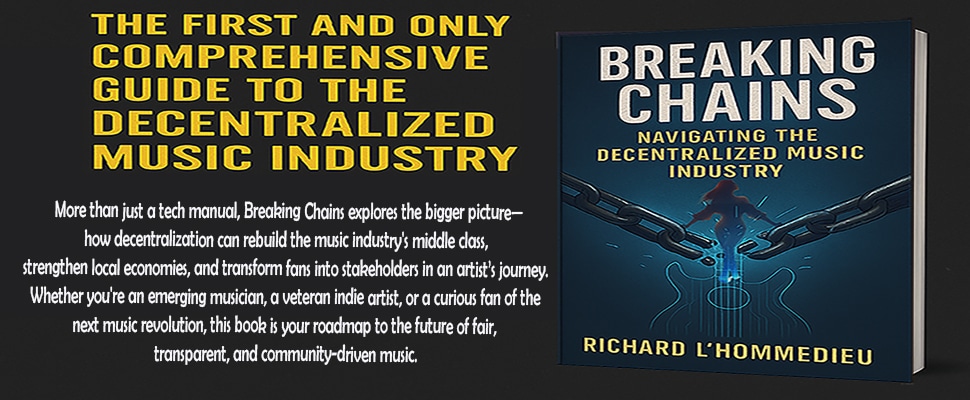
Breaking Chains – Navigating the Decentralized Music Industry

Breaking Chains is a groundbreaking guide for independent musicians ready to take control of their careers in the rapidly evolving world of decentralized music. From blockchain-powered royalties to NFTs, DAOs, and smart contracts, this book breaks down complex Web3 concepts into practical strategies that help artists earn more, connect directly with fans, and retain creative freedom. With real-world examples, platform recommendations, and step-by-step guidance, it empowers musicians to bypass traditional gatekeepers and build sustainable careers on their own terms.
More than just a tech manual, Breaking Chains explores the bigger picture—how decentralization can rebuild the music industry’s middle class, strengthen local economies, and transform fans into stakeholders in an artist’s journey. Whether you’re an emerging musician, a veteran indie artist, or a curious fan of the next music revolution, this book is your roadmap to the future of fair, transparent, and community-driven music.
Get your Limited Edition Signed and Numbered (Only 50 copies Available) Free Shipping Included
Discover more from Making A Scene!
Subscribe to get the latest posts sent to your email.


