


Room Acoustics on a Budget: How to Tame Your Bedroom Studio



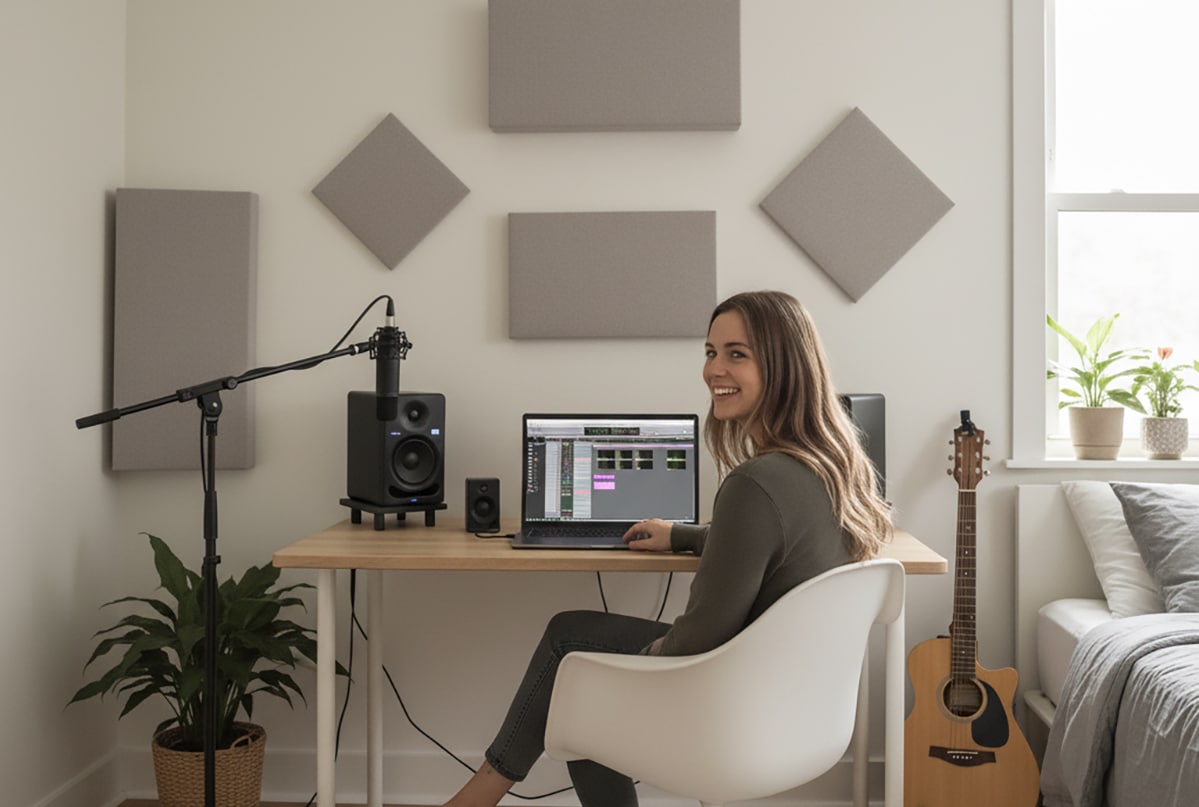
Making a Scene Presents – Room Acoustics on a Budget: How to Tame Your Bedroom Studio
So, you’ve got your mic, your interface, your laptop, and a dream. You’re ready to record your songs in your bedroom studio. But then you hit record and—ouch. The vocals sound boxy, the guitars are muddy, and the mix feels flat. It’s not your performance, and it’s not your gear. The problem is your room.
Most indie artists don’t realize this, but room acoustics play just as big a role in the quality of your recording as your microphone or preamp. Even the best gear will sound bad if your room is bouncing sound waves all over the place. The good news? You don’t need to spend thousands of dollars to fix it. With a little creativity, some DIY tricks, and a few budget-friendly upgrades, you can tame your bedroom studio and get professional-sounding recordings.
This article will walk you through simple, affordable ways to improve your room acoustics without turning your space into a cave of ugly foam panels. We’ll keep it practical, good-looking, and totally doable—even if your “studio” is also your bedroom.
Soundproofing vs. Sound Dampening: What’s the Difference?
This is one of the most common points of confusion for home studio owners. People often use “soundproofing” and “sound treatment” as if they mean the same thing, but they’re actually two very different goals.
-
Soundproofing is about keeping sound from getting in or out of your room. Imagine you’re trying to stop water from leaking out of a bucket. To soundproof, you’d need to build solid walls, seal cracks, use heavy doors, and maybe even float the floor. True soundproofing is expensive and usually requires construction. If your neighbor downstairs hears your bass or your family can’t sleep because of your late-night sessions, that’s a soundproofing problem.
-
Sound Dampening (Acoustic Treatment) is about controlling how sound behaves inside your room. This is what most bedroom studios need. Instead of stopping sound from leaving the room, you’re making sure it doesn’t bounce all over the place and mess up your recordings. Think of it like putting sponges in a bathtub—water (sound) is still in the tub, but now it’s being absorbed instead of splashing back in your face.
Here’s the key:
-
If you want to record without bothering your neighbors, you’d need soundproofing (and that’s tough on a budget).
-
If you want your recordings to sound cleaner, clearer, and more professional, you need sound dampening (acoustic treatment).
This article is all about dampening—taming reflections and tightening up your sound without expensive construction. That’s the part you can absolutely do with blankets, panels, and DIY traps.
Why Room Acoustics Matter
Think of sound like water. When you pour water into a small bowl, it swirls, splashes, and bounces around the edges before it settles. That’s exactly what your voice or guitar does in your bedroom. The sound waves leave the source (your instrument or speakers), hit the walls, ceiling, and floor, and bounce back. Those reflections overlap with the direct sound, creating weird echoes, boomy bass, or hollow mids.
That’s why recordings in untreated rooms often sound amateur. The mic isn’t just capturing your performance—it’s also capturing the room’s reflections. Your goal is to tame those reflections so your mic hears more of you and less of your walls.
First Step: Speaker and Mic Placement
Before you hang a single blanket or buy any foam, start with placement. Sometimes small changes in where you put your speakers or mic can make a huge difference.
For Speakers (Monitors):
-
Avoid corners. Bass builds up in corners, so don’t shove your monitors against the wall. Pull them out a bit, at least a foot if you can.
-
Create a triangle. Place your monitors so they and your head form an equilateral triangle. This gives you the most accurate stereo image.
-
Ear level is key. The tweeters (small cones) of your monitors should be at ear height when you’re sitting. Use stands, shelves, or even stacks of sturdy books to line them up.
For Microphones:
-
Stay away from walls. Don’t record right up against a wall. Move your mic into the room a little to avoid reflections.
-
Avoid the middle. Dead center of the room often sounds weird because of standing waves. Aim for a spot about a third of the way into the room.
-
Use your closet wisely. Closets full of clothes can act like natural vocal booths, soaking up reflections.
DIY Acoustic Treatment: Blankets, Carpets, and Curtains
You don’t have to spend a fortune to control reflections. Soft, thick materials absorb sound instead of bouncing it back. Look around your house—you probably already own some tools for better acoustics.
-
Blankets: Heavy moving blankets (you can grab these cheap at hardware stores) are lifesavers. Hang them on walls or drape them over mic stands behind your vocalist. The thicker, the better.
-
Carpets and Rugs: Hardwood or tile floors reflect sound. A thick area rug will cut down on reflections and make the room feel warmer. If you can double up with a carpet pad underneath, even better.
-
Curtains: Thin curtains won’t do much, but heavy blackout curtains are great. Use them over windows or even along bare walls.
Pro tip: Don’t just throw blankets around randomly. Try to keep it tidy. Use curtain rods, hooks, or DIY wooden frames to hang them neatly so your studio looks intentional, not like a laundry room exploded.
Affordable Alternatives to Foam
You’ve probably seen pictures of studios lined with foam wedges. They work, but they’re not the only option—and they’re often overpriced. One budget-friendly alternative is foambymail.com, which sells acoustic foam at a fraction of the cost of big-name brands. It won’t magically turn your room into Abbey Road, but it can help tame reflections.
Another great option is rockwool insulation (like Roxul Safe’n’Sound). Wrapped in fabric, it works better than foam for bass control and looks way more professional. Plus, you can DIY panels out of it without spending much.
How to Build Your Own Sound Baffles
Sound baffles are panels that absorb reflections and make your room sound tighter. Luckily, they’re easy to build.
You’ll need:
-
Rockwool or fiberglass insulation (2–4 inches thick)
-
Wooden frame (1x4s work fine)
-
Breathable fabric (canvas, burlap, or speaker cloth)
-
Staple gun
Steps:
-
Build a simple wooden frame.
-
Place the insulation inside the frame.
-
Wrap it tightly with fabric, making sure the insulation is fully covered.
-
Staple the fabric to the back.
Now you’ve got a professional-looking acoustic panel. Hang a few of these on the walls at reflection points (where sound would bounce from your speakers to your ears) and behind your mic. Your mixes will instantly sound clearer.
Bass Traps: Taming the Low End
The hardest thing to control in small rooms is bass. Low frequencies are like stubborn guests—they linger and pile up in corners. That’s why your mixes might sound boomy at home but thin everywhere else.
Bass traps are thicker versions of baffles that go in corners. You can build them the same way, just make them deeper (6–8 inches if possible). Place them in as many corners as you can—floor-to-ceiling if space allows. Even two traps can make a huge difference.
If DIY isn’t your thing, sites like foambymail.com or GIK Acoustics sell budget-friendly options.
Placement: Where to Put Your Panels
You don’t need to cover every inch of your walls. In fact, that would make the room sound lifeless. Instead, target the main reflection points.
-
First reflection points: Sit in your mix position, have a friend slide a mirror along the wall. Wherever you can see your monitors in the mirror, that’s a reflection point. Put a panel there.
-
Behind your monitors: A couple of panels on the wall behind your speakers help tighten up the sound.
-
Behind your mic: For vocals, hang a blanket or place a panel behind the singer to stop reflections bouncing back into the mic.
-
Corners: Bass traps go here. Prioritize the corners closest to your monitors.
Portable Solutions: Move It Around
Not everyone can glue panels to their bedroom walls—especially if you’re renting. Portable solutions work great too.
-
Freestanding baffles: Build two panels and hinge them together like a folding screen. Place them around your recording spot.
-
Mic shields: Those little curved foam shields you see behind mics aren’t perfect, but they help in untreated rooms.
-
Blanket forts: Yes, it works. Drape heavy blankets over a few mic stands to create a quick recording booth.
Keeping It Professional and Aesthetic
Here’s the thing: no one wants to sleep in a room that looks like a padded cell. Luckily, DIY treatment doesn’t have to look ugly. Some tips:
-
Wrap panels in fabric that matches your room—neutral colors, or even patterned fabric if you want style points.
-
Use nice curtain rods for blankets instead of duct tape.
-
Add LED strip lights around your panels for a vibe that feels more like a creative studio than a science experiment.
Remember, your space should inspire you as much as it treats sound.
The Payoff: Better Recordings, Better Mixes
Once you treat your room, you’ll notice the difference immediately. Vocals will sound more focused, guitars less muddy, and your mixes will translate better outside your studio. No more car-test nightmares where your track sounds great in your room but awful everywhere else.
And the best part? You don’t need to drop thousands on pro acoustic treatment. With some blankets, rugs, DIY panels, and smart placement, you can tame your bedroom studio for a few hundred bucks—or less.
Final Thoughts
Great recordings don’t come from gear alone. They come from controlling the space where you record. By treating your room—even on a budget—you’re giving your songs the professional polish they deserve. So grab some blankets, build a few panels, and start shaping your room into a space where your music can truly shine.
Your bedroom can be more than just a place to sleep. It can be the heart of your music career—and with a little effort, it can sound just as good as a pro studio.
Buy Us a Cup of Coffee!
Join the movement in supporting Making a Scene, the premier independent resource for both emerging musicians and the dedicated fans who champion them.
We showcase this vibrant community that celebrates the raw talent and creative spirit driving the music industry forward. From insightful articles and in-depth interviews to exclusive content and insider tips, Making a Scene empowers artists to thrive and fans to discover their next favorite sound.
Together, let’s amplify the voices of independent musicians and forge unforgettable connections through the power of music
Make a one-time donation
Make a monthly donation
Make a yearly donation
Buy us a cup of Coffee!
Or enter a custom amount
Your contribution is appreciated.
Your contribution is appreciated.
Your contribution is appreciated.
DonateDonate monthlyDonate yearlyYou can donate directly through Paypal!
Subscribe to Our Newsletter
Order the New Book From Making a Scene
Breaking Chains – Navigating the Decentralized Music Industry

Breaking Chains is a groundbreaking guide for independent musicians ready to take control of their careers in the rapidly evolving world of decentralized music. From blockchain-powered royalties to NFTs, DAOs, and smart contracts, this book breaks down complex Web3 concepts into practical strategies that help artists earn more, connect directly with fans, and retain creative freedom. With real-world examples, platform recommendations, and step-by-step guidance, it empowers musicians to bypass traditional gatekeepers and build sustainable careers on their own terms.
More than just a tech manual, Breaking Chains explores the bigger picture—how decentralization can rebuild the music industry’s middle class, strengthen local economies, and transform fans into stakeholders in an artist’s journey. Whether you’re an emerging musician, a veteran indie artist, or a curious fan of the next music revolution, this book is your roadmap to the future of fair, transparent, and community-driven music.
Get your Limited Edition Signed and Numbered (Only 50 copies Available) Free Shipping Included
Discover more from Making A Scene!
Subscribe to get the latest posts sent to your email.


