Real-Time AI Feedback: The Virtual Producer in Your Headphones



Making a Scene Presents – Real-Time AI Feedback: The Virtual Producer in Your Headphones
Listen to the Podcast Discussion to gain more insight into the Future of AI Feedback in your Studio
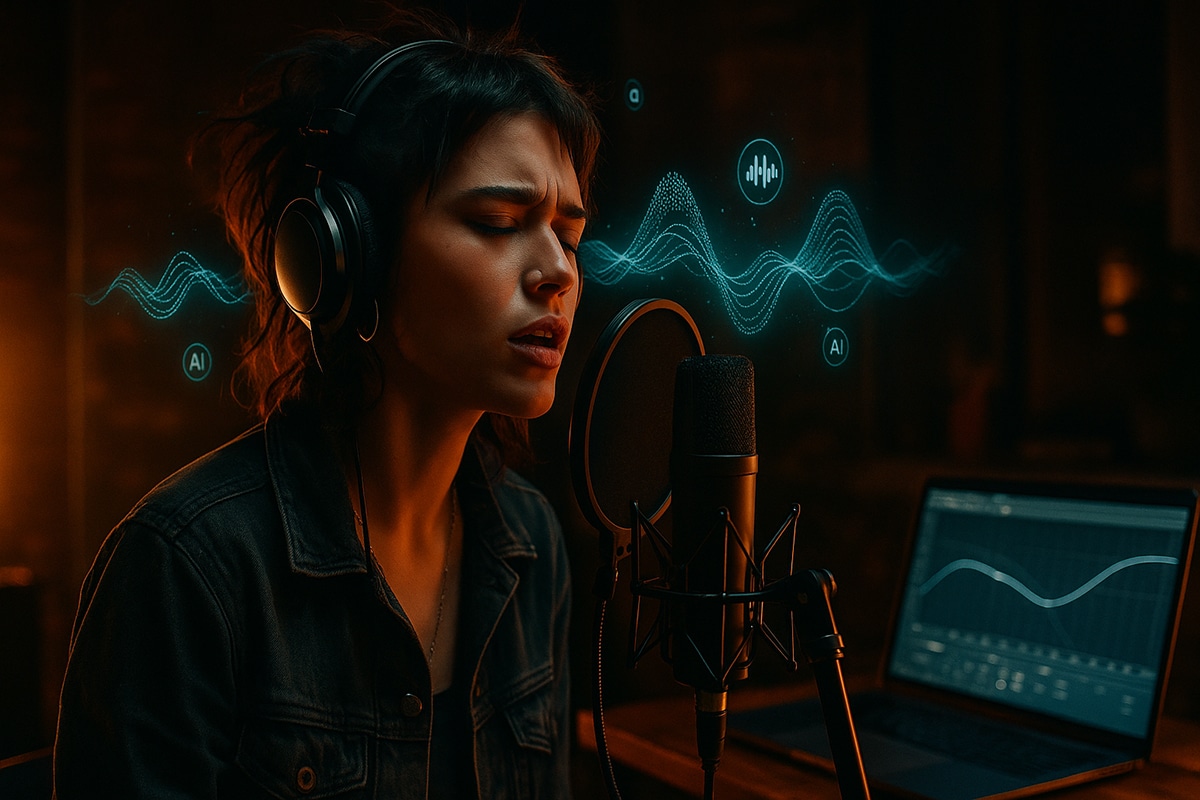
Imagine you’re in the middle of a take. The mic is hot, the groove feels right, but suddenly you hear a calm voice in your headphones: “Your vocals are clipping. Step back from the mic just a bit.” You adjust your distance, redo the phrase, and this time—perfect. No ruined take, no distorted peak, no need to scrub through the waveform later. That’s the future of recording with real-time AI feedback—where your computer doesn’t just capture sound, it coaches you.
This isn’t science fiction anymore. We’re already halfway there. The rise of AI-driven plugins and production tools is giving musicians real-time insights that used to require a producer or engineer standing behind the glass. Tools like Waves Clarity VX, iZotope Visual Mixer, and Sonible smart:gate are early examples of what’s coming next—a virtual producer that listens, analyzes, and helps you make better recordings on the spot.
The Dawn of AI Performance Coaching
Let’s start with what’s happening right now. Waves Clarity VX uses machine learning to separate your voice from background noise in real time. It listens intelligently, identifies the unwanted sounds—like fan hums or room echoes—and removes them without killing the tone of your voice. For a singer or podcaster recording in a home studio, that’s already like having a seasoned engineer whispering, “Don’t worry, I’ve got your background noise handled.”
Next, iZotope Visual Mixer lets you see your mix as a 3D soundstage. Instead of juggling faders and pan knobs, you drag each sound—vocals, guitars, drums—into position on the screen. It’s a kind of visual feedback loop that helps you understand balance and depth instantly. If your vocals are buried, you’ll see it right there in front of you. It’s not quite a voice in your headphones yet, but it’s definitely a mentor in your monitor.
Then there’s Sonible smart:gate, which listens to your incoming audio and automatically decides how to open and close the gate depending on the material. That means it can tell the difference between a snare hit, a vocal breath, or an ambient noise, and adapt in real time. It’s like having an engineer with perfect reflexes—one who never misses a beat.
These tools don’t just automate—they teach. By seeing what they do and hearing the results, you start learning what good gain staging, dynamics control, and spatial balance feel like. And that’s where the idea of a real-time AI production coach starts to get exciting.
From Static Plugins to Living Mentors
Imagine you’re tracking vocals and the AI says, “You’re singing too close to the mic—pull back two inches.” Or maybe it detects sibilance and gently nudges you: “Ease off your ‘S’ sounds, or let me apply a dynamic EQ for you.” You’re still in full control, but it’s like having an assistant who never gets tired and never misses a detail.
That’s where predictive AI monitoring comes in. Instead of reacting to mistakes after the fact, the system anticipates them. It can analyze your signal chain, detect risk points—like clipping levels or resonant frequencies—and alert you before they ruin a take. AI-powered gain staging could automatically balance your inputs across multiple tracks, ensuring your instruments all hit the sweet spot.
Companies like iZotope and Sonible are already laying the foundation for this kind of intelligence. Their AI tools don’t just process audio—they interpret it. The next evolution will connect that interpretation to natural language, allowing you to talk to your DAW in real time. Picture saying, “AI, tighten the vocal timing by 10 milliseconds,” and it just happens.
How AI “Listens” to You
Under the hood, these systems use machine learning models trained on thousands of audio samples. They learn what “good” sounds like and recognize patterns that lead to problems—like excessive noise, unbalanced frequencies, or dynamic peaks. As this technology matures, your AI assistant will start to recognize your unique style too.
For example, if you tend to sing louder during choruses or play your snare a little harder when you’re excited, the AI can predict it and compensate automatically. It might say, “Lowering your input gain to prevent clipping,” or even automate compression thresholds based on your habits. That’s not just smart—it’s personal.
Over time, your AI will essentially learn your sonic fingerprint. Think of it as a mentor that grows with you. After a few months of sessions, it might say, “This performance has more presence than your usual takes—keep that energy.” That’s the moment when AI stops being a tool and starts being a collaborator.
Artists Already Using AI in Real Time
Some artists are already experimenting with AI analysis during live recording. Electronic artists like Imogen Heap and Holly Herndon have integrated AI systems into their creative process, allowing the machine to respond to their performance on the fly. Herndon’s Spawn project, for instance, uses an AI voice model that learns from her vocal performances in real time, creating harmonies and textures as she sings.
Producers are also beginning to use AI-assisted metering tools to monitor recording quality live. Tools like Accusonus ERA Voice Leveler and Sonible smart:comp 2 analyze your dynamics continuously, helping you maintain consistency across takes. While these aren’t full-blown virtual producers yet, they’re clear signs of where things are headed.
The Future: An Intelligent Producer That Grows With You
Picture a near-future DAW that’s fully integrated with an AI mentor. You put on your headphones, load your session, and a calm voice greets you: “Hey, let’s start with a warm-up take. Your mic level is a little hot; I’ve adjusted it. Tempo locked at 92 BPM. Ready when you are.”
As you record, it monitors your pitch, timing, dynamics, and tone—offering subtle guidance like, “You’re rushing the third beat in that verse,” or “Your tone is perfect, let’s double that take for stereo width.” You could ask it to “add light compression,” “save this take as best,” or “check phase on drum mics,” and it would respond immediately.
This type of AI wouldn’t just fix problems—it would train your ear. It would explain why something sounds off and show you how to correct it next time. The more you record, the smarter it gets, learning your preferences and adapting to your workflow. That’s what makes it a virtual producer, not just another plugin.
The long-term vision even extends to live performance. Imagine in-ear monitors with built-in AI feedback that adjust EQ, balance, and vocal reverb in real time, based on the acoustics of the venue. You’d have your own personal sound engineer on stage with you, invisible but always listening.
Why Musicians Should Care
For indie artists and home studio producers, this is a game-changer. You don’t need to rent an expensive studio or hire an engineer to get pro-level feedback. With AI, every take can be optimized, every mistake caught early, and every mix improved before you even hit playback.
More importantly, AI feedback tools can teach you to hear like a producer. When your system tells you, “Your mids are masking the vocal clarity,” and you adjust accordingly, you start internalizing that skill. The result is not just a cleaner mix—it’s a smarter musician.
And for the new generation of artists raised on laptops and headphones, this kind of responsive, always-on mentorship will feel natural. It’s not replacing creativity—it’s amplifying it.
The Bottom Line
Real-time AI feedback is turning recording sessions into conversations. The line between artist and engineer is blurring, replaced by a partnership between human instinct and machine precision. Today’s tools—like Waves Clarity VX, iZotope Visual Mixer, and Sonible smart:gate—are the first whispers of that future. Tomorrow’s tools will talk back, guide you, and grow alongside you.
So next time you hit record, imagine that virtual producer in your headphones—not judging, not replacing—but coaching you toward your best performance. The future of music production isn’t about replacing the human touch. It’s about refining it, one real-time whisper at a time.
 |  Spotify |  Deezer |  Breaker |
 Pocket Cast |  Radio Public |  Stitcher |  TuneIn |
 IHeart Radio |  Mixcloud |  PlayerFM |  Amazon |
 Jiosaavn |  Gaana |  Vurbl |  Audius |
 Reason.Fm | |||
Find our Podcasts on these outlets
Buy Us a Cup of Coffee!
Join the movement in supporting Making a Scene, the premier independent resource for both emerging musicians and the dedicated fans who champion them.
We showcase this vibrant community that celebrates the raw talent and creative spirit driving the music industry forward. From insightful articles and in-depth interviews to exclusive content and insider tips, Making a Scene empowers artists to thrive and fans to discover their next favorite sound.
Together, let’s amplify the voices of independent musicians and forge unforgettable connections through the power of music
Make a one-time donation
Make a monthly donation
Make a yearly donation
Buy us a cup of Coffee!
Or enter a custom amount
Your contribution is appreciated.
Your contribution is appreciated.
Your contribution is appreciated.
DonateDonate monthlyDonate yearlyYou can donate directly through Paypal!
Subscribe to Our Newsletter
Order the New Book From Making a Scene
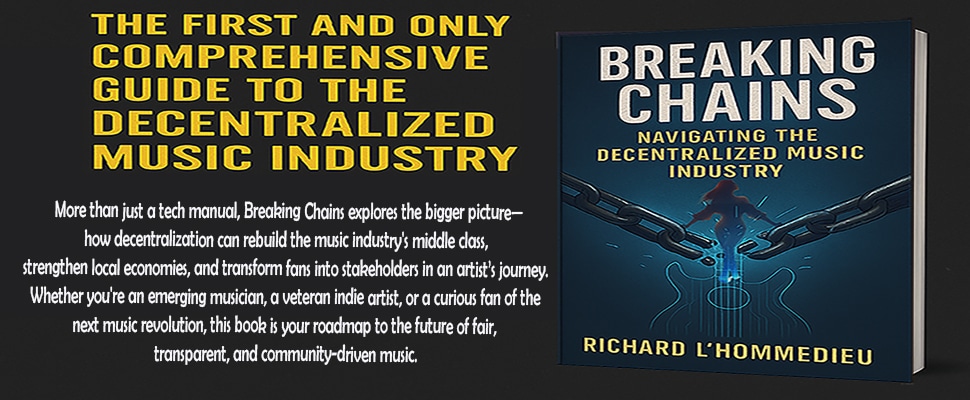
Breaking Chains – Navigating the Decentralized Music Industry

Breaking Chains is a groundbreaking guide for independent musicians ready to take control of their careers in the rapidly evolving world of decentralized music. From blockchain-powered royalties to NFTs, DAOs, and smart contracts, this book breaks down complex Web3 concepts into practical strategies that help artists earn more, connect directly with fans, and retain creative freedom. With real-world examples, platform recommendations, and step-by-step guidance, it empowers musicians to bypass traditional gatekeepers and build sustainable careers on their own terms.
More than just a tech manual, Breaking Chains explores the bigger picture—how decentralization can rebuild the music industry’s middle class, strengthen local economies, and transform fans into stakeholders in an artist’s journey. Whether you’re an emerging musician, a veteran indie artist, or a curious fan of the next music revolution, this book is your roadmap to the future of fair, transparent, and community-driven music.
Get your Limited Edition Signed and Numbered (Only 50 copies Available) Free Shipping Included
Discover more from Making A Scene!
Subscribe to get the latest posts sent to your email.


