

Predictive Mixing: How AI Anticipates Problems Before You Hear Them



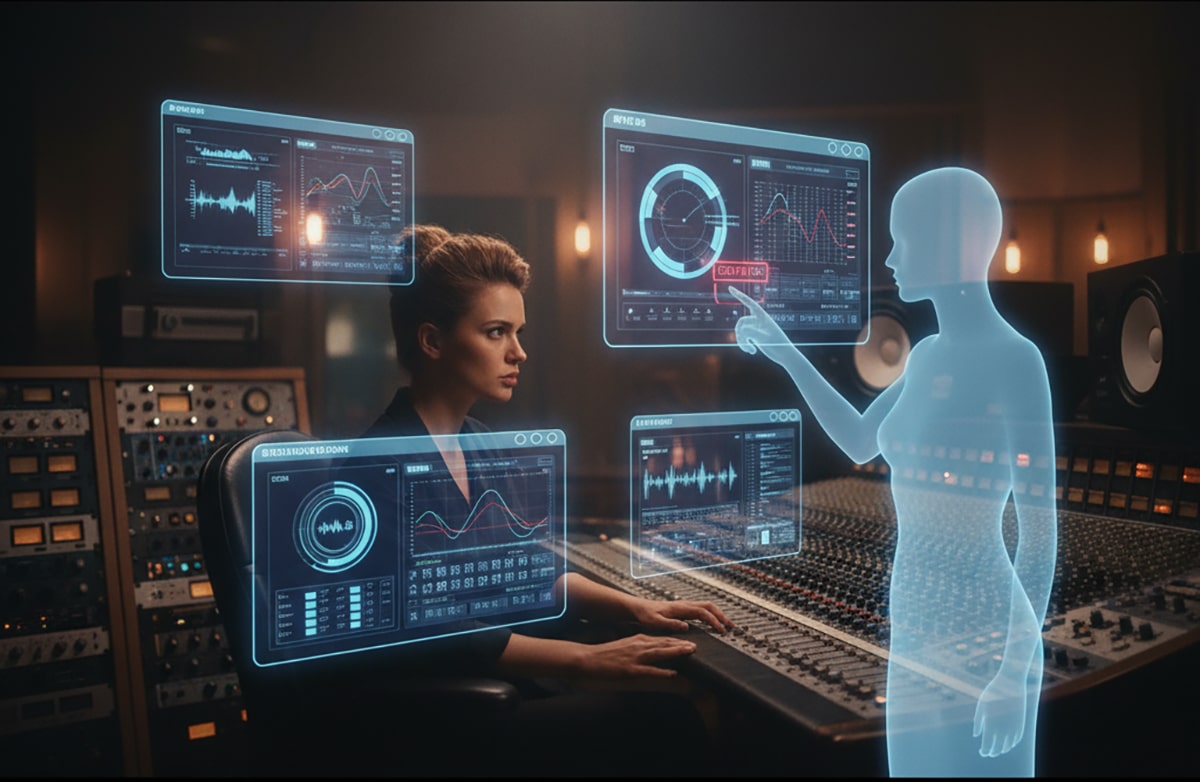
Making a Scene Presents – Predictive Mixing: How AI Anticipates Problems Before You Hear Them
Listen to the Podcast Discussion to gain more insight into Predictive Mixing
A Deep-Dive Guide for Indie Artists Who Want a Cleaner, Faster, Smarter Mix
If you’ve been mixing your own music for a while, you already know how chaotic the process can feel. You dial in the vocals until they finally sit right, but then the guitars suddenly jump out too bright. You smooth the guitars, and somehow the kick drum disappears. So you push the kick, and the bass turns to mud. Then you fix the bass, and your vocals sound dull again. It’s like chasing ghosts in your own mix.
That endless cycle is fading away. Fast.
We are entering the era of predictive mixing — a world where your AI tools spot the trouble way before your ears even know something is wrong. These systems don’t get tired, don’t second-guess themselves, and don’t lose perspective after listening to the same chorus 200 times. They look at the deeper patterns in your tracks and tell you exactly where problems will show up, even if you haven’t noticed them yet.
For indie artists who mix at home, this is a massive shift. AI is finally doing the part of the job that used to take years of ear training and painful trial-and-error. And before you think this is sci-fi, keep this in mind: Predictive Mixing isn’t some future idea. It’s already happening inside the tools you may be using every day.
Let’s break the whole thing wide open.
So What Exactly Is Predictive Mixing?
Predictive Mixing is when your AI tools analyze your audio and identify problems before they ever become audible. Instead of reacting to issues you hear, it jumps ahead and prevents them from happening in the first place. Imagine mixing with a seasoned producer sitting in the back of the room, humming along, then suddenly tapping you on the shoulder saying that when the chorus kicks in your vocal is going to get buried behind that guitar, or that once those drums get loud you’re going to get some ugly pumping from that compressor. That’s what predictive mixing feels like — a silent partner who sees the disaster before it hits.
Traditional mixing waits for a problem to show itself. Predictive mixing catches the problem while it’s still in hiding. This isn’t just automated EQ or compression. It’s AI that understands patterns, trends, and interactions between tracks long before those interactions create audible chaos. Think of it as preemptive cleanup for your mix.
How Predictive Mixing Works (Without the Tech Jargon)
At the heart of predictive mixing are machine-learning models that have been trained on huge volumes of audio. These models learn what clean, balanced mixes look and sound like. They’ve also been shown messy mixes with phase problems, masking issues, harshness, clipping, and dynamics going off the rails. Because they’ve been exposed to so many examples, they start spotting those signs the moment they appear in your session.
While this is happening, the plugin also measures the raw math of your audio — the frequency buildup, transient behavior, left-right balance, and overall loudness. It doesn’t “hear” sound the way you do. It reads waveforms the way a doctor reads an X-ray. All that data feeds into predictive algorithms. These are the systems that simulate your mix’s future by forecasting things like frequency collisions, dynamics problems, mono compatibility issues, or phase conflicts before they show up in your speakers.
The result is that the AI can warn you that something bad is about to happen, and in many cases, it can fix the issue automatically.
The Tools Already Doing Predictive Mixing
You don’t have to wait for some future DAW update to get your hands on predictive mixing. It’s already hiding inside plugins you may own.
Ozone 12 Master Assistant
https://www.izotope.com/en/products/ozone.html
When you run a track through Ozone’s Master Assistant, it isn’t just adjusting EQ curves. It evaluates the entire tonal balance of your track and predicts what’s going to fall apart once the song gets louder. It anticipates low-end build-up, high-end harshness, overly squashed transients, and imbalances that might happen between sections of the song. The Stabilizer module jumps in as a constant guardian, softening frequency spikes before you even hear them. And the Impact module looks for micro-dynamics issues that might wreck the groove later on.
Sonible smart:comp 2
https://www.sonible.com/smartcomp2/
smart:comp 2 listens to your audio and makes a compression profile built around its future behavior. It understands whether your track will clash with others, whether the compressor will pump too hard once the arrangement fills out, or whether certain frequencies will overwhelm the others. This isn’t guesswork. It’s based on patterns the machine has learned by studying thousands of mixes.
iZotope Unmask (in Nectar and other bundles)
https://www.izotope.com/en/products/nectar.html
This plugin is the closest thing to cheating legally available. You feed it two tracks — say, a vocal and a guitar — and it instantly tells you where frequencies will collide. Instead of waiting for your chorus to sound muddy or your vocal to get buried, Unmask steps in and reshapes things so the important element stays clear. You don’t even get a chance to hear the problem because it never makes it to the speakers.
Neutron 5: Predictive Mixing Inside the Session, Not Just on the Master
The tools above are powerful, but Neutron 5 is where predictive mixing really starts infiltrating your entire session.
Website: https://www.izotope.com/en/products/neutron.html
Neutron 5 isn’t just a channel strip with EQ, compression, saturation, or transient shaping. It behaves like a smart mix brain that spreads across multiple tracks and observes how they interact. When you put Neutron on your drum bus, bass track, guitars, or vocals, it doesn’t treat each one like a lonely island. It analyzes everything as a whole ecosystem. It looks at what your kick is doing to the bass, how your guitars might interfere with the vocal, and where frequency or phase conflicts are about to blow up.
You can literally watch Neutron predict masking before it happens. When your kick and bass start getting into each other’s space, Neutron highlights the collision. Instead of guessing which instrument should dominate the area around 60 Hz or which one should stay clear at 120 Hz, Neutron shows you the overlap visually and guides your hand as you carve out room. You start shaping the mix before the conflict even becomes audible.
The Assistant in Neutron is another perfect example of predictive behavior. When you run it on a vocal or instrument, it listens for common problems and builds a full processing chain tailored to what it thinks the track will struggle with later. If the vocal has some low-mid mud that will eventually cloud the mix, or if the snare is going to poke out too aggressively once the full arrangement hits, Neutron sets the stage for you in advance. You’re still the one shaping the tone, but Neutron eliminates the busywork and gives you a smarter starting point.
The Unmask function inside Neutron is especially useful. It treats your main track as the “priority” and clears space in the competing track automatically. If you want your vocal to stay front and center while a heavy guitar riff comes in, Neutron anticipates where the guitar will step on the vocal frequencies and ducks them with intelligent EQ and dynamics. It’s predictive mixing in real time — the exact type of assistance engineers used to wish for during high-pressure mix sessions.
When you connect Neutron 5 with other iZotope tools like Ozone, Nectar, Relay, or Tonal Balance Control, you end up with something close to an AI-powered mixing team. Neutron predicts problems inside the mix, Nectar guards the vocal, Ozone makes sure the master is stable, and Tonal Balance Control ensures the whole track is moving toward the kind of frequency curve that commercial records tend to follow. It all works together in one predictive ecosystem.
For indie musicians working from a home setup, Neutron 5 might be the strongest real-world example of where predictive mixing is going. It doesn’t replace your creativity or your ears. It simply keeps you from doing the things every mixer accidentally does — carving too much, boosting too much, letting low mids build up, smashing transients, or letting masking destroy clarity. Neutron lets you mix more confidently without worrying that your choices are secretly breaking the rest of the session.
Why Predictive Mixing Sometimes Beats Human Ears
Your ears are powerful. They’re also unreliable. Long sessions fatigue them. Room acoustics mess with them. Cheap monitors distort your perception. Earbuds change everything. And sometimes you just miss stuff. It happens to every engineer on earth.
AI doesn’t get tired. It doesn’t adjust its judgment based on mood, stress, caffeine, or guesswork. It sees issues with cold, emotionless accuracy. That doesn’t make AI better than you — it makes AI the perfect assistant. You still make all the creative choices. The AI makes sure your creativity doesn’t destroy your technical foundation.
The Big Problems AI Predicts Before You Ever Hear Them
AI is scarily good at spotting frequency masking — when two sounds fight for the same space. It’s good at spotting phase problems that will kill your snare drum once the song is heard in mono. It notices low-end buildup that will crush your mix during loud sections. It spots harshness and resonances that your ears won’t notice until they’re worn out. And it predicts over-compression or pumping based on the dynamics of your chorus or drop.
It even sees stereo width issues long before you check your mix on headphones or earbuds. Predictive mixing isn’t magic. It’s math, pattern recognition, and machine learning — and it’s damn good at it.
Traditional Mixing vs Predictive Mixing
Traditional mixing works on a simple loop: you hear a problem, you fix a problem, and then you cross your fingers that fixing the problem didn’t cause five more problems somewhere else. It’s a constant cycle of reacting to what your ears tell you.
Predictive mixing flips the workflow completely. Instead of waiting for issues to blow up, AI flags them in advance, and often corrects them immediately. You spend less time hunting down issues and more time shaping the creative direction of your track. The better your tools become, the more time you get back for the fun part — actually making music.
The Future: What Self-Healing Mixes Will Actually Look Like
We are closer than ever to a DAW with something like a “self-healing mode.” Imagine loading your stems and immediately getting a pop-up that says your kick and bass are on a crash course, your vocal EQ curve will get swallowed in the second verse, and your reverb will create masking in the chorus. Now picture clicking one button and watching your DAW adjust EQ, change compressor timing, rebalance gain staging, correct phase, and fix stereo width in seconds.
That’s not fantasy. That’s the natural next step based on the tools we already have. Soon your DAW will adjust itself when you make changes that break the mix. Soon your mix will adapt based on playback system, genre, arrangement, and even your personal mix preferences. Your DAW will learn how you mix. It will memorize your habits and predict what you’re likely to fix before you even touch a knob.
This isn’t replacing engineers. It’s upgrading them.
Using Predictive Mixing Today: A Real Workflow
Right now, you can already take advantage of predictive tech using tools like smart:comp 2, iZotope Unmask, Ozone 12 Master Assistant, Tonal Balance Control, and Soothe2 from oeksound. By feeding your vocals, drums, guitars, and synths through these tools, your mix will practically warn you when you’re breaking it.
It’s not fully “self-healing” yet, but it’s damn close. If you lean into these tools now, you’ll get the advantages long before mainstream engineers admit the game has changed.
The Bottom Line
Predictive mixing isn’t here to replace human ears, creativity, or taste. It’s here to eliminate the blind spots. It gives indie artists with home studios the power that only big-budget studios used to have. You get cleaner mixes, fewer surprises, faster results, and a partner who never gets tired and never stops scanning for trouble.
The engineers who understand how to work with AI — not against it — are the ones who will dominate the new era of music production.
Predictive mixing isn’t the future. It’s the present. And the artists who embrace it now will be miles ahead of those still fighting mud and harshness with nothing but their ears and a prayer.
 |  Spotify |  Deezer |  Breaker |
 Pocket Cast |  Radio Public |  Stitcher |  TuneIn |
 IHeart Radio |  Mixcloud |  PlayerFM |  Amazon |
 Jiosaavn |  Gaana |  Vurbl |  Audius |
 Reason.Fm | |||
Find our Podcasts on these outlets
Buy Us a Cup of Coffee!
Join the movement in supporting Making a Scene, the premier independent resource for both emerging musicians and the dedicated fans who champion them.
We showcase this vibrant community that celebrates the raw talent and creative spirit driving the music industry forward. From insightful articles and in-depth interviews to exclusive content and insider tips, Making a Scene empowers artists to thrive and fans to discover their next favorite sound.
Together, let’s amplify the voices of independent musicians and forge unforgettable connections through the power of music
Make a one-time donation
Make a monthly donation
Make a yearly donation
Buy us a cup of Coffee!
Or enter a custom amount
Your contribution is appreciated.
Your contribution is appreciated.
Your contribution is appreciated.
DonateDonate monthlyDonate yearlyYou can donate directly through Paypal!
Subscribe to Our Newsletter
Order the New Book From Making a Scene
Breaking Chains – Navigating the Decentralized Music Industry

Breaking Chains is a groundbreaking guide for independent musicians ready to take control of their careers in the rapidly evolving world of decentralized music. From blockchain-powered royalties to NFTs, DAOs, and smart contracts, this book breaks down complex Web3 concepts into practical strategies that help artists earn more, connect directly with fans, and retain creative freedom. With real-world examples, platform recommendations, and step-by-step guidance, it empowers musicians to bypass traditional gatekeepers and build sustainable careers on their own terms.
More than just a tech manual, Breaking Chains explores the bigger picture—how decentralization can rebuild the music industry’s middle class, strengthen local economies, and transform fans into stakeholders in an artist’s journey. Whether you’re an emerging musician, a veteran indie artist, or a curious fan of the next music revolution, this book is your roadmap to the future of fair, transparent, and community-driven music.
Get your Limited Edition Signed and Numbered (Only 50 copies Available) Free Shipping Included
Discover more from Making A Scene!
Subscribe to get the latest posts sent to your email.


