
Music Metadata on the Blockchain: Fixing a Broken System



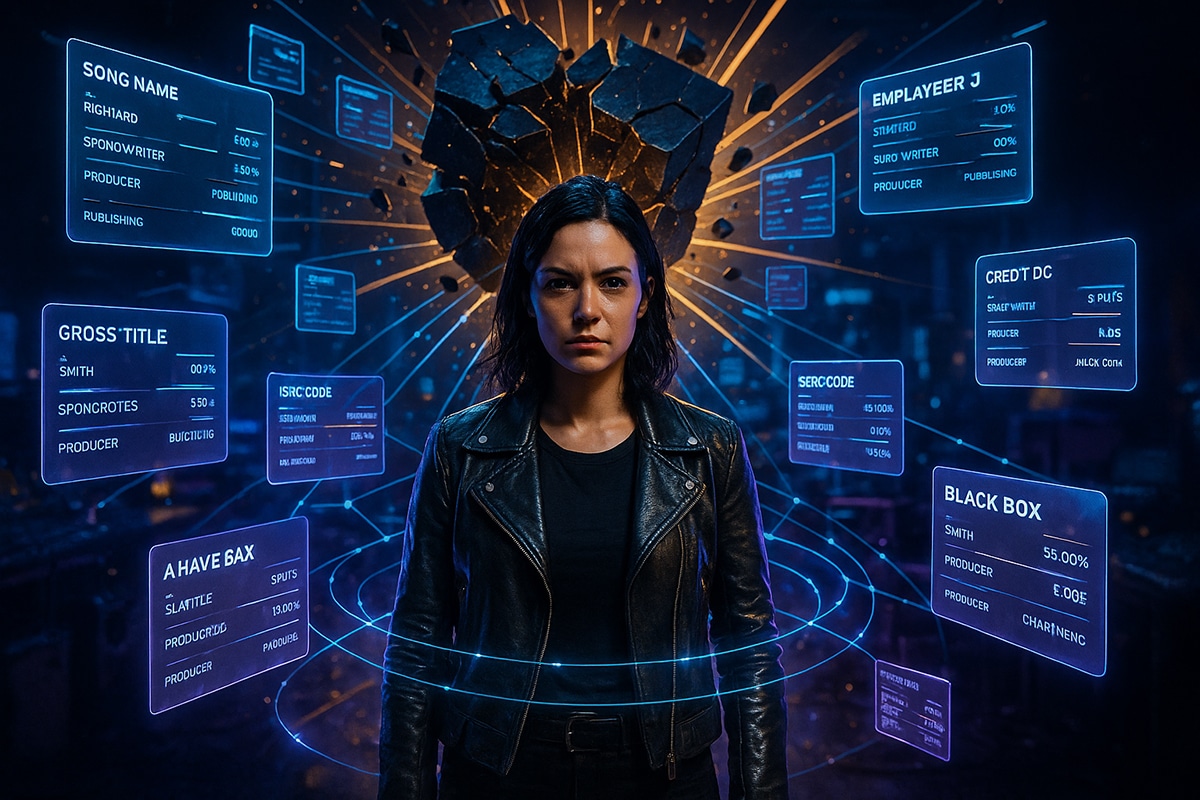
Making a Scene Presents – Music Metadata on the Blockchain: Fixing a Broken System
Listen to the podcast discussion to gain more insight into the Broken Meta data system
The music industry has a weird problem that nobody outside the business talks about. It’s not streaming payouts. It’s not labels taking too much money. It’s something way more basic, almost embarrassing when you think about it. The whole industry still runs on broken metadata. Metadata is the simple information about a song like who wrote it, who produced it, who played on it, who owns the master, who owns the publishing, and what identifiers track those rights. Without it, the entire royalty system collapses. And right now, that system is held together with duct tape, Excel sheets, and outdated databases that can’t keep up with the global music economy.
This isn’t a small issue. Bad metadata costs indie musicians billions of dollars in lost royalties every year. Money that should go straight into their pockets just gets lost in a maze of mismatched credits, outdated copyright registrations, missing songwriter names, and old catalog records that were never updated. Most of the royalty agencies like ASCAP, BMI, SESAC, SoundExchange, and even the MLC are stuck with old software that does not talk to each other. They can’t match creator names across all their systems, so the money sits in giant piles of “unmatched royalties.” The industry calls this “black box money,” and it’s massive.
This is where Web3 steps in, and honestly, it’s one of the few places where blockchain isn’t hype. It’s actually the fix the music world has needed for decades. Decentralized metadata is the answer because it stops the confusion at the source. Instead of having your credits scattered across ten different databases around the world, everything lives in one permanent, tamper-proof, open registry controlled by no single company. It turns metadata from a messy chore into a clean, universal source of truth. And once that happens, royalties stop falling through the cracks and start going where they belong.
Today we’re going to break this whole thing down in simple language. We’re going to look at why the current metadata system is broken, how blockchain fixes all of it, what standards exist right now, and how indie artists can actually use Web3 tools to protect their royalties. Don’t worry if you’ve never heard of DDEX or MusicOASIS or Dequency. You will by the end of this, and it’ll actually make sense.
Let’s dig in.
Why Music Metadata Is a Disaster in the First Place
Most people think a song is just an audio file you upload to Spotify. But the industry sees it very differently. A song is a data package. Inside that package are names, identifiers, ownership shares, and codes that tell the world who should get paid. The problem is that most artists have no idea this data even exists, and the companies that handle it can’t agree on how to store or share it.
When you upload a track to a distributor, you think the work is done. But that distributor has to send your credits to performance rights organizations, mechanical rights organizations, neighboring rights groups, international societies, publishers, sub-publishers, and streaming platforms. Every one of these systems needs the same data, and every one of them stores it differently.
ASCAP and BMI don’t even use the same formats. SoundExchange doesn’t talk to the PROs. The MLC only covers U.S. mechanical royalties. If your metadata is slightly wrong in one system, everything falls apart. Even small typos can cost you money. A missing middle initial can block a payment. A misspelled producer name can make a credit disappear forever. A missing ISRC or ISWC can turn a song invisible to half the world’s tracking systems.
This isn’t rare. It’s happening millions of times every year.
When the systems can’t match the data, the money goes into the black box. After a certain amount of time, the black box money gets paid out to the biggest artists instead of the ones who earned it. That means Drake, Taylor Swift, Bad Bunny, and Beyoncé get the indie artists’ lost royalties. The majors love this system because it quietly funnels money upward.
Web3 doesn’t like that. Web3 is built to destroy systems that hide or redirect value. This is why music metadata is finally getting attention in the decentralized world. When the data is wrong, the system is rigged. And the only fair fix is a decentralized registry that nobody can manipulate or rewrite.
The Music Industry’s Credit Crisis
There’s another layer to this mess. Credits don’t just affect money. They affect careers. A producer who doesn’t get properly credited doesn’t get hired. A songwriter who isn’t listed doesn’t get recognition. A session musician who isn’t named can’t prove their work.
This credit crisis is so common that it’s become normal. But it shouldn’t be.
This is where blockchain makes things simple. When metadata is stored on-chain, it becomes permanent and transparent. If your name goes into the record, nobody can edit it later, no label can erase it, and no company can rewrite history. That matters more than people realize, especially in an industry where gatekeeping and political games still decide who gets seen.
How Blockchain Metadata Works (In Simple Language)
When you hear “blockchain,” you might think of crypto coins or NFTs. But the most important part of blockchain for music isn’t the tokens. It’s the ledger. A blockchain ledger is a permanent record. Once something is written into it, it can’t be changed or hidden. That’s perfect for music metadata because the industry has spent decades losing, changing, or hiding credits.
Here’s what happens when metadata is stored on-chain. The moment you register a song on a decentralized registry, all your information is timestamped, verified, and made public on a global database. Anyone in the world can see who wrote the song, who produced it, who owns the master, and what the splits are. That information never gets lost because it’s not stored in one company’s computer. It lives on thousands of nodes around the world.
This kind of metadata is interoperable. That means every music platform, distributor, publisher, and rights society can pull from the same source. Nobody has to maintain their own version of the truth. Everyone uses the same one.
This is what the music industry should have built decades ago, but Web3 did it instead.
The Standards Behind Decentralized Metadata
The decentralized music world isn’t starting from scratch. There are already groups building standards to fix the mess the old industry left behind.
One of the most important is DDEX, which you can find at https://www.ddex.net/. DDEX is a consortium building the rules for how music companies share data. They’ve been around for a while, but Web3 developers are starting to adopt their standards into on-chain systems.
Another key system is MusicOASIS, the open metadata standard for the decentralized music economy. You can learn more about the project at https://musicoasis.io/. MusicOASIS focuses on making sure that all metadata is clean, open, and stored in a way that works across platforms, blockchains, and countries. It’s a major step toward building a universal registry.
Then there is Dequency at https://www.dequency.com/, which is the first decentralized sync licensing marketplace that uses on-chain metadata to automate rights and payments. While Dequency focuses on sync, their whole platform depends on clean credit data. They show the power of storing credits on-chain in real time.
These standards matter because metadata is useless if every platform uses a different language. Blockchain fixes the ownership problem, but standards fix the communication problem. Together, they form the new backbone of the decentralized music economy.
How On-Chain Metadata Protects Your Royalties
The beauty of blockchain metadata is that it stops the leaks before they happen. Right now, royalties slip through the cracks because data gets lost between companies. But on-chain metadata doesn’t move from system to system. It stays in the same place, and the platforms come to it.
This means your name, your ownership share, your identifiers, and your credits never get lost. And more importantly, they never get overwritten by someone else. The blockchain record becomes the authoritative source for royalty payments.
Imagine uploading a song and automatically registering your metadata in a universal, open database. Every royalty system worldwide can read that record automatically. They don’t have to guess. They don’t have to match data. They don’t have to hope your distributor typed everything right. Your credits become part of a global truth-machine.
When this happens, royalties finally go where they belong. No more black box. No more mismatched credits. No more money slipping away forever.
The ISRC Problem and the Web3 Solution
One of the biggest flaws in the current metadata system is the ISRC code. The ISRC is a unique identifier for a sound recording. It’s the closest thing we have to a universal ID for songs. But the ISRC system is outdated, centralized, and not transparent. Getting an ISRC is slow, and the code isn’t always tied correctly to the song’s metadata.
Web3 developers are already talking about a replacement: the on-chain identifier. Instead of a temporary code stored in a company’s database, a Web3 identifier is minted permanently. The moment your metadata hits the blockchain, it gets an immutable ID that can be used everywhere. This ID never breaks, never gets mistyped, and can’t be duplicated.
This one change could save independent artists millions.
The Dream of Automated Global Payouts
Once metadata lives on the blockchain, royalties can move automatically. Smart contracts can read metadata, calculate splits, and send payments directly to the wallets of every rights holder. No middlemen. No delays. No guessing.
Platforms like Audius, Royal, Sound, and Catalog are already leaning heavily in this direction. Audius, for example, is experimenting with artist coins and on-chain identity features at https://audius.co/. Royal at https://royal.io/ uses metadata tied to royalty shares. And Catalog at https://catalog.works/ uses on-chain records to show ownership and creator credits.
When metadata becomes the anchor, payments become the flow. Everything simply works.
Why This Matters Most for Indie Artists
Major labels have teams that track their metadata, monitor their registrations, and chase down royalties. Indie artists do not. That means independents lose the most money when the system breaks.
Blockchain levels the playing field. It takes away the advantage that only major labels had. It replaces back-door databases with open registries anyone can use. This is how indie artists finally get treated fairly. When metadata becomes decentralized, the industry stops depending on gatekeepers and old companies to decide who gets paid.
The dream of a decentralized music economy starts here, and most musicians don’t even see it happening. But everything from smart contracts to NFTs to artist coins depends on this one thing: perfect metadata. Without it, the decentralized ecosystem cannot function.
This is why this transition is so important. It’s not just about technology. It’s about justice for artists who have been losing money for decades.
How Indie Artists Can Start Using On-Chain Metadata Today
You don’t need to understand coding or how blockchains work to protect your metadata. Platforms are already making it simple.
Dequency lets you register your metadata for sync licensing. Audius is experimenting with on-chain identity and artist coins. MusicOASIS is building the standards for you. As these systems evolve, more tools will show up that make it easy for artists to register metadata with a few clicks.
The goal is to make metadata registration automatic. Upload a song once. Mint the metadata once. Let the smart contracts do the rest.
When indie artists adopt these systems early, they get a head start on protecting their rights in the new music economy. This isn’t a trend. This is the future backbone of the music business. And the artists who control their metadata will control their income.
The Future: A Global Decentralized Music Registry
If you zoom out and look at what’s happening, you can see where all this is heading. The old system is going to collapse under its own weight. It can’t hold the global music economy forever. There are too many songs, too many platforms, too many rights holders, and too much confusion.
A global decentralized registry is the only solution that makes sense. Not a single company. Not a single industry group. A shared, open, blockchain-based record of every song, every credit, every ownership share, and every identifier.
Everything else in the decentralized music industry sits on top of this. Artist coins. Tokenized royalties. Smart contract splits. Automated payouts. Sync licensing. Fractional song ownership. On-chain publishing catalogs.
None of it works without clean metadata.
This is the shift the industry has been avoiding for years, but Web3 is making it happen anyway. The next generation of music platforms won’t even build support for the old systems. They’ll use blockchain metadata from day one.
This is the “last rewrite” of the music industry’s source code. And when it’s done, independent artists will finally have a system that doesn’t lose their money or erase their credits.
Final Thoughts
Music has never had a clean, fair, global database of credits. Not in a hundred years. Every decade a new format shows up, a new technology takes over, and the metadata gets lost in the shuffle. Vinyl to cassette. Cassette to CD. CD to MP3. MP3 to streaming. But blockchain breaks that pattern. This time, the data becomes permanent.
Metadata has always been the boring part of the music business. But in Web3, it becomes the most powerful part. It becomes the foundation for a world where indie artists finally get paid what they deserve, their credits are never erased, and their ownership is baked into the system itself.
This is how we fix a broken system. Not with hype. Not with corporate promises. But with decentralized truth that can’t be erased.
 |  Spotify |  Deezer |  Breaker |
 Pocket Cast |  Radio Public |  Stitcher |  TuneIn |
 IHeart Radio |  Mixcloud |  PlayerFM |  Amazon |
 Jiosaavn |  Gaana |  Vurbl |  Audius |
 Reason.Fm | |||
Find our Podcasts on these outlets
Buy Us a Cup of Coffee!
Join the movement in supporting Making a Scene, the premier independent resource for both emerging musicians and the dedicated fans who champion them.
We showcase this vibrant community that celebrates the raw talent and creative spirit driving the music industry forward. From insightful articles and in-depth interviews to exclusive content and insider tips, Making a Scene empowers artists to thrive and fans to discover their next favorite sound.
Together, let’s amplify the voices of independent musicians and forge unforgettable connections through the power of music
Make a one-time donation
Make a monthly donation
Make a yearly donation
Buy us a cup of Coffee!
Or enter a custom amount
Your contribution is appreciated.
Your contribution is appreciated.
Your contribution is appreciated.
DonateDonate monthlyDonate yearlyYou can donate directly through Paypal!
Subscribe to Our Newsletter
Order the New Book From Making a Scene
Breaking Chains – Navigating the Decentralized Music Industry
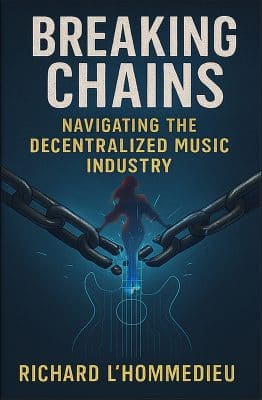
Breaking Chains is a groundbreaking guide for independent musicians ready to take control of their careers in the rapidly evolving world of decentralized music. From blockchain-powered royalties to NFTs, DAOs, and smart contracts, this book breaks down complex Web3 concepts into practical strategies that help artists earn more, connect directly with fans, and retain creative freedom. With real-world examples, platform recommendations, and step-by-step guidance, it empowers musicians to bypass traditional gatekeepers and build sustainable careers on their own terms.
More than just a tech manual, Breaking Chains explores the bigger picture—how decentralization can rebuild the music industry’s middle class, strengthen local economies, and transform fans into stakeholders in an artist’s journey. Whether you’re an emerging musician, a veteran indie artist, or a curious fan of the next music revolution, this book is your roadmap to the future of fair, transparent, and community-driven music.
Get your Limited Edition Signed and Numbered (Only 50 copies Available) Free Shipping Included
Discover more from Making A Scene!
Subscribe to get the latest posts sent to your email.


