
Lucinda Williams World’s Gone Wrong



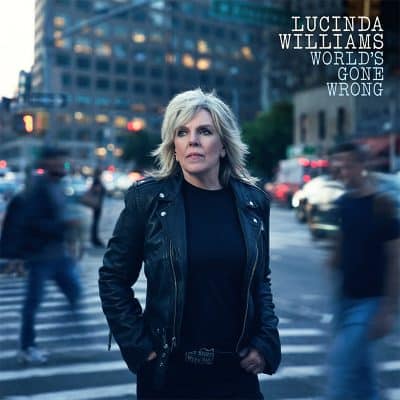 Lucinda Williams
World’s Gone Wrong
Highway Twenty Records
Lake Charles, Louisiana native Lucinda Williams recorded her first album in 1978, but it wasn’t until a decade later that she began to gain widespread recognition. In 1988, she released her self-titled album Lucinda Williams, which included the song “Passionate Kisses.” That song was later covered by Mary Chapin Carpenter in 1992 and went on to win Williams a Grammy Award in 1994 for Country Song of the Year.
In 1998, Williams released Car Wheels on a Gravel Road, which marked her breakthrough into the mainstream. The album earned her another Grammy Award, this time for Best Contemporary Folk Album, and launched her into national touring. In 2002, Time magazine named her “America’s Best Songwriter.” Her later releases include 2011’s Blessed and the 2014 double album Down Where the Spirit Meets the Bone, a country-soul collection that also received airplay on blues radio stations across the country.
Now a three-time Grammy Award winner, Williams confronts America’s socio-political chaos head-on with her forthcoming album World’s Gone Wrong, scheduled for release on January 23. The album is a raw and unapologetic set of nine songs written and recorded with urgency during the spring of 2025.
The album opens with the powerful title track, “World’s Gone Wrong,” featuring Brittany Spencer and co-written by Williams with T. Overby and guitarist Doug Pettibone. Williams sings about the struggles of the working class during turbulent times and the resilience required to keep moving forward. She pleads, “They get up every morning and go to work… workin’ long hours is the devil’s curse. Things are gettin’ tight, but it could be worse,” capturing the confusion and exhaustion of modern life.
Written by the same trio, the next song reflects the emotional weight of the moment as Williams sings, “There’s a heaviness these days, a burden on a shoulder. I think we’ve lost our way, the air is getting colder,” lamenting division, broken bonds, and the unspoken cost of the times we’re living in.
“Low Life,” written by Williams along with A. Lenker, B. Meek, J. Krivchenia, and T. Stephens, finds her embracing escape and grit as she chants, “Play Slim Harpo on the jukebox… I guess this is the low life, but it’s where I want to be.” The song paints a vivid picture of refuge found in dive bars, music, and momentary freedom.
“How Much Did You Get for Your Soul?” is a spiritual reckoning written by the core trio, as Williams growls, “The Devil is a master salesman… so I gotta ask you, how does it feel to be bought?” The song confronts moral compromise and the cost of selling one’s integrity.
“So Much Trouble in the World” is a cover of the Bob Marley and the Wailers classic, delivered here as a gripping duet with Mavis Staples. Together they sing, “So much trouble in the world… what goes up is coming on down,” turning the song into a timeless warning and a plea for compassion and accountability.
“Sing Unburied Sing,” another trio-penned track, is haunting and spiritual. Williams sings of unseen presences and whispered voices, calling out, “So sing to me unburied friend, and save me with your sound,” with Mark Ford joining Pettibone on guitar to deepen the song’s emotional pull.
“Black Tears,” featuring Reese Wynans on Hammond B-3 organ, confronts America’s racial history and ongoing injustice. Williams howls, “There’s a darkness in the Delta… 400 years is long enough,” demanding reflection, reckoning, and mercy.
“Punchline,” co-written with Mark Ford, channels frustration and disillusionment as Williams cries, “People are angry, looking for answers… did God forget the punchline?” The song captures a nation searching for truth amid fear and manipulation.
“Freedom Speaks” continues the album’s defiant tone, personifying liberty as a voice rising against oppression and warning of the dangers of apathy. Williams belts, “Don’t take me for granted, stand up and fight,” urging listeners to remain vigilant and engaged.
The album closes with the deeply moving “We’ve Come Too Far to Turn Around.” On this hymn-like song rooted in struggle and redemption, Norah Jones joins Williams on piano and harmony. Together they acknowledge exhaustion and perseverance, singing, “We are weary of these trials… but we’ve come too far to turn around,” offering a breathtaking and hopeful conclusion.
With World’s Gone Wrong, Lucinda Williams says exactly what needs to be said. This striking and candid work stands as both a warning and a call to action, urging us to take responsibility for protecting our shared future.
Richard Ludmerer
Buy Now

 |  Spotify |  Deezer |  Breaker |
 Pocket Cast |  Radio Public |  Stitcher |  TuneIn |
 IHeart Radio |  Mixcloud |  PlayerFM |  Amazon |
 Jiosaavn |  Gaana |  Vurbl |  Audius |
 Reason.Fm | |||
Find our Podcasts on these outlets
Buy Us a Cup of Coffee!
Join the movement in supporting Making a Scene, the premier independent resource for both emerging musicians and the dedicated fans who champion them.
We showcase this vibrant community that celebrates the raw talent and creative spirit driving the music industry forward. From insightful articles and in-depth interviews to exclusive content and insider tips, Making a Scene empowers artists to thrive and fans to discover their next favorite sound.
Together, let’s amplify the voices of independent musicians and forge unforgettable connections through the power of music
Make a one-time donation
Make a monthly donation
Make a yearly donation
Buy us a cup of Coffee!
Or enter a custom amount
Your contribution is appreciated.
Your contribution is appreciated.
Your contribution is appreciated.
DonateDonate monthlyDonate yearlyYou can donate directly through Paypal!
Subscribe to Our Newsletter
Order the New Book From Making a Scene
Breaking Chains – Navigating the Decentralized Music Industry

Breaking Chains is a groundbreaking guide for independent musicians ready to take control of their careers in the rapidly evolving world of decentralized music. From blockchain-powered royalties to NFTs, DAOs, and smart contracts, this book breaks down complex Web3 concepts into practical strategies that help artists earn more, connect directly with fans, and retain creative freedom. With real-world examples, platform recommendations, and step-by-step guidance, it empowers musicians to bypass traditional gatekeepers and build sustainable careers on their own terms.
More than just a tech manual, Breaking Chains explores the bigger picture—how decentralization can rebuild the music industry’s middle class, strengthen local economies, and transform fans into stakeholders in an artist’s journey. Whether you’re an emerging musician, a veteran indie artist, or a curious fan of the next music revolution, this book is your roadmap to the future of fair, transparent, and community-driven music.
Get your Limited Edition Signed and Numbered (Only 50 copies Available) Free Shipping Included
Discover more from Making A Scene!
Subscribe to get the latest posts sent to your email.


