How to Use AI Art to Build a Visual Brand Fans Remember




Making a Scene Presents – How to Use AI Art to Build a Visual Brand Fans Remember
How indie artists can use Midjourney, Ideogram, and Leonardo.ai to create a powerful, consistent visual world
Listen to the podcast discussion to gain more insight into using AI to build your consistent Brand
When people talk about branding in the music industry, it usually sounds like something only major labels can afford. Big agencies. Big budgets. Big teams deciding what your album art should look like or what colors fit your vibe. But that world is dead. Indie artists now have something better than a room full of marketing people. You have AI art tools that let you build your own visual universe with nothing but your imagination and a prompt.
This new wave puts the power back in your hands. You don’t need approval. You don’t need a label. You don’t need a designer who charges more than your whole merch table is worth. You only need a laptop, a few free accounts, and the guts to claim your own look.
If you can describe your sound, you can design your world.
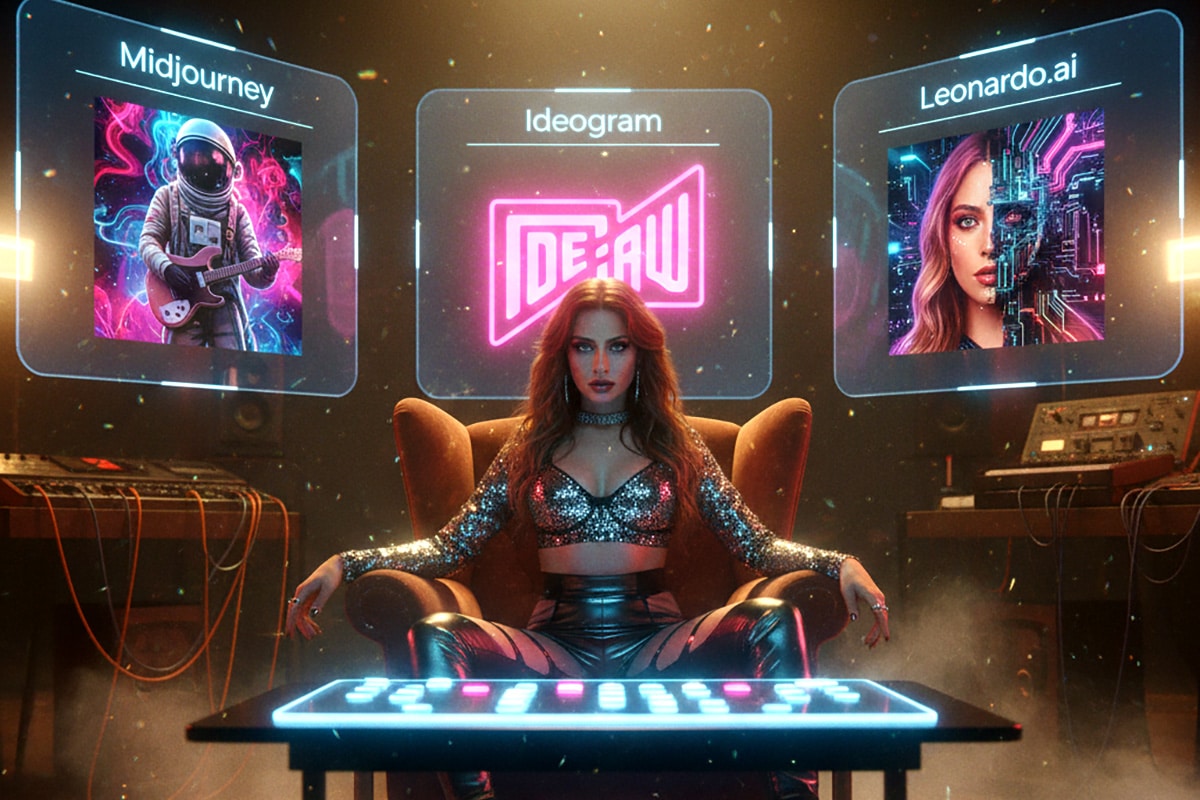
This article walks you through how to use Midjourney at https://www.midjourney.com, Ideogram at https://www.ideogram.ai, and Leonardo.ai at https://www.leonardo.ai to build a visual brand your fans won’t forget. You’ll learn how to create album art, posters, social content, and even animated visuals that all look like they belong together. You’ll learn how to control your style so your fans instantly recognize a piece of art as yours. And by the time you’re done, you’ll realize you don’t need permission from any gatekeeper ever again.
Why Your Visual Brand Matters More Than Ever
Music discovery has moved from the ears to the eyes. Online, people see you long before they hear you. They scroll past an album cover. They see a gig poster. They swipe on a Reel. Your visual world is your doorway. If it looks boring or disconnected, people move on before giving your music a chance.
A strong visual brand does one simple thing. It gives fans a feeling before they hit play. That’s the secret labels used for decades. They tried to own the artist’s “look” because it controlled the audience’s first impression.
Now you get that same power without begging anyone to believe in you.
AI gives you tools to design a look that fits your music, your story, and your identity. And you can do it without any design experience. You’re basically building a movie universe for your songs.
Meet the Three AI Tools That Will Shape Your Visual Identity
We’re going to keep this simple and democratic. Midjourney, Ideogram, and Leonardo.ai all have strengths, and if you use them together, you can build a brand that looks rich, cohesive, and unique.
Midjourney
https://www.midjourney.com
This tool is the cinematic powerhouse. It’s great for album covers, atmospheric portraits, surreal scenes, and anything that needs mood. If you want images that look like they were shot by a Hollywood photographer or painted by a cyberpunk ghost, this is your place.
Ideogram
https://www.ideogram.ai
Ideogram is the typography king. It creates stylized text that looks like real artwork. Perfect for posters, logos, title cards, merch mockups, and anything that needs clean, beautiful lettering.
Leonardo.ai
https://www.leonardo.ai
This one is your “studio.” It lets you train your own styles, remix looks, create variations, and keep everything consistent from one project to the next. It’s the easiest place to maintain a visual identity across a whole campaign.
Each tool gives you a different part of your brand voice. Together, they make you unstoppable.
How AI Actually Builds a Visual Brand
Your visual brand is just three things.
Your color world.
Your imagery.
Your style rules.
AI lets you define all three.
Color world means the colors people associate with you. Maybe your music feels neon purple and gold. Maybe it feels dusty orange and denim blue. AI lets you test and explore until you find colors that match your sound.
Imagery is the symbols that follow your music. Maybe you always use broken street lamps, vintage cars, feathers, wolves, tarot cards, city skylines, 1990s cassette textures, or glitchy holograms. When you repeat those elements, fans instantly recognize you.
Style rules are how all your visuals are shaped. Sharp or soft. Clean or messy. Film grain or glossy. Retro or futuristic. AI lets you lock in these rules so your next album cover matches your last poster and your TikTok banner.
Once you combine these three elements, your visuals become a world.
Building Your Brand Starts with a Story
This is the part where most artists get stuck. They think they don’t have a “brand.” But every artist has one. You just haven’t defined it yet.
Here’s the easiest way to start.
Imagine your music is a movie. What does the world look like? What colors flood the screen? What objects appear in scenes? What emotion hits first?
Now describe that in simple language. You just built your brand foundation.
Example:
“My sound feels like lonely neon nights in a small city, with purple streetlights, fog, and vintage cars.”
You can turn that into a prompt. And that prompt becomes album art, posters, reels, merch, and everything else.
How to Use ChatGPT to Identify and Create Your Visual Brand
Most indie artists don’t actually struggle with the art. They struggle with figuring out who they are visually. That’s where ChatGPT becomes your secret weapon. You can think of it like having your own creative director, brand strategist, and marketing intern all wrapped into one voice that never gets tired, never judges your ideas, and never charges you a fee.
ChatGPT helps you uncover your brand by asking the right questions. It takes your music, your influences, your story, and your emotional tone and turns them into repeatable visual rules you can use across Midjourney, Ideogram, and Leonardo.ai. If you’ve ever looked at another artist’s branding and thought, “How do they make everything match?”, ChatGPT is how you get that same clarity.
You start by having a simple conversation. Describe your music in basic words. You don’t need poetic language or industry jargon. You just need honesty. Tell ChatGPT how your music feels, what emotions you want people to feel, what movies or colors your songs remind you of, and what kind of world your music would live in if it was a film. If you get stuck you can use cyanite.ai to identify the mood of your music and create a descriptive paragraph of a song.
Once you give ChatGPT that raw information, it can turn it into something powerful. It can produce a full mood board description, a color palette, a brand voice, and a set of symbols that belong to your world. You can then copy and paste these brand elements directly into your AI prompts.
ChatGPT can also write your master prompt for you. This becomes the blueprint that shapes your entire visual identity. You use this master prompt every time you create art, so everything feels connected. This is how big labels do it, but now you can do it faster, cheaper, and with more freedom.
To get started, simply ask ChatGPT a question like:
“Help me identify my visual brand. My music feels emotional and cinematic with influences from indie rock and synthwave. Create my brand identity, color world, symbolism, and a master prompt I can use for Midjourney, Ideogram, and Leonardo.ai.”
ChatGPT will give you a full brand breakdown within seconds. If you don’t like something, ask for a change. If you want more symbolism, ask for more. If you need your colors to feel warmer or darker, tell it. You’re shaping your brand the same way you shape a mix — through feedback, revision, and instinct.
Once you like the result, everything becomes easier. You can ask ChatGPT to write 20 album cover concepts. You can ask it for consistent prompt templates. You can ask it to design a social content theme for a month-long release rollout. You can even feed it past images you’ve made so it can refine your brand rules and keep improving your world.
This is how you stop guessing.
This is how you take control of your presentation.
This is how you become the kind of artist who looks intentional and confident before the first note plays.
The major labels once had whole departments figuring this out. Now you have ChatGPT. And the crazy thing is, ChatGPT listens to you better than those teams ever would.
How to Control Style Across All Platforms
To keep everything looking like it belongs together, you need a “master prompt.” This is a single paragraph you reuse in every image you generate. You can adjust details, but the core stays the same.
Here’s an example master prompt you can adapt:
“Cinematic indie aesthetic with neon purple and warm gold lighting, soft film grain, dreamy atmosphere, emotional close-up storytelling, reflective surfaces, foggy backgrounds, analog texture, indie artist mood.”
You drop this same block into every Midjourney prompt, every Ideogram design, and every Leonardo.ai render. This becomes your glue.
This is how major brands maintain consistency. You’re just doing it with AI instead of a million-dollar team.
Using Midjourney to Create Your Core Visual Identity
Midjourney is where you build the heart of your brand. The album covers. The cinematic portraits. The surreal world-building.
Go to https://www.midjourney.com and sign in. You can use the website interface or the Discord version depending on the current build, but both work the same way. You type a prompt, and it gives you four images.
Here’s a prompt example for album art:
“Indie musician walking through neon fog on an empty street, purple and gold lighting, dreamy reflections on wet pavement, emotional atmosphere, cinematic realism, soft depth of field, album cover layout, square format.”
You can create dozens of variations until you find the look that matches your sound. Then you reuse the same style cues in future prompts.
Midjourney also gives you consistent camera angles, lighting moods, and textures. This is what fans will start to associate with you.
How Ideogram Makes Your Titles Look Like Real Artwork
Ideogram is built for typography, logos, and anything involving text. When you upload your Midjourney image, Ideogram lets you design lettering that matches the vibe.
Visit https://www.ideogram.ai and sign up.
If your album is called Midnight on the Wire, you can type:
“Bold cinematic typography for album title ‘Midnight on the Wire,’ neon purple glow, film grain texture, indie music aesthetic, integrated into the artwork with realistic lighting.”
While Midjourney struggles with readable text, Ideogram nails it. This is how you get professional-looking posters and merch designs without paying a designer.
How Leonardo.ai Keeps Your Brand Consistent Across Everything
Leonardo.ai is your “style bank.”
Visit https://www.leonardo.ai and log in.
You can upload images you created with Midjourney and Ideogram, then fine-tune your own style model. This lets you say:
“Make all my future art look like this.”
Leonardo will remember your colors, shapes, textures, and emotions. You can generate album art, video thumbnails, banners, stickers, and even 3D-looking merch concepts that all match.
You’re basically building your own brand generator.
Here’s a Leonardo prompt example:
“Create a portrait of an indie musician inside a neon-lit room, purple and gold color world, dreamy film grain, emotional expression, same style as previous uploads, cohesive aesthetic for social content.”
The AI learns your world and keeps it consistent.
A Simple Workflow That Any Indie Artist Can Use
Here’s how you build a repeating system so your brand looks unified everywhere.
You start in Midjourney to design the core image.
You bring that image into Ideogram to design the typography.
You bring both into Leonardo.ai to produce variations and future visuals.
Then you take everything into Canva at https://www.canva.com or Buffer at https://www.buffer.com to schedule content.
This workflow gives you quality, control, and consistency.
When fans see your next post or poster, they’ll feel like they’re stepping back into the same world.
How to Use This Branding Across Your Entire Career
Album covers
Instagram posts
TikTok backgrounds
YouTube banners
Merch
Tour posters
Lyric sheets
Press kits
Website banners
Streaming thumbnails
All of these can look like they came from the same universe by using the same style rules.
And when everything looks unified, you begin to feel like a real artist brand instead of someone just throwing images online.
Real Indie Artists Already Using AI to Revolutionize Their Branding
Plenty of indie musicians are already doing this, even if people don’t realize it.
Some pop artists use Midjourney to design whole album rollouts.
Electronic artists create consistent motion loops with Runway at https://www.runwayml.com.
Indie folk singers design watercolor-inspired merch with Leonardo model training.
Rappers create gritty street poster series using Ideogram’s bold typography engine.
AI isn’t replacing creativity. It’s giving indie musicians the power labels once hoarded. It’s leveling the field.
How to Extend Your Visual Brand into Motion
Your branding doesn’t have to sit still. You can animate it.
Runway — https://www.runwayml.com lets you create short loops, music videos, and animated album covers.
Kaiber — https://www.kaiber.ai lets you take one still image and turn it into motion.
Pika — https://www.pika.art gives you advanced cinematic motion tools.
Import the images you made in Midjourney or Leonardo, and these tools will bring them to life.
Now your brand becomes a world fans can move through.
How to Deploy Your Brand Everywhere
Once you have the looks, you need to spread them.
Canva at https://www.canva.com lets you resize your art into every social format.
Buffer at https://www.buffer.com and Metricool at https://www.metricool.com let you schedule weeks of branded content.
When everything is consistent, fans start trusting you. They see your world. They feel your world. They connect before ever hearing a note.
Ethical AI Use for Indie Artists
No one wants to steal anyone’s style.
Here’s the truth.
If you build your own world using your own colors, themes, and story, you’re not copying anybody. You’re creating something original. Avoid using prompts that say “in the style of [famous artist],” and your brand becomes genuinely yours.
AI should amplify your creativity, not imitate someone else’s.
This Is About Control — And You Finally Have It
For decades, big labels owned the visual world. They told artists what was “on brand.” They hired teams. They approved or rejected designs. They controlled the look because they controlled the budget.
Now the budget is whatever you put on your credit card each month.
The power is in your hands.
You can build a world that reflects you and only you.
AI isn’t the enemy. It’s your weapon.
Use it to build a brand that makes people stop scrolling.
Use it to tell your story before the first note drops.
Use it to show the world who you are without asking anyone for permission.
Your art deserves a visual universe.
Now you can create one.
Prompt Starter Pack You Can Use Right Now
Here are reusable prompt templates for each platform.
Midjourney Album Cover Prompt
“Cinematic indie album cover of a musician walking through neon fog, purple and gold lighting, dreamy reflections on wet pavement, emotional atmosphere, soft film grain, atmospheric depth, square format.”
Ideogram Poster Typography Prompt
“Stylized poster text for the title ‘Midnight on the Wire,’ neon purple glow, clean lettering, film grain, indie design aesthetic, integrated into visual artwork.”
Leonardo.ai Brand Style Prompt
“Create a portrait with purple and gold color world, cinematic film grain, soft dreamy lighting, consistent with previous brand style, designed for cohesive social media visuals.”
These will help you start building your world immediately.
THE INDIE ARTIST AI BRAND GUIDE
Your no-permission playbook for building a visual world fans can spot from a mile away.
Branding used to be the thing labels controlled. They hired agencies, stylists, designers, and photographers who cost more than your whole album budget. Now you have something better. AI tools let you build a world that fits your music and your personality without begging anyone to “see your vision.”
This guide gives you a simple system to lock in your look.
THE INDIE ARTIST AI BRAND GUIDE
Your no-permission playbook for building a visual world fans can spot from a mile away.
Branding used to be the thing labels controlled. They hired agencies, stylists, designers, and photographers who cost more than your whole album budget. Now you have something better. AI tools let you build a world that fits your music and your personality without begging anyone to “see your vision.”
This guide gives you a simple system to lock in your look.
Your Brand Core
Your brand is made of three pieces.
Your colors.
Your imagery.
Your mood.
Colors are your emotional signature.
Imagery is the stuff that returns again and again in your artwork.
Mood is how everything feels when someone sees it.
Once you lock these three pieces in place, your visuals become your world.
Use this foundation prompt to define your brand:
Brand Identity Prompt
“Create a consistent indie artist visual world built around neon purple and warm gold lighting, soft dreamy film grain, reflective surfaces, emotional close-ups, foggy backgrounds, and a cinematic storytelling tone. Everything should feel like a quiet movie scene that matches the artist’s emotional sound.”
You can replace the colors, vibe, or objects with your own. This becomes your “brand glue.”
Master Prompt Library (Your Plug-and-Play Toolkit)
These prompts work across Midjourney, Ideogram, and Leonardo.ai.
Album Cover Master Prompt
“Cinematic indie album cover of a lone musician in a moody environment, signature color world, film grain, deep atmosphere, emotional realism, reflective textures, storytelling tone, square format.”
Single Cover Prompt
“Minimal but emotional single cover with signature colors, soft background haze, centered subject or symbolic object, subtle shadows, dreamy vibe, high-quality realism.”
Poster / Tour Art Prompt
“Bold cinematic tour poster with signature colors, dramatic lighting, atmospheric depth, emotional textures, clean composition for text placement, cohesive with existing brand visuals.”
Social Media Post Prompt
“Cohesive social content image with the artist’s signature color palette, film grain, emotional tone, recurring imagery, and a look that matches previous artwork.”
Merch Design Prompt
“Graphic illustration inspired by the artist’s signature world, bold shapes, limited color palette, clean edges, high print clarity, strong silhouette for shirts and hoodies.”
YouTube Banner Prompt
“Wide cinematic banner using the artist’s signature colors and mood, foggy atmosphere, depth, subtle film grain, space for title text on left side.”
Press Kit Header Prompt
“Professional but emotional header image with the artist’s signature tones, clean clarity, soft focus background, strong portrait energy.”
AI PROMPT BANK BY GENRE
Every genre has a natural visual world. These prompts help artists find it fast.
Indie Rock
“Gritty urban textures, neon reflections, rooftop scenes, vintage lenses, warm tungsten lights, foggy nights, quiet emotional portraits.”
Americana / Folk
“Soft earth tones, warm sunset lighting, wooden textures, fields, vintage pickups, denim blues, analog film grain.”
Blues
“Smoky bar mood, deep shadows, warm amber lights, vintage amps, cracked paint textures, emotional close-ups.”
Singer-Songwriter
“Minimal rooms, warm desk lamps, handwritten textures, cozy corners, quiet atmospheres, soft-focus portraits.”
EDM / Electronic
“Vibrant neon palettes, holographic elements, glitch movement, cyberpunk energy, deep reflective surfaces.”
Pop
“Bright clean lighting, pastel gradients, glossy textures, fun energetic mood, modern fashion elements.”
Hip-Hop / Rap
“Street textures, moody alleys, bold contrast, confident portraits, metallic accents, graffiti elements.”
Replace colors and objects as needed. This is only your starting point.
AI-POWERED CONTENT ROLLOUT PLAN
Your 30-day visual takeover
This plan uses Midjourney, Ideogram, Leonardo.ai, Canva, and Buffer.
Week 1: Build the Branding Core
Create 20–40 images in Midjourney and Leonardo.
Choose your color world, moods, and symbols.
Design your typography in Ideogram.
Week 2: Create the Album and Single Art
Design album cover variations in Midjourney.
Add title text in Ideogram.
Keep everything consistent in Leonardo.
Week 3: Create Your Social Universe
Make 15–20 social posts using the same color and mood.
Resize everything inside Canva at https://www.canva.com.
Schedule them in Buffer at https://www.buffer.com.
Week 4: Expand to Motion & Merch
Use Kaiber at https://www.kaiber.ai, Runway at https://www.runwayml.com, or Pika at https://www.pika.art to animate your world.
Use Leonardo.ai to design hoodie and shirt concepts.
By the end of 30 days, you’ll have a branded universe that looks like you hired a full creative team.
 |  Spotify |  Deezer |  Breaker |
 Pocket Cast |  Radio Public |  Stitcher |  TuneIn |
 IHeart Radio |  Mixcloud |  PlayerFM |  Amazon |
 Jiosaavn |  Gaana |  Vurbl |  Audius |
 Reason.Fm | |||
Find our Podcasts on these outlets
Buy Us a Cup of Coffee!
Join the movement in supporting Making a Scene, the premier independent resource for both emerging musicians and the dedicated fans who champion them.
We showcase this vibrant community that celebrates the raw talent and creative spirit driving the music industry forward. From insightful articles and in-depth interviews to exclusive content and insider tips, Making a Scene empowers artists to thrive and fans to discover their next favorite sound.
Together, let’s amplify the voices of independent musicians and forge unforgettable connections through the power of music
Make a one-time donation
Make a monthly donation
Make a yearly donation
Buy us a cup of Coffee!
Or enter a custom amount
Your contribution is appreciated.
Your contribution is appreciated.
Your contribution is appreciated.
DonateDonate monthlyDonate yearlyYou can donate directly through Paypal!
Subscribe to Our Newsletter
Order the New Book From Making a Scene
Breaking Chains – Navigating the Decentralized Music Industry
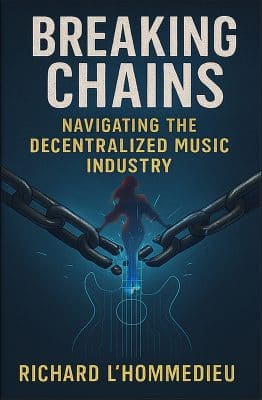
Breaking Chains is a groundbreaking guide for independent musicians ready to take control of their careers in the rapidly evolving world of decentralized music. From blockchain-powered royalties to NFTs, DAOs, and smart contracts, this book breaks down complex Web3 concepts into practical strategies that help artists earn more, connect directly with fans, and retain creative freedom. With real-world examples, platform recommendations, and step-by-step guidance, it empowers musicians to bypass traditional gatekeepers and build sustainable careers on their own terms.
More than just a tech manual, Breaking Chains explores the bigger picture—how decentralization can rebuild the music industry’s middle class, strengthen local economies, and transform fans into stakeholders in an artist’s journey. Whether you’re an emerging musician, a veteran indie artist, or a curious fan of the next music revolution, this book is your roadmap to the future of fair, transparent, and community-driven music.
Get your Limited Edition Signed and Numbered (Only 50 copies Available) Free Shipping Included
Discover more from Making A Scene!
Subscribe to get the latest posts sent to your email.


