

Follow the Money: How Indie Musicians Can Collect Every Dollar They’re Owed




Making a Scene – Follow the Money: How Indie Musicians Can Collect Every Dollar They’re Owed (and Use AI + Web3 to Get Even More)
Make sure you check out the podcast above for an in depth discussion of How to get all your Royalty Money!
So you’ve finally dropped your new single. The mix sounds tight, the artwork is on point, and you’ve hit “distribute.” Feels amazing, right? But here’s the thing — releasing a song doesn’t automatically mean you’ll get paid for it. In fact, most indie musicians never see a big chunk of the money they’ve actually earned because they don’t know where to look or how to collect it.
That money is out there — waiting. You just have to know how to find it.
Let’s break down exactly how music royalties work, where you need to register, and how new tools like AI and Web3 can help you collect everything you’re owed — and even open up new revenue streams you might never have imagined.
Why So Much Money Gets Lost in the Music Industry
Before diving into the “how,” let’s talk about the “why.”
Every song you release generates multiple streams of income — from streaming services, downloads, radio, YouTube, live shows, TikTok, TV syncs, and even fan-made videos. But all that money flows through different systems, managed by different organizations. If your name or song isn’t registered in the right places, that money just… floats away.
Some of it gets sent to the wrong person. Some sits unclaimed in giant pools. And after a few years, a lot of it gets redistributed to major publishers or just disappears forever.
It’s not about the industry trying to rob you. It’s about data — if your information isn’t in the system, the system can’t pay you.
That’s where AI and blockchain are starting to change everything — by tracking, matching, and distributing royalties automatically, no middlemen required. But first, let’s cover the basics so you can take control right now.
Step 1: Know the Two Worlds of Music Money
Every song you release is actually two separate assets: the songwriting (lyrics and composition) and the recording (the actual performance you recorded).
Each of these earns different types of royalties.
Songwriting royalties pay the writers and publishers. Recording royalties pay the performers and record labels. If you’re an indie artist who writes and records your own stuff, congratulations — you own both sides. That means you’re entitled to everything.
But only if you register your music properly.
Step 2: Start With a Distributor
Your first stop is your distributor — that’s the company that actually sends your music out to Spotify, Apple Music, Amazon, TikTok, YouTube, and all the other platforms.
If you use DistroKid, CD Baby, TuneCore, Ditto, or Symphonic, they’ll deliver your music to those platforms and collect the “master” side of your royalties — the money paid to whoever owns the sound recording.
That covers the streaming income, but not the songwriter side. That’s where you’ll need to do a bit more legwork.
Step 3: Register with a Performing Rights Organization (PRO)
When your song gets played on radio, TV, or live at a venue, you earn performance royalties. These are collected by organizations like ASCAP and BMI in the U.S. (or SOCAN in Canada, PRS in the UK, etc.).
If you’re a songwriter, you must join a PRO. When you register a song, they track every performance they can find — bar jukeboxes, concerts, radio plays, TV syncs, even coffee shops that stream playlists — and make sure you get paid.
Here’s a trick many artists miss: if you only sign up as a writer, you’ll only get half your royalties. The other half (the “publisher’s share”) just sits in limbo. So you should also register as a publisher — even if it’s just you. You can literally create your own little publishing company name, register it, and double your payout.
Step 4: Get Your Mechanical Royalties with The MLC
Here’s the part almost nobody tells new artists: streaming services like Spotify and Apple Music don’t just pay one royalty. They pay two — one for the recording (which your distributor collects), and one for the songwriting, called a mechanical royalty.
In the U.S., those mechanical royalties are collected by The Mechanical Licensing Collective (The MLC) — and joining is totally free.
Once you register at themlc.com, you can list all your songs, confirm your ownership, and start receiving quarterly payments. The MLC also has a public database, so you can check if your works are already there or if they’re sitting unclaimed.
If you’re outside the U.S., there are similar organizations — like MCPS in the UK or SOCAN RR in Canada.
Here’s where AI can help: tools like Songtrust, Sentric Music, or CD Baby Pro use automation and data-matching AI to find and collect missing royalties across dozens of countries. They’ll even cross-check metadata (song titles, writer names, ISRCs, ISWCs) to make sure nothing slips through the cracks.
Step 5: SoundExchange — The Hidden Goldmine of Digital Radio Royalties
Most indie artists have no idea how valuable their digital radio airplay really is.
If your song gets played on SiriusXM, Pandora, iHeartRadio, or any kind of digital radio — not a playlist or on-demand stream, but true radio-style airplay — SoundExchange is sitting on money that belongs to you.
This isn’t a maybe. It’s guaranteed.
SoundExchange collects digital performance royalties on behalf of everyone who helped create the recording — the lead artist, the background singers, the session players, and whoever owns the master recording.
And here’s the shocking part: a single play on SiriusXM can be worth hundreds or even thousands of dollars.
Why SiriusXM Airplay Pays So Well
When your song spins on SiriusXM, it doesn’t just pay a flat rate per play like Spotify or Apple Music. Instead, it pays per performance per listener.
That means every listener who hears your track during that broadcast counts as a separate payment.
So if your track airs once on a station with 100,000 listeners, you’re getting credit for 100,000 performances.
Those royalties can add up fast — especially if you’re in rotation for weeks. It’s not uncommon for indie artists to earn $500, $1,000, or more per quarter from SiriusXM spins alone.
But here’s the catch: you won’t see a dime if your song isn’t claimed in the SoundExchange system.
How SoundExchange Divides the Money
When SoundExchange collects royalties for a track, the payout is split three ways:
-
45% to the featured artist(s) — the main performer or band name on the release.
-
50% to the rights owner — usually the record label or independent artist who owns the master.
-
5% to non-featured performers — the background singers, session musicians, or sidemen who played on the recording.
That 5% may not sound like much, but for players who’ve recorded dozens of songs, it adds up to a meaningful income stream — especially when tracks get regular radio rotation or are part of a classic catalog.
If You Don’t Claim, You Lose It
SoundExchange doesn’t hold onto unpaid royalties forever.
They keep unclaimed money for a limited window (usually a few years), and after that, it’s redistributed to other rightsholders in the general pool.
Once that happens, it’s gone. You can’t get it back.
That’s why it’s critical to register your account, claim your songs, and verify every recording you’ve played on — whether as a main artist or a sideman.
How to Register and Claim as an Artist or Rights Owner
If you’re a solo artist or bandleader who owns the master, you’ll want to register as both a Featured Artist and a Rights Owner.
Here’s how to do it step-by-step:
1. Create Your Free Account
Visit soundexchange.com and click Register Now.
Choose the option for Featured Artist/Rights Owner.
You’ll fill in your legal name, artist name, contact info, and payment details (so they can deposit your royalties).
2. Log Into the SoundExchange Portal
After approval, you’ll get access to the SoundExchange portal — your personal dashboard for adding songs, viewing claims, and seeing your earnings.
3. Add and Claim Your Recordings
Inside your portal:
-
Go to My Catalog → Add New Recording.
-
Enter your song title, ISRC (your distributor provides this), release date, and any collaborators.
-
Check the boxes for “Featured Artist” and “Rights Owner” if they apply to you.
If SoundExchange already has your songs in its database (from radio logs), they may appear under Unclaimed Works. Search for your songs there and hit Claim Recording to take ownership.
How Sidemen and Session Musicians Get Paid
Now here’s where most musicians miss out.
Even if you’re not the featured artist or label, if you performed on the recording — guitar, drums, keys, bass, backing vocals, horns, anything — you have a right to your non-featured performer share from SoundExchange.
That money is set aside in a separate pool and paid out to performers through SoundExchange’s Affiliated Performer Program, managed with the help of the AFM (American Federation of Musicians) and SAG-AFTRA (Screen Actors Guild–American Federation of Television and Radio Artists).
To claim your share, here’s how it works:
Step 1: Register as a Non-Featured Performer
Go to soundexchange.com and select “Non-Featured Performer Registration.”
You’ll need to fill out basic info and upload identification (driver’s license, passport, etc.).
If you’re a union member (AFM or SAG-AFTRA), you can register through them directly, as they manage distributions for non-featured performer royalties.
Step 2: Submit Your Recordings
After registering, you can submit the songs you’ve performed on by listing:
-
Song title
-
Artist name
-
ISRC code (get this from the producer or main artist)
-
Your role on the track (guitarist, background vocals, drummer, etc.)
Include any supporting documentation you can — studio credits, liner notes, or even session invoices. The more proof you have, the faster your claim can be verified.
Step 3: Keep a Session Log
Every time you perform on a recording, keep a written or digital log that includes:
-
Date of session
-
Artist name
-
Song title(s)
-
Studio name
-
Producer contact
-
Agreed role and payment terms
This log can become critical proof later if you need to verify your contribution to a track that’s earning royalties.
Step 4: Track Your Payouts
Once verified, SoundExchange (or your union) will deposit your share of the royalties whenever that recording earns digital airplay.
You can view your statements in the performer portal or receive physical checks if you prefer.
These payments are separate from whatever session fee you originally earned in the studio — this is ongoing income for the life of the recording.
Why Side Musicians Should Take This Seriously
A lot of sidemen think, “I was just paid for the session, I don’t own anything.”
But that’s not true when it comes to digital performance royalties.
Even if you signed away mechanicals or publishing, your performance on the recording still counts for that 5% SoundExchange pool — and you can claim it independently of the featured artist or label.
For veteran session players, that can mean hundreds or even thousands of dollars every year from songs they recorded decades ago that still get airplay.
Imagine you were the guitarist on a blues or Americana album that’s now in rotation on SiriusXM’s Outlaw Country or The Loft. Those plays are paying someone — make sure part of it is you.
What Happens If You Don’t Claim (or Someone Else Does)
Here’s where things get tricky.
If another person (or label) claims ownership of your song on SoundExchange before you do, SoundExchange isn’t responsible for sorting out the dispute. They’ll continue paying the claimant until you provide legal proof of ownership or participation.
SoundExchange does not get involved in legal battles. You’ll have to handle it yourself — often by presenting your ISRC codes, recording contracts, or session documentation as evidence.
This is another reason every musician should register early and claim their part before someone else does.
AI Tools Can Help You Track What’s Yours
If you’ve recorded with multiple artists, it can be tough to remember every track you’ve played on — especially if some of those albums went out through different distributors.
AI can make that process way easier.
Tools like Pex, Audoo, and Song Sleuth AI use audio fingerprinting to find where your performances appear across digital platforms. They can even match your playing to known recordings to help identify missed royalties.
Royalty Hero and Curve Royalty Systems can track SoundExchange data and show which songs are earning money and which ones still need to be claimed.
You can even use ChatGPT to build a personal “SoundExchange Claim Tracker” spreadsheet that lists:
-
Each song you’ve played on
-
The ISRC and release date
-
Whether it’s been registered or claimed
-
The last time it was played on digital radio
With that info, you can stay organized and make sure you never lose out on royalties you’ve earned.
Bottom Line: Everyone on the Record Deserves Their Share
SoundExchange isn’t just for the headline artist — it’s for everyone who contributed to the recording.
Whether you’re a singer-songwriter, a studio guitarist, a background vocalist, or a hired horn player, your performance is part of that record’s DNA — and SoundExchange recognizes that.
If you played on a track that’s getting airplay, you should be getting paid. All it takes is registering, claiming, and keeping your information up to date.
A few hours of work now could mean steady royalty checks for years to come — even from songs you recorded a decade ago.
Step 6: Don’t Forget About YouTube, TikTok, and Instagram
Your music is probably all over social media — but if you don’t have monetization set up, you’re missing out on one of the biggest new income streams for indie musicians.
Distributors now let you activate Content ID — a system that automatically scans YouTube and pays you whenever your song appears in a video. Even if a fan uploads a clip of their cat dancing to your song, you get paid when ads run on that video.
The same goes for TikTok and Instagram Reels. When your distributor delivers your track to their music libraries, every short-form video that uses your song earns you a micro-payment. It might not sound like much, but it adds up quickly when your track goes viral.
AI is already making this easier. Some content recognition tools like Pex and Audoo can automatically detect when your song is used in public videos or stores, flagging those plays so you can claim them.
Step 7: Neighboring Rights — the Global Hidden Treasure
Outside the U.S., there’s a separate kind of royalty called Neighboring Rights that pays performers whenever their recordings are played on radio, TV, or in public.
In the UK, it’s handled by PPL. In Canada, it’s Re:Sound. In France, it’s SCPP or ADAMI.
If your music streams internationally, there’s a good chance you’re owed money from one or more of these agencies — even if you’ve never set foot in those countries.
AI-powered platforms like Labelcamp and Kobalt Neighboring Rights use automated data matching to find these royalties for you.
Step 8: Sync Licensing — The Real Jackpot
Sync licensing means getting your song placed in movies, TV shows, commercials, or video games. It’s one of the most profitable forms of music income because you can get paid twice — once up front for the sync fee, and again every time the show airs (through your PRO).
You can pitch your music directly through sites like Songtradr, Musicbed, or Pond5, or use AI-driven tools like AIVA Sync or Disco.ac to tag and match your tracks to opportunities automatically.
Some AI services even scan your catalog and suggest which songs fit specific moods or film genres, helping you target placements that actually fit your sound.
Step 9: Bring AI Into Your Royalty Tracking
Here’s where things start to get exciting.
AI can now do the kind of data cross-checking that used to take human accountants weeks. There are AI tools that can:
-
Match metadata across thousands of databases (so every royalty finds its owner).
-
Predict which platforms or territories you’re missing registration on.
-
Identify streaming spikes and alert you if someone’s using your track without credit.
For example:
-
Musixmatch Pro uses AI to link lyrics, credits, and metadata automatically.
-
Cyanite.ai can analyze your songs and help categorize them for sync or streaming discovery.
-
Audoo creates hardware devices placed in public venues that automatically detect what songs are playing — no more missed bar or club plays.
Even ChatGPT (yep, me!) can help you build a personalized registration roadmap. By analyzing your release data, we can figure out exactly which organizations you still need to sign up for and even generate the links and forms to do it.
Step 10: Metadata — The DNA of Your Music
Think of metadata like the birth certificate of your song. Without it, you can’t prove who you are or what you own.
Every track you release should have:
-
An ISRC code for the recording
-
An ISWC code for the composition
-
A UPC for the album or single release
Your distributor usually gives you the ISRC and UPC. The ISWC comes from your PRO.
Once you’ve got those, double-check that every database — PRO, distributor, The MLC, SoundExchange, YouTube — all use the exact same titles, spellings, and credits.
Even one wrong letter can send your royalties into limbo.
Step 11: Don’t Forget Your Live Gigs
Did you know you get paid when you perform your own songs live?
Most artists don’t.
ASCAP and BMI both have programs where you can log your setlists after each show and earn performance royalties from the venue’s blanket license fees. You just go online, enter the date, the songs you played, and boom — money in your next royalty check.
It’s usually not huge per show, but it’s passive income for work you’ve already done. And if you’re touring regularly, it adds up.
AI helps here too — tools like Setlist.fm and GigPig can automatically track your performances and pre-fill your submissions, saving you time.
Step 12: Use Web3 to Build Direct Revenue Streams
Here’s where the future really starts to get interesting.
Web3 and blockchain-based platforms are flipping the script by letting artists earn directly from fans — instantly and transparently. No middlemen, no waiting months for payouts, no hidden splits.
Platforms like Audius, Catalog, Sound.xyz, Royal.io, and Opulous let you upload your music to the blockchain. Fans can stream your tracks, buy NFTs or “shares” of your songs, and even invest in your future releases.
Because everything’s on-chain, every play and transaction is permanently recorded — meaning every royalty is traceable and paid out automatically.
If someone remixes or resells your NFT track, you still get a cut, thanks to smart contracts.
AI is already merging with Web3 in powerful ways here. Smart AI agents can automatically:
-
Distribute royalties on-chain.
-
Match your releases to decentralized platforms.
-
Create NFTs or fan tokens for special access or rewards.
Imagine your next album as a tokenized release where every supporter who buys an NFT gets early access, bonus stems, or concert perks — and you keep 90–100% of the profits.
That’s the decentralized music industry in action. See “Breaking Chains Navigating the Decentralized Music Industry“
Step 13: Direct-to-Fan Sales and Community
Streaming money is fine, but nothing beats direct fan support.
Platforms like Bandcamp, Gumroad, or Zora (a Web3 version of Bandcamp) let you sell directly to your audience. You can offer exclusive tracks, high-res downloads, vinyl, or digital collectibles — all while keeping fan data and building relationships.
You can even use AI marketing tools like Beatchain, Lately.ai, or ChatGPT to write personalized email campaigns, track who’s buying your music, and create fan funnels that turn casual listeners into lifelong supporters.
When you combine direct fan connections with Web3 ownership and AI automation, you create something powerful — a self-sustaining, artist-owned ecosystem.
Step 14: Keep Your House in Order
Once your registrations are set up, don’t just forget about them. Keep an organized record of every song, code, registration number, and organization you’ve joined.
A simple spreadsheet works fine, or you can use AI-powered tools like Royalty Hero, Curve Royalty Systems, or Ampled DAO dashboards to visualize your income across platforms.
That way, you can see which songs are earning the most, which platforms are underperforming, and where to focus your next marketing push.
Step 15: Find and Claim Lost Money
Believe it or not, there are billions of unclaimed royalties floating around globally right now.
You can literally search for your name or song titles on The MLC, Songview, or unclaimedroyalties.com and sometimes find cash that’s been waiting for you.
If you’ve released music in the past without registering properly, it’s worth spending an afternoon reclaiming it. AI auditing tools like Blokur and Vydia can help match your catalog to missing metadata and recover royalties from years back.
The Big Picture: Take Control of Your Music’s Financial Future
For years, indie artists have been told that the music business is impossible to navigate — too complicated, too unfair, too locked down by big players. But that’s changing fast.
AI is simplifying the paperwork. Web3 is cutting out the middlemen. And artists like you are finally learning to track every dollar, every play, and every fan relationship directly.
The truth is, you don’t need a major label to make a living in music anymore. You just need a system — and the discipline to set it up once and let it work for you forever.
So take a few hours this week and register your songs everywhere they need to be. Automate what you can with AI. Experiment with Web3 tools that give your fans ownership and rewards.
Because your music isn’t just art — it’s an asset. And every note deserves to pay you back.
Artist Resource Index: Where to Register, Claim, and Collect Every Dollar
You’ve done the hard part — you’ve learned how every piece of the music revenue puzzle fits together.
Now it’s time to act.
Here’s your master list of websites, organizations, and AI-powered tools that help you collect and protect every cent your music earns — from traditional royalties to Web3 income streams.
Download and print the Checklist for Artist Release Royalty Collection
SoundExchange & Performer Royalties
SoundExchange (Official Site) – https://www.soundexchange.com
Create your account, claim your recordings, and register as a featured artist, sideman, or rights owner.
Unpaid Artist Search Tool – https://www.soundexchange.com/what-we-do/artist-payments/unpaid-artists/
Find out if SoundExchange is already holding royalties in your name.
AFM (American Federation of Musicians) – https://www.afm.org
Non-featured performers can claim SoundExchange payments through AFM.
SAG-AFTRA – https://www.sagaftra.org
Union performers and background vocalists can register to receive their digital performance royalties.
SiriusXM – https://www.siriusxm.com
Satellite radio spins can generate hundreds or thousands in SoundExchange royalties.
Pandora – https://www.pandora.com
A major digital radio source that pays through SoundExchange.
iHeartRadio – https://www.iheart.com
National digital radio broadcaster covered by SoundExchange payments.
U.S. Royalty Collection & Rights Organizations
ASCAP – https://www.ascap.com
BMI – https://www.bmi.com
SESAC – https://www.sesac.com
SOCAN (Canada) – https://www.socan.com
PRS for Music (UK) – https://www.prsformusic.com
The MLC (Mechanical Licensing Collective) – https://www.themlc.com
MCPS (UK Mechanical Rights) – https://www.prsformusic.com/mcps
These are your go-to PROs and mechanical rights hubs for registering your songs as a writer and publisher.
Neighboring Rights & International Royalties
PPL (UK) – https://www.ppluk.com
Re:Sound (Canada) – https://www.resound.ca
SCPP (France) – https://www.scpp.fr
ADAMI (France) – https://www.adami.fr
GEMA (Germany) – https://www.gema.de
These handle royalties for recordings played publicly or broadcast in their respective countries.
AI-Powered Royalty & Tracking Tools
Royalty Hero – https://www.royaltyhero.com
Automates royalty tracking across multiple platforms.
Curve Royalty Systems – https://www.curveroyaltysystems.com
Comprehensive royalty data and audit software.
Chartmetric – https://www.chartmetric.com
Real-time airplay and fan analytics.
Soundcharts – https://www.soundcharts.com
Monitors global radio airplay and chart placements.
Pex – https://www.pex.com
Detects where your songs are used online, even in fan videos.
Audoo – https://www.audoo.com
AI-based system for detecting music played in public venues.
Song Sleuth AI – https://www.songsleuth.ai
Music recognition tool for session players and side musicians.
Cyanite.ai – https://www.cyanite.ai
AI-powered tagging for sync licensing and music discovery.
Beatchain – https://www.beatchain.com
AI marketing and fan data automation for indie artists.
Distribution Platforms
DistroKid – https://www.distrokid.com
CD Baby – https://www.cdbaby.com
TuneCore – https://www.tunecore.com
Symphonic Distribution – https://www.symphonic.com
Ditto Music – https://www.dittomusic.com
Distributors collect your master royalties and deliver your music to streaming and social platforms.
Sync Licensing Platforms
Songtradr – https://www.songtradr.com
Musicbed – https://www.musicbed.com
Pond5 – https://www.pond5.com
Use these platforms to pitch your songs for TV, film, and video game placements.
Web3 & Decentralized Music Platforms
Audius – https://www.audius.co
Sound.xyz – https://www.sound.xyz
Catalog Works – https://www.catalog.works
Royal.io – https://www.royal.io
Opulous – https://www.opulous.org
Zora – https://www.zora.co
Decentralized platforms for NFT releases, fan tokens, and direct artist royalties.
Direct-to-Fan Platforms
Bandcamp – https://www.bandcamp.com
Gumroad – https://www.gumroad.com
Sell your music directly to fans while keeping more of the profits.
Metadata Databases
MusicBrainz – https://www.musicbrainz.org
Discogs – https://www.discogs.com
ISNI – https://www.isni.org
Register your recordings and maintain accurate credits across the global music data network.
Publishing & Administration
Songtrust – https://www.songtrust.com
Sentric Music – https://www.sentricmusic.com
Kobalt Music – https://www.kobaltmusic.com
These companies register your songs worldwide and collect publishing income across borders.
Royalty Recovery & Research Tools
UnclaimedRoyalties.com – https://www.unclaimedroyalties.com
Search global databases for lost or unclaimed royalty payments.
Songview – https://songview.com
Check your song registrations across ASCAP and BMI in one place.
Blokur – https://www.blokur.com
Blockchain-based platform for music rights management and royalty reconciliation.
Final Note:
Bookmark this list, print it, or save it in your release folder.
Every site here represents a potential paycheck — money already earned by your art that’s just waiting for you to claim it.
Your mission:
Register everything. Automate what you can. Own what you make.
 |  Spotify |  Deezer |  Breaker |
 Pocket Cast |  Radio Public |  Stitcher |  TuneIn |
 IHeart Radio |  Mixcloud |  PlayerFM |  Amazon |
 Jiosaavn |  Gaana |  Vurbl |  Audius |
 Reason.Fm | |||
Find our Podcasts on these outlets
Buy Us a Cup of Coffee!
Join the movement in supporting Making a Scene, the premier independent resource for both emerging musicians and the dedicated fans who champion them.
We showcase this vibrant community that celebrates the raw talent and creative spirit driving the music industry forward. From insightful articles and in-depth interviews to exclusive content and insider tips, Making a Scene empowers artists to thrive and fans to discover their next favorite sound.
Together, let’s amplify the voices of independent musicians and forge unforgettable connections through the power of music
Make a one-time donation
Make a monthly donation
Make a yearly donation
Buy us a cup of Coffee!
Or enter a custom amount
Your contribution is appreciated.
Your contribution is appreciated.
Your contribution is appreciated.
DonateDonate monthlyDonate yearlyYou can donate directly through Paypal!
Subscribe to Our Newsletter
Order the New Book From Making a Scene
Breaking Chains – Navigating the Decentralized Music Industry
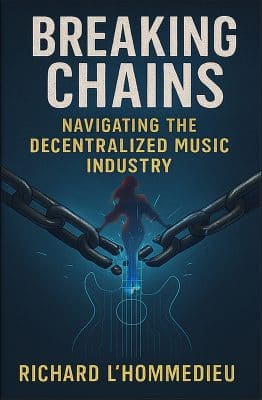
Breaking Chains is a groundbreaking guide for independent musicians ready to take control of their careers in the rapidly evolving world of decentralized music. From blockchain-powered royalties to NFTs, DAOs, and smart contracts, this book breaks down complex Web3 concepts into practical strategies that help artists earn more, connect directly with fans, and retain creative freedom. With real-world examples, platform recommendations, and step-by-step guidance, it empowers musicians to bypass traditional gatekeepers and build sustainable careers on their own terms.
More than just a tech manual, Breaking Chains explores the bigger picture—how decentralization can rebuild the music industry’s middle class, strengthen local economies, and transform fans into stakeholders in an artist’s journey. Whether you’re an emerging musician, a veteran indie artist, or a curious fan of the next music revolution, this book is your roadmap to the future of fair, transparent, and community-driven music.
Get your Limited Edition Signed and Numbered (Only 50 copies Available) Free Shipping Included
Discover more from Making A Scene!
Subscribe to get the latest posts sent to your email.


