
Decentralized Streaming Platforms: The Spotify Alternative




Making a Scene Presents – Decentralized Streaming Platforms: The Spotify Alternative
When most people think of music streaming, Spotify is usually the first name that comes to mind. It’s the giant of the industry, with over half a billion users worldwide and more songs than anyone could listen to in a lifetime. For indie musicians, Spotify seems like the obvious place to be. You upload your tracks through a distributor, your music shows up next to the stars, and fans can find you with a search bar.
But here’s the catch. Spotify’s business model wasn’t built with independent musicians in mind. The way they calculate payouts is complicated, often unfair, and almost impossible to understand. For every thousand plays you get, the actual money you see can feel tiny—sometimes just a few dollars, sometimes even less. Meanwhile, decentralized streaming platforms like Audius are rewriting the rules. Instead of middlemen and murky calculations, they use blockchain and smart contracts to make sure artists get paid instantly and fairly.
Let’s break down the differences between Spotify and Audius, explore how streaming payouts really work, and show you how you as an indie musician can start using decentralized platforms to build a fanbase and actually keep more of the money you earn.
How Spotify Really Pays Musicians
Spotify likes to say that it has paid out billions of dollars to rights holders since it launched. That sounds impressive, but when you zoom in on how those payments work, the story gets a lot more complicated.
Spotify doesn’t actually pay artists directly. Instead, it pays record labels, distributors, and publishers, who then decide how to split the money with artists. If you’re signed to a label, your contract might mean you only see a fraction of what Spotify sends out. Even if you’re independent and using a distributor like DistroKid or TuneCore, there are still cuts being taken before the money reaches your bank account.
Another big issue is the “pro-rata” payout system. Imagine there’s a giant pot of money that Spotify collects each month from subscriptions and ads. That money gets divided based on the total number of streams across the entire platform. So if you got 10,000 plays in a month, your payout isn’t based on your fans’ subscription fees—it’s based on your slice of that total pie. If Drake or Taylor Swift gets a billion streams in the same month, they eat up a huge share of the pot, leaving less for everyone else.
The result is that the average payout per stream usually falls somewhere between $0.003 and $0.005. That means a million streams might only earn you around three to five thousand dollars before anyone else takes their cut. For indie musicians who don’t have marketing budgets or major label backing, getting to those numbers can feel almost impossible.
And then there’s the question of transparency. Spotify doesn’t clearly explain how streams are counted. Do short plays count the same as long ones? How do fraudulent or bot-driven streams affect payouts? Why do payments vary so much month to month? These questions are rarely answered, and indie artists are often left feeling like they’re being kept in the dark about how their own money is calculated.
The Promise of Decentralized Streaming
Now let’s compare that to a platform like Audius. Audius is built on blockchain technology, which means it doesn’t rely on labels or distributors to handle payouts. Instead, artists upload their music directly to the platform, and fans listen through apps like Audius.org. Every stream is tracked on the blockchain, and payments are distributed instantly through smart contracts.
So what’s a smart contract? Think of it as an automated agreement written into code. If you upload a song and say that 80% of the streaming revenue should go to you and 20% to your producer, the blockchain enforces that split every single time your song is played. There’s no waiting weeks or months for a payout, no chasing down distributors, and no mysterious deductions you never agreed to.
Audius uses its own token, called $AUDIO, to reward artists, fans, and even developers who build apps on top of the platform. The token is a kind of digital currency that can be earned, traded, or staked for additional rewards. As an artist, you can collect tokens every time your songs are played, and you can also use them to unlock special features, promote your tracks, or reward fans for their support.
The big difference here is ownership and control. On Spotify, you don’t really own the relationship with your fans. Spotify does. They decide how to recommend your music, how to share your stats, and when you get paid. On Audius, you upload your tracks directly, connect with fans through social tools, and see your token rewards in real time. It feels more like a partnership than a middleman deal.
How Smart Contracts Split Income
One of the most powerful features of decentralized streaming is how smart contracts handle revenue sharing. Let’s say you collaborated with a friend on a new single. On Spotify, you’d have to work out splits with your distributor, fill out forms, and hope that everything is processed correctly. Payments could take months to arrive.
On Audius, you set the split when you upload the track. If you decide it’s 50/50, the smart contract ensures that every time the song is played, the tokens are divided equally and sent to both of your wallets instantly. If you had a more complex split—say, 60% for you, 25% for your producer, and 15% for the session guitarist—the smart contract would handle that automatically, every single time.
This is a game-changer for indie artists who collaborate often. Instead of worrying about who owes what or dealing with messy accounting later, the blockchain keeps everything fair and transparent from the start.
How to Upload Music to Audius
If you’re curious about trying it out yourself, getting started on Audius is surprisingly simple. First, go to Audius.co and create a free account. You don’t need a distributor or a label—you can upload your tracks directly from your computer.
Once your account is set up, click on the “Upload Track” button. You’ll be asked to add your song file, cover art, title, and any other details. You can also set whether the track is public or hidden, and if you want to offer it for free or token-gated (meaning fans need to hold a certain number of tokens to access it).
After your track is live, fans can find it on the Audius platform and start streaming immediately. You’ll be able to see your stats, track your plays, and watch your token rewards accumulate in real time. If you’ve set up revenue splits with collaborators, those payments will flow automatically as well.
Audius also makes it easy to connect directly with fans. The platform has built-in social features, so listeners can comment on your tracks, repost them, and share them with friends. Unlike Spotify, where fan data is mostly hidden, Audius gives you direct visibility into who your listeners are and how they’re engaging with your music.
Tracking Your Token Rewards
One of the coolest parts about Audius is the ability to track your rewards on the blockchain. Every time your track is played, the smart contract records the payout. You can log in and see exactly how many tokens you’ve earned, where they came from, and how they were distributed.
This transparency is something Spotify doesn’t offer. With traditional streaming, you just get a vague monthly report with numbers that don’t always make sense. On Audius, the blockchain ledger makes sure that every transaction is public and verifiable. If you want to double-check your earnings, the data is all there.
Over time, those token rewards can add up. You can hold onto your tokens as an investment, trade them for other cryptocurrencies, or cash them out into traditional money. Some artists even use their tokens to reward fans, offering exclusive tracks, merchandise, or experiences in exchange for $AUDIO.
Why This Matters for Indie Musicians
The shift from centralized platforms like Spotify to decentralized ones like Audius is more than just a change in technology. It’s a change in power. For too long, indie artists have been stuck in a system where big labels and platforms make the rules, take the biggest slices of revenue, and keep musicians in the dark about how money flows.
Decentralized streaming flips that system upside down. It puts artists back in control of their music, their fan relationships, and their income. It’s not a magic bullet—building an audience still takes work, and not every fan has moved over to Audius yet—but it’s a fairer, more transparent way to share your music and get rewarded.
The Future of Music Streaming
So what does the future look like? Spotify isn’t going away anytime soon, but cracks are showing in the old model. More artists are speaking out about unfair payouts, and fans are starting to realize how little of their subscription fees actually reach the musicians they love.
Meanwhile, platforms like Audius are proving that a different approach is possible. By using blockchain and smart contracts, they’re building a system that’s transparent, fast, and fair. As more artists join and more fans discover the benefits, decentralized streaming could become the true alternative to Spotify—the one where indie musicians finally have a fighting chance.
For now, the best move is to explore both worlds. Keep your music on Spotify to reach the listeners who are already there, but start experimenting with Audius to see what decentralized streaming can do for you. Upload a track, connect with fans, and watch how the token rewards change the way you think about streaming income.
It might just be the step that takes you from frustrated Spotify payouts to a new era of independence, ownership, and fair rewards for your art.
 |  Spotify |  Deezer |  Breaker |
 Pocket Cast |  Radio Public |  Stitcher |  TuneIn |
 IHeart Radio |  Mixcloud |  PlayerFM |  Amazon |
 Jiosaavn |  Gaana |  Vurbl |  Audius |
 Reason.Fm | |||
Find our Podcasts on these outlets
Buy Us a Cup of Coffee!
Join the movement in supporting Making a Scene, the premier independent resource for both emerging musicians and the dedicated fans who champion them.
We showcase this vibrant community that celebrates the raw talent and creative spirit driving the music industry forward. From insightful articles and in-depth interviews to exclusive content and insider tips, Making a Scene empowers artists to thrive and fans to discover their next favorite sound.
Together, let’s amplify the voices of independent musicians and forge unforgettable connections through the power of music
Make a one-time donation
Make a monthly donation
Make a yearly donation
Buy us a cup of Coffee!
Or enter a custom amount
Your contribution is appreciated.
Your contribution is appreciated.
Your contribution is appreciated.
DonateDonate monthlyDonate yearlyYou can donate directly through Paypal!
Subscribe to Our Newsletter
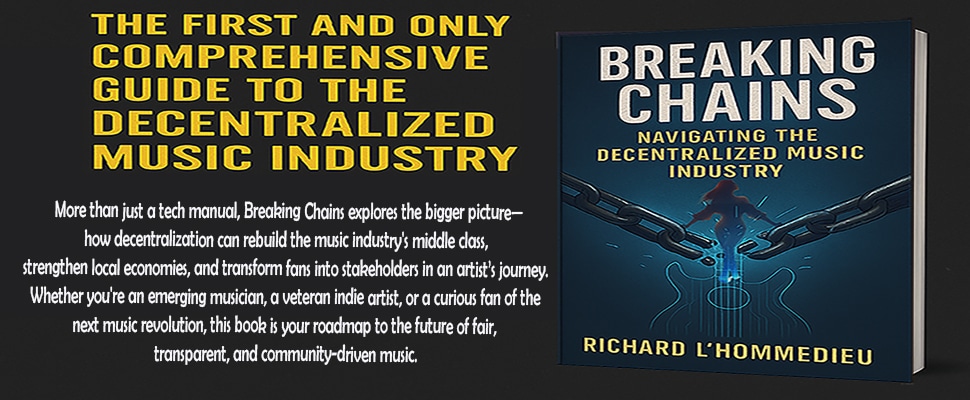
Order the New Book From Making a Scene
Breaking Chains – Navigating the Decentralized Music Industry
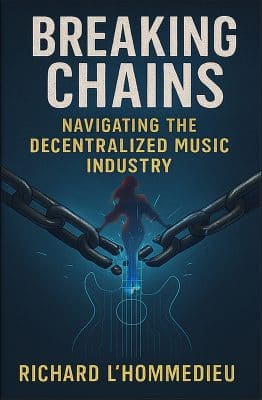
Breaking Chains is a groundbreaking guide for independent musicians ready to take control of their careers in the rapidly evolving world of decentralized music. From blockchain-powered royalties to NFTs, DAOs, and smart contracts, this book breaks down complex Web3 concepts into practical strategies that help artists earn more, connect directly with fans, and retain creative freedom. With real-world examples, platform recommendations, and step-by-step guidance, it empowers musicians to bypass traditional gatekeepers and build sustainable careers on their own terms.
More than just a tech manual, Breaking Chains explores the bigger picture—how decentralization can rebuild the music industry’s middle class, strengthen local economies, and transform fans into stakeholders in an artist’s journey. Whether you’re an emerging musician, a veteran indie artist, or a curious fan of the next music revolution, this book is your roadmap to the future of fair, transparent, and community-driven music.
Get your Limited Edition Signed and Numbered (Only 50 copies Available) Free Shipping Included
Discover more from Making A Scene!
Subscribe to get the latest posts sent to your email.


