
Bob Corritore And Friends Ernestine Blues




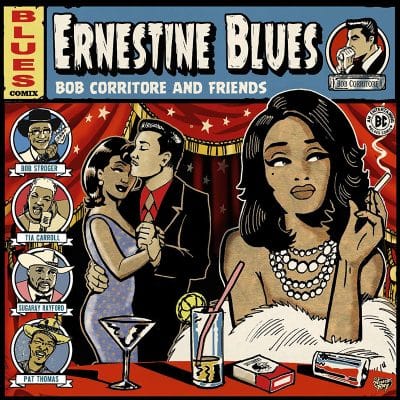
Bob Corritore And Friends
Ernestine Blues
Vizztone/SWMAF Records
Bob Corritore was born in Chicago in 1956 and became hooked on blues harmonica at the age of twelve. By twenty-five he had relocated to Phoenix, where he eventually became one of the most important figures in the Southwest blues scene. Ten years after arriving, Corritore opened his own club, The Rhythm Room, which quickly became a major stop for touring blues artists. With his house band, The Rhythm Room All-Stars, he regularly backed visiting musicians and helped preserve traditional blues in a live setting.
Since 2017, Corritore has earned thirteen Blues Music Awards nominations. He won his first Blues Music Award in 2011 for Historical Album of the Year and won again in 2025 for Traditional Blues Album for “Crawlin’ Kingsnake,” recorded with John Primer. He is also nominated for a 2026 Blues Music Award in the category of Best Instrumentalist–Harmonica. This new compilation serves as a broad survey of his collaborative work, with Corritore playing harmonica on all sixteen tracks.
The album opens with “How’d You Learn to Shake It Like That,” written by Snooky Pryor in 1985. The track features Tony Coleman on vocals and drums, Jimi ‘Primetime’ Smith on guitar, Bob Stroger on bass, and Anthony Geraci on piano, as Coleman delivers the lyric with playful swagger.
“Tell Me Darling,” written by Betty Everett and Lucious Porter Weaver in 1959, features Carla Denise on vocals alongside Smith, Stroger, Geraci, Wes Starr on drums, and Doug James on saxophone. Denise gives the song a strong early rhythm and blues feel.
“Big Fat Mama,” first released in 2013, features Pat Thomas on guitar and vocals, bringing a raw, energetic delivery that fits naturally beside Corritore’s harmonica.
“Blind Man,” written by Sugaray Rayford, features Rayford on vocals with Smith and Johnny Rapp on guitars, Russ Harwood on organ, Yahni Riley on bass, and Brian Fahey on drums. Rayford’s voice gives the song emotional weight.
“Ernestine,” written and first recorded by Sam Cooke in 1963, features Smith and Bob Margolin on guitars, Stroger on bass, Geraci on piano, Starr on drums, Doug James on saxophone, and backing vocalists Eboni McDonald, Diamond Porter, and Yolanda Tharrington, with Tia Carroll delivering the lead vocal.
“Trouble No More,” originally recorded by Muddy Waters in 1955, features Willie Buck on vocals, Smith and Margolin on guitars, Stroger, Geraci, and Starr, staying deeply rooted in classic Chicago blues phrasing.
“I Love the South,” written and recorded by Johnny Rawls, features Rawls on vocals and guitar, joined by Smith, Terry “D” Harris on organ, Yahni Riley on bass, Brian Fahey on drums, and backing vocals from Eboni McDonald, Yolanda Tharrington, and Clarke Rigsby.
“Going Fishing,” written by Jimmy Reed, features Smith on vocal and guitar, Margolin on guitar, Stroger on bass, Geraci on piano, and Starr on drums, delivering an easy rolling groove.
“Troubles on Your Mind,” written by Henry Glover and Sonny Thompson in 1952, returns Carla Denise to the microphone, this time with pianist Ben Levin, giving the song a stripped-down emotional focus.
“Wild as You Can Be,” written by Ricky Harper, again features Carla Denise with Smith, Margolin, Stroger, Geraci, Starr, and Doug James, carrying strong late-night blues energy.
“Pretty Girls Everywhere,” written by Eugene Church and Thomas Williams in 1958, includes Smith, Margolin, Geraci, and Starr, while Bob Stroger takes the vocal lead.
“Standing on the Bank,” written by William Crawford and later associated with Tab Benoit, features Willie Buck on vocals with Smith, Margolin, Stroger, Geraci, and Starr.
“Sorry I Had to Leave You Behind,” written by Albert Holder and Ferdinand Washington, features Charles Wilson on vocals with Kid Ramos and Johnny Main on guitars, Mike Turturro on bass, and Brian Fahey on drums.
“She Might Need Me,” written by Joe Tex, features Oscar Wilson of The Cash Box Kings on vocals, with Nick Moss on guitar, Ross Harwood on organ, Rodrigo Mantovani on bass, and Pierce Downer on drums.
“Down in Mississippi,” another Jimmy Reed composition, again features Oscar Wilson, Smith, Margolin, Stroger, Geraci, and Starr.
The closing track, “Shoes,” written by Teeny Tucker and Robert Hughes, features Tia Carroll on vocals with Smith and Billy Flynn on guitars, Stroger on bass, Geraci on piano, and Starr on drums.
On this edition of Bob Corritore & Friends, Corritore once again demonstrates why he remains such a respected curator of traditional blues. These collaborations move naturally through straight Chicago blues, early rhythm and blues, Mississippi country blues, and soul blues. His harmonica never overwhelms the material; instead, it helps define each song’s character. The result is a guided tour through the many living branches of blues tradition, performed by some of the strongest voices in today’s scene.
Richard Ludmerer
BUY NOW
Buy Us a Cup of Coffee!
Join the movement in supporting Making a Scene, the premier independent resource for both emerging musicians and the dedicated fans who champion them.
We showcase this vibrant community that celebrates the raw talent and creative spirit driving the music industry forward. From insightful articles and in-depth interviews to exclusive content and insider tips, Making a Scene empowers artists to thrive and fans to discover their next favorite sound.
Together, let’s amplify the voices of independent musicians and forge unforgettable connections through the power of music
Make a one-time donation
Make a monthly donation
Make a yearly donation
Buy us a cup of Coffee!
Or enter a custom amount
Your contribution is appreciated.
Your contribution is appreciated.
Your contribution is appreciated.
DonateDonate monthlyDonate yearlyYou can donate directly through Paypal!
Subscribe to Our Newsletter
Order the New Book From Making a Scene
Breaking Chains – Navigating the Decentralized Music Industry

Breaking Chains is a groundbreaking guide for independent musicians ready to take control of their careers in the rapidly evolving world of decentralized music. From blockchain-powered royalties to NFTs, DAOs, and smart contracts, this book breaks down complex Web3 concepts into practical strategies that help artists earn more, connect directly with fans, and retain creative freedom. With real-world examples, platform recommendations, and step-by-step guidance, it empowers musicians to bypass traditional gatekeepers and build sustainable careers on their own terms.
More than just a tech manual, Breaking Chains explores the bigger picture—how decentralization can rebuild the music industry’s middle class, strengthen local economies, and transform fans into stakeholders in an artist’s journey. Whether you’re an emerging musician, a veteran indie artist, or a curious fan of the next music revolution, this book is your roadmap to the future of fair, transparent, and community-driven music.
Get your Limited Edition Signed and Numbered (Only 50 copies Available) Free Shipping Included
Discover more from Making A Scene!
Subscribe to get the latest posts sent to your email.


