

AI in Metadata & File Prep: Smarter Exports for Distribution



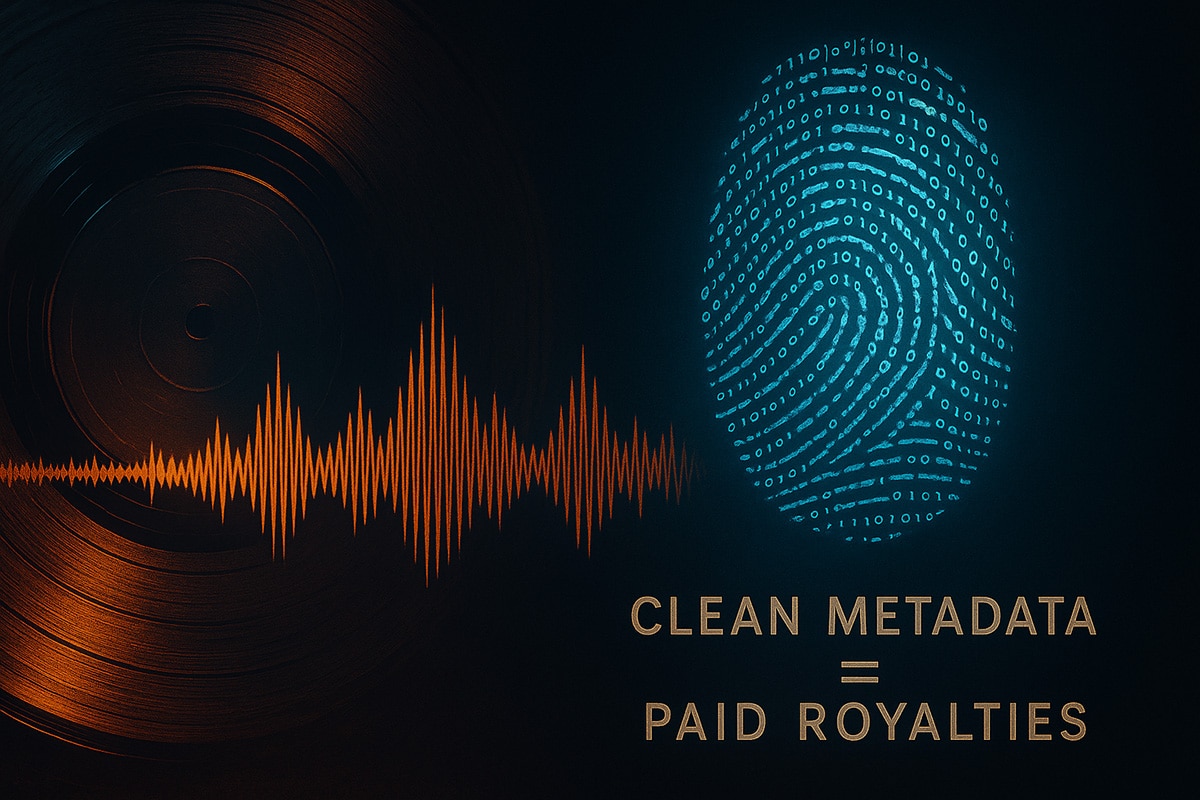
Making a Scene Presents – AI in Metadata & File Prep: Smarter Exports for Distribution
Listen to the podcast discussion of Metadata and Royalties for more information
What is metadata, and why should you care about it?
Imagine this: you write a song, record it, and then send it out into the world. But who “owns” that song? Who wrote it? Who should get paid when people listen? How will streaming services or radio stations know which song it is, among millions of others? That’s where metadata comes in.
Metadata is “data about data.” In music, metadata is all the information attached to a recording (or a track) that describes it: the song title, who the artist is, who wrote it, who owns it, when it was released, the track number on an album, and unique codes like an ISRC (International Standard Recording Code). Without good metadata, your track is like a book without a cover or title page—it’s hard to identify, harder to track, and easier to lose.
Why is metadata so important for royalties? Because when your music is streamed, downloaded, played on radio, or used in films, it generates money. But before royalty systems can pay that money to you, they need to match the usage (e.g. “this was played 100 times in Sweden”) to the right recording and right rights holders. They do that matching by relying on metadata (especially unique identifiers and artist/rights info). If your metadata is wrong, incomplete, or inconsistent, that matching fails. That means either you won’t get paid, or payments get delayed, or payments go to the wrong people.
In fact, a big problem in the music industry is “black box” money: that’s royalties collected by streaming services or platforms that can’t be matched to any rights holder, so they just hold onto the money. One report says that poor metadata leads to lost royalties and unclaimed rights. Another source says the Mechanical Licensing Collective in the U.S. has collected more than $2 billion in royalties—but nearly $1 billion is still unclaimed due to metadata mismatches.
Also, metadata isn’t just about getting paid. It helps your music be found. Search, playlists, recommendations, sync licensing (for TV, film, ads)—all these use metadata (genre, mood, tempo, etc.). So good metadata helps your music get heard and used more.
So to sum up: metadata is the glue that ties a track to its creators and rights, and it’s how royalty systems know who to pay and how much. Mistakes or omissions in metadata are like holes in a bucket—you lose money.
Key metadata pieces: what you need to fill
Here are the key fields you absolutely must have in your metadata, in ways that are correct and consistent:
-
Track title / song title
-
Artist name(s) (and features, if any)
-
Composer / songwriter name(s)
-
Publisher or rights owner info
-
ISRC (International Standard Recording Code) — this is a unique 12-character code that identifies a specific recording. It’s like a fingerprint for that version of the song.
-
ISWC (International Standard Musical Work Code) — this is for the underlying composition (the writing), distinguishing different works even if there are multiple recordings.
-
Track order / track number (if part of album, EP)
-
Release date
-
Genre, mood, other descriptive tags
-
Duration
-
Splits / royalty shares — who gets what percentage (if there are multiple writers)
-
Rights ownership and label info
-
Alternate titles / versions, when needed
And you must keep these fields consistent across all places you upload, register, or distribute the track. If you spell your name slightly differently, or use an extra space, or omit a co-writer in one system, you risk losing matching.
One site (PRS formusic) emphasizes that metadata includes song title, creator identifiers (CAE or IPI), producers, and the ISRC. Another (Reprtoir) says that modern metadata tools automatically validate fields to meet the streaming service specifications and flag missing or misformatted data.
How can AI help auto-fill metadata like ISRCs, names, track order?
Doing metadata manually is tedious and error-prone. That’s where AI (or smart software) can help by automating, suggesting, validating, and correcting metadata. Here are ways AI (or intelligent software) can help:
1. Suggesting metadata by audio analysis
An AI system can “listen” to a song (analyze its audio features) and suggest metadata like genre, mood, instrumentation, and even tempo. This gives you a starting point rather than you typing everything from scratch.
2. Auto-completing known fields
If your catalog or database already has previous entries, the AI can autocomplete artist names, songwriter names, or label names as you type—helping maintain consistency (avoiding typos or alternate spellings).
3. Auto-assigning ISRCs (where allowable)
In many cases, when you’re preparing a new track for release, your distribution platform (or master cataloging tool) might be able to generate or reserve an ISRC automatically. Some systems support you requesting new ISRCs or claiming existing ones based on your rights.
For example, many music distribution systems (like DistroKid, TuneCore) provide tools to help you request or input ISRCs properly. (Though it’s not always AI in the strict sense, it’s automated handling).
Also, as AI advances, there is research about upgrading identifier systems (e.g. “ISRC-AAM-CID”) to better handle AI‐generated works and participation weights automatically.
4. Validating metadata against rules and catching errors
AI systems can check whether your artist names match existing entries, whether the metadata fields adhere to the required format (for each streaming service), whether splits add up to 100 %, and whether there are missing values. If something looks off, the system can flag it or even propose a fix.
For instance, Reprtoir’s tools “automatically validate metadata against DSP requirements, flag missing fields or formatting issues, and even suggest corrections.”
5. Propagating metadata across versions or releases
If you have multiple versions of a track (e.g. radio edit, remix, live version), AI or smart software can help you propagate shared fields to all versions (title, artist, composer) and only require you to enter the differences. That reduces duplication and error.
6. Bulk filling and templates
AI-enabled catalogs can let you create templates: for instance, when releasing an album, the system can auto-fill track order, base artist and album metadata, and you just fill in the unique parts per track.
7. Cross-checking external databases
Some AI or smart tools can cross-check your data against external trusted sources (like MusicBrainz, or performing rights databases) to catch mismatches, typos, alternate names, or missing identifiers.
Overall, the AI doesn’t magically know everything, but it dramatically speeds up the work, reduces error, and helps maintain consistency, especially in large catalogs.
Manual workflow vs AI-assisted metadata workflow: a comparison
Let me walk you through how a manual metadata workflow typically goes, and then how an AI-assisted workflow changes that, plus what advantages and trade-offs emerge.
Manual workflow (doing everything by hand)
You (or someone on your team) do the following steps:
-
Create a spreadsheet or form for your release
-
For each track, type in the track title, artist name, songwriter names, splits, track number, release date, etc.
-
Request or look up ISRCs (maybe through your label or a national agency) and manually insert them
-
Check for typos, spelling inconsistencies, missing fields
-
When uploading to distributor or aggregator (e.g. DistroKid, TuneCore, CD Baby), manually retype or paste all those fields
-
You may discover errors after uploading (fields rejected, missing info) and have to fix and reupload
-
Later you might detect mismatches in your royalty statements (e.g. one track wasn’t paid) and you’ll backtrack metadata, registration, and fix the misattributed field
-
As your catalog grows, maintaining consistency (spelling, field conventions) gets harder
-
If you have multiple versions, copying metadata across becomes tedious
-
The chances of human error (typos, omissions, misformatting) grow
This manual method is slow, error-prone, and especially challenging at scale (many tracks, many releases over time).
AI-assisted / smart metadata workflow
In contrast, an AI-assisted workflow might look like this:
-
You start a new release in a metadata management system (or distributor)
-
You pick a template (for albums, EPs, singles) and it automatically fills shared fields (artist, release date, label info)
-
As you type artist or songwriter names, it autocompletes based on past entries or external databases
-
The system gives you options for ISRCs: either use existing ones (if re-release) or request/generate new ones automatically
-
The AI suggests genre, mood, tags based on analyzing the audio file you upload
-
The system checks your entries live: missing fields, splits that don’t sum to 100 %, formatting rules per DSP, typos, inconsistencies
-
For multiple versions, the system copies shared fields and lets you override what’s unique
-
The system can flag mismatches or inconsistencies with external data sources or previous releases
-
When you finally submit to distributor, fewer errors or rejects happen
-
Later on, when royalty reports or statements show missing or unmatched songs, you can trace back metadata reliably and correct issues
-
As your catalog grows, consistency is maintained by the system rather than relying entirely on manual memory
In effect, AI and automation shift much of the burden from human memory and data entry toward structured, guided workflows with validation.
Why AI workflows prevent errors (and how error prevention saves your income)
Here are core ways in which AI or smart metadata systems help prevent errors (compared to manual workflows), and why those protections directly matter for distribution and royalties.
Consistency in spelling and naming
Humans make typos, use slightly different spellings (“John A. Smith” vs “John Smith”), or add suffixes in one place and omit them elsewhere. An AI system or metadata catalog enforces consistency: once a name is entered a certain way, it helps you stick to that version everywhere.
If streaming services or royalty systems see your name spelled differently in two places, they might treat them as two separate people or two separate songs, causing mismatches or lost royalties.
Validation rules and format checking
Distribution platforms have strict rules (e.g. for artist name length, allowed characters, no extra spaces, correct date formats, etc.). A smart system can enforce these rules, catching invalid inputs before you submit. That avoids rejections, delays, or truncated metadata.
Alerts for missing or contradictory fields
The system can warn you if you forgot to input splits, or if the sum of songwriter percentages is not 100 %. Or if you left artist blank, or forgot ISRC. Human operators often forget or skip things; systems help you catch those blanks.
Propagation of shared metadata
With multiple tracks or versions, propagation of shared fields (release date, label, artist, etc.) reduces repeated entry and reduces inconsistencies. It’s much safer than retyping for each track.
Cross-database checking
Smart systems can check metadata you entered against external trusted databases (MusicBrainz, PRO registries, etc.) to detect mismatches or duplicated entries. If your songwriter name is registered in a PRO under a slightly different form, the system might flag that. This cross-check reduces mismatches that cause royalty misattribution.
Error correction suggestions
When something looks off (e.g. a name doesn’t match previous entries), the system might suggest close matches or corrections. That saves you time and catches errors you might not notice.
Faster detection and shorter feedback loops
If there is a mismatch or error, it’s better to catch it early (before distribution) rather than months later when royalties are missing. AI systems allow for instant feedback so you can fix problems immediately. Manual workflows often detect problems only later, after money is already lost or withheld.
Catalog scale and growth
As your catalog grows, manual workflows scale poorly: more data, more risk of divergence, more chance for inconsistency. But AI workflows scale better—consistent enforcement, reuse, templates, and checks. The larger your catalog, the more value you get from automating consistency and validation.
All of these protections help ensure that when your music is distributed, the metadata is clean, matched, and will lead to correct royalty payments. If your metadata is bad or mismatched, you risk payments being delayed, not credited to you, or going to someone else.
How good metadata prevents errors in distribution
Let’s walk a few scenarios of what can go wrong in distribution because of bad metadata, and how good metadata, especially aided by AI, helps avoid them.
Scenario: Misspelled artist or songwriter name
Suppose on your release you accidentally enter “Alyxandra Jones” instead of “Alexandra Jones.” The streaming platform might treat that as a different artist. Then in royalty matching, plays under “Alexandra Jones” might not match “Alyxandra Jones.” Result: lost or misattributed royalties.
If your AI system detects your earlier entries under “Alexandra Jones” and warns that “Alyxandra” is a new variation, you can catch the typo immediately.
Scenario: Missing ISRC or duplicate ISRC
If you forget to include an ISRC, or assign one that’s already used by another track, the distribution platform may reject the track or misroute usage data. That results in errors or rejection.
A smart system enforces you to provide valid, unique ISRCs, or auto-generates them according to your label’s pool, reducing human error here.
Scenario: Splits don’t add up to 100 %
If writers’ percentage splits are inconsistent or wrongly entered, you’ll confuse the system and your co-writers may not get paid accurately. It might even block registration.
An AI workflow will check that splits add to 100 % and warn you of contradictions before submission.
Scenario: Wrong track order or inconsistent album metadata
If track numbers are wrong or the album metadata (release date, artist name) is inconsistent between album and track level, some platforms might reject the upload, or worse, distribute with mislinked metadata.
An AI system ensures track order propagation and cross-checks consistency between album and track metadata.
Scenario: Mismatches in external rights databases
If your distribution metadata doesn’t match what PROs or collection societies have (writer name, songwriter splits, titles), when the streaming reports come in, matching will fail and royalties go to “unmatched” or “black box.”
AI or smart metadata systems that cross-check your entries to external databases can help you spot and align entries before releasing.
Scenario: Re-releases or remasters
If you re-release or remaster a track but change some metadata (title, casing, etc.), the system might treat it as a new track, losing your historical play data or breaking continuity of plays. If you reuse exactly the same metadata and ISRC where needed, you preserve history.
An AI workflow can remind you “this is a re-release; reuse metadata” rather than letting you diverge.
Scenario: Late discovery and royalty leakage
Often, errors in metadata are discovered months or years later. By then, royalties may have been distributed incorrectly, claims may be harder to correct, and you risk permanently lost money. Clean data from the start helps avoid that.
In short: good metadata is your best defense against distribution errors, and AI workflows give you tools to maintain that quality at scale.
Why this matters especially for smaller or independent artists
You might think: “Maybe big labels can afford careful metadata management, but I’m informal / indie.” But actually, you need it more because:
-
You likely have smaller margins. Missing a few pays here and there adds up.
-
You have less buffer to retrace errors months later.
-
You may not have a specialized team, so you need systems that help you avoid mistakes.
-
As your catalog grows, manual approaches become unmanageable.
-
You want every dollar of royalty you deserve, especially at early stages.
So investing effort and tools (or AI systems) to manage metadata well is essential.
A simple story illustration
Let me tell you a small “story” to make this real.
Imagine an independent singer-songwriter, Mia. She writes 10 songs and releases her first album. She types in all the metadata manually: Mia Smith, “Sunrise in July,” etc. She gets shares for her songs. A few months later she notices one song has zero royalty even though she sees plays in her dashboard. She digs in and finds that in her metadata she accidentally left off one songwriter credit (her friend’s name), so the system never matched that track to the correct writer. Because of that, all the royalty went into a “pending / unmatched” pool.
Next time, she uses a music metadata tool (with some AI assist). As she types her friend’s name, the system autocompletes from earlier and warns if splits don’t add up. It also cross-checks with external songwriter databases to confirm the name. It helps her reserve the ISRC, validates formatting, flags any inconsistencies. The next release goes out cleanly. Over time, her royalty statements match, she doesn’t have missing payments, and everything is traceable.
The difference: in the manual case, she lost some royalties (or delayed them) and spent hours fixing. In the AI-assisted case, she avoids those errors ahead of time.
Best practices to combine AI and human oversight
Even with AI and automation, humans need to make judgements. Here are best practices to combine both:
-
Create a metadata style guide: define conventions (artist name form, spacing, capitalization, naming of featured artists, etc.) This gives consistency. Many guides and catalogs recommend this.
-
Use a centralized metadata catalog / database: store all your metadata (past releases, versions) in one place. AI tools can draw from that catalog.
-
Use templates for albums / releases: let AI propagate shared fields rather than entering from scratch.
-
Validate early and often: don’t wait until the end—get feedback (errors, missing fields, mismatches) as you enter data.
-
Cross-check external databases / PROs: occasionally compare your metadata entries against PRO registries, MusicBrainz, etc.
-
Lock core fields: once you release, some fields should become read-only (especially ISRCs) so they can’t be accidentally changed.
-
Audit royalty statements and track exceptions: even with clean metadata, mismatches happen. Review your statements, see which tracks are unmatched, trace back to metadata fields, and correct.
-
Keep version history / logs: maintain logs of metadata changes, so you can revert or track when something changed.
-
Include alternate titles / spellings: if a song may be referred to slightly differently, include alternate names so matching is more robust.
-
Educate collaborators: ensure all co-writers, engineers, label staff use the same metadata standards.
By combining human judgement (for names, splits, creative decisions) with AI tools (auto-fill, validation, checking), you get the best of both worlds.
Wrapping up: why metadata + AI = better distribution and royalty outcomes
Let me restate the major takeaways in a conversational way:
Metadata is the quiet hero behind the scenes in music. It’s what links your track to you (artist, writer), tells the world how to credit you, and lets royalty systems pay you. If metadata is missing or wrong, your music might get out there, but your money gets stuck in limbo.
Doing metadata manually works—but only up to a point. As you grow, mistakes creep in. Typos, inconsistent naming, missing fields—all these small errors add up to big losses in royalty.
That’s where AI and smart metadata systems shine. They help you fill in fields faster, autocomplete names, validate your entries, catch mistakes early, enforce consistency across releases, and cross-check with external sources. In effect, they act as a safety net and guide, ensuring your metadata is clean and robust, so your music gets distributed properly and your royalties get paid correctly.
Good metadata prevents errors in distribution (rejections, misattributions) and helps maximize your income. It’s not optional; it’s part of professional music operations. Even for indie artists, caring about metadata—and using tools or AI to support it—is a way to protect your creative work, your rights, and your earnings.
AI Metadata Workflow Template for Indie Artists
1. Prepare Your Final Mix and Export Files
Before any metadata, you need clean, finalized audio files.
Export your tracks at 24-bit/44.1 kHz WAV or higher. Name them clearly — something like:ArtistName_SongTitle_FinalMaster.wav
That naming helps AI systems auto-detect and auto-fill fields.
If you’re using PreSonus Studio One or Logic Pro, both now include metadata embedding panels on export, so you can start tagging even before uploading.
2. Create a Central Metadata Sheet (Your “Source of Truth”)
Use a spreadsheet or metadata app where you record:
Artist name, track title, version (radio edit, remix, etc.), songwriter(s), publisher(s), splits (%), release date, genre, ISRC, ISWC, and any notes.
This sheet becomes your master reference — and AI tools can read or import it later.
Tools that help:
-
Reprtoir — professional catalog and metadata manager with validation.
-
Swayzio — cloud-based metadata cleaning and publishing platform for independent artists.
-
Sound Credit — lets engineers and artists capture credits and metadata directly in the DAW.
3. Let AI Help Auto-Fill and Verify Metadata
This is where the time savings happen.
When you upload audio or a metadata sheet, AI tools can listen and analyze your music to fill missing info automatically. They can detect genre, mood, key, tempo, and suggest ISRCs or track order.
Smart AI metadata helpers include:
-
Cyanite.ai – analyzes songs and generates metadata like mood, genre, and similar tracks.
-
Musixmatch Pro – lyric and metadata matching service used by Spotify and Apple Music.
-
Reprtoir AI Validation – flags missing or incorrect fields automatically.
-
Tunedge – AI-powered catalog management that tags and classifies tracks for sync and streaming.
As you type artist or songwriter names, these tools also autocomplete from your previous entries — reducing typos and inconsistencies.
If you use distributors like DistroKid (distrokid.com) or TuneCore (tunecore.com), they already auto-assign ISRCs for new releases. Just make sure to copy those back into your master metadata sheet for future reference.
4. Validate and Clean Your Metadata Before Upload
Once your AI tools suggest metadata, you still need to check it manually.
The AI can guess genre or fill fields, but you should confirm spelling, capitalization, and splits.
Reprtoir and Swayzio both include validation dashboards — they compare your metadata to DSP requirements (Spotify, Apple, Tidal, etc.) and warn if anything fails.
You can also use MusicBrainz Picard (picard.musicbrainz.org) to check whether your metadata conflicts with existing releases under similar titles.
Clean metadata ensures your song is identified correctly and won’t be rejected by your distributor.
5. Embed Metadata in the Audio File
Even before uploading to a distributor, it’s smart to embed metadata into the audio file itself.
This acts as a permanent “digital signature” inside the file.
Most DAWs and tools like Sound Credit Tracker Plug-in or MetaBliss can embed info such as:
Artist, Title, Album, Year, ISRC, Genre, and Copyright.
Tools for embedding metadata:
- Sound Credit Tracker Plug-in
-
Kid3 Audio Tagger (free, open source)
Once embedded, that data stays attached wherever the file travels — even when copied or uploaded.
6. Cross-Check External Databases and Rights Registries
Before distribution, compare your metadata to public databases to ensure accuracy:
-
ISRC / ISWC Lookup: ISRC International
-
Songwriter/Publisher Data: ASCAP Repertory, BMI Repertoire, SESAC.
-
Open Database Match: MusicBrainz
This cross-check prevents mismatches that could block royalties later.
7. Final AI-Assisted Distribution
When you’re ready to distribute, upload your cleaned and validated metadata (and audio) to your distributor.
AI-friendly distributors:
-
Vydia – integrates AI tagging and compliance checks before distribution.
-
Symphonic Distribution – uses AI to validate metadata and prevent duplicates.
-
Amuse.io – automatically assigns ISRCs and UPCs, checks for format errors, and suggests fixes.
Some newer blockchain-based distributors like Unchained Music and Stem.is are adding AI and smart-contract-linked metadata, which ensures royalties flow automatically when plays are tracked.
8. Post-Release Monitoring and AI Error Tracking
After your release goes live, you can use AI analytics tools to spot metadata or royalty mismatches early.
Platforms like Verifi Media (verifi.media) use blockchain and AI to track ownership data and detect inconsistencies in metadata across platforms.
If your royalties or track credits seem off, tools like Royalty Hero (royaltyhero.com) or LabelRadar (labelradar.com) can help reconcile reports by comparing metadata between sources.
You can even feed your royalty CSV reports into AI assistants (like ChatGPT or Claude) and ask:
“Find tracks in this report that have missing or mismatched ISRCs.”
AI can quickly flag anomalies so you can fix them before future payments are lost.
9. Maintain a Versioned Metadata Archive
Keep a dated copy of every metadata sheet, especially when edits happen (e.g., co-writer changes, remasters, re-releases).
You can automate this archiving with:
-
Airtable or Notion databases (both have AI plugins for text correction and version tracking).
-
Google Sheets AI Add-ons for automatic validation and consistency checks.
This makes it easy to audit royalty reports or prove ownership later.
Final Takeaway
AI doesn’t replace the artist or the business manager — it acts like a meticulous studio assistant who never gets tired of double-checking details.
Clean metadata is your invisible armor. AI helps you fill it faster, validate it smarter, and prevent the silent money leaks that plague independent musicians. By following this workflow and using the linked tools, you make sure your tracks don’t just exist on streaming platforms — they’re properly registered, traceable, and ready to earn you every cent you deserve.
 |  Spotify |  Deezer |  Breaker |
 Pocket Cast |  Radio Public |  Stitcher |  TuneIn |
 IHeart Radio |  Mixcloud |  PlayerFM |  Amazon |
 Jiosaavn |  Gaana |  Vurbl |  Audius |
 Reason.Fm | |||
Find our Podcasts on these outlets
Buy Us a Cup of Coffee!
Join the movement in supporting Making a Scene, the premier independent resource for both emerging musicians and the dedicated fans who champion them.
We showcase this vibrant community that celebrates the raw talent and creative spirit driving the music industry forward. From insightful articles and in-depth interviews to exclusive content and insider tips, Making a Scene empowers artists to thrive and fans to discover their next favorite sound.
Together, let’s amplify the voices of independent musicians and forge unforgettable connections through the power of music
Make a one-time donation
Make a monthly donation
Make a yearly donation
Buy us a cup of Coffee!
Or enter a custom amount
Your contribution is appreciated.
Your contribution is appreciated.
Your contribution is appreciated.
DonateDonate monthlyDonate yearlyYou can donate directly through Paypal!
Subscribe to Our Newsletter
Order the New Book From Making a Scene
Breaking Chains – Navigating the Decentralized Music Industry

Breaking Chains is a groundbreaking guide for independent musicians ready to take control of their careers in the rapidly evolving world of decentralized music. From blockchain-powered royalties to NFTs, DAOs, and smart contracts, this book breaks down complex Web3 concepts into practical strategies that help artists earn more, connect directly with fans, and retain creative freedom. With real-world examples, platform recommendations, and step-by-step guidance, it empowers musicians to bypass traditional gatekeepers and build sustainable careers on their own terms.
More than just a tech manual, Breaking Chains explores the bigger picture—how decentralization can rebuild the music industry’s middle class, strengthen local economies, and transform fans into stakeholders in an artist’s journey. Whether you’re an emerging musician, a veteran indie artist, or a curious fan of the next music revolution, this book is your roadmap to the future of fair, transparent, and community-driven music.
Get your Limited Edition Signed and Numbered (Only 50 copies Available) Free Shipping Included
Discover more from Making A Scene!
Subscribe to get the latest posts sent to your email.


