ChatGPT as Your Personal Music Marketing Assistant




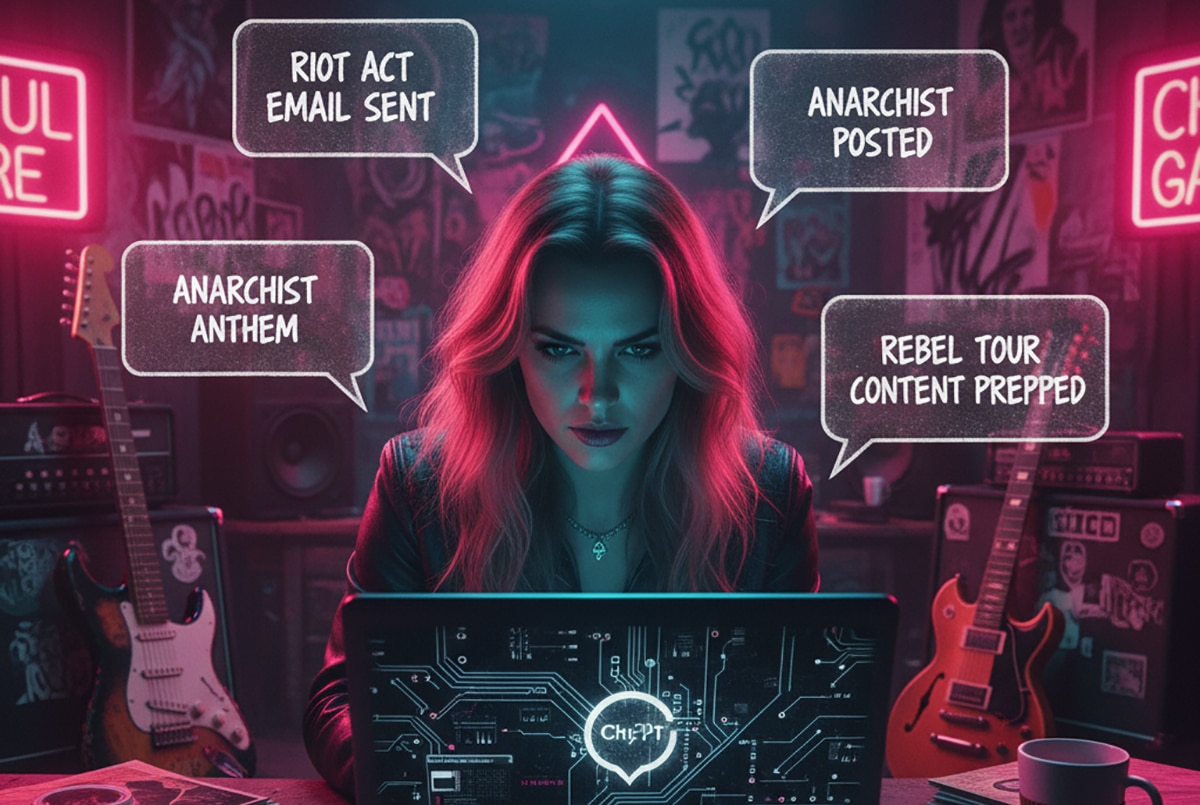
Making a Scene Presents – ChatGPT as Your Personal Music Marketing Assistant
Listen to the Podcast Discussion to learn more Insights into Using ChatGPT to Market your Music
How to Build Your Own “AI Intern” for Emails, Social Captions, and Campaigns
Imagine having your own marketing assistant — someone who knows your artist story, understands your fans, and can help you plan your next release, write your social posts, or even draft your newsletters. Now imagine that assistant never sleeps, never complains, and learns your voice over time. That’s exactly what ChatGPT can be for indie musicians.
ChatGPT (https://chat.openai.com) isn’t just a chatbot — it’s a creative partner that can help you automate the business side of being an artist. Most indie musicians love writing songs, not marketing them. But in today’s digital world, you can’t ignore marketing if you want to grow a fanbase, build income, and create longevity. The good news is that AI tools like ChatGPT can take the heavy lifting off your shoulders — you just have to know how to teach it to think like you.
This article will show you how to treat ChatGPT like your personal music marketing assistant — how to train it with your artist identity, create custom prompts, and use it to handle your emails, captions, bios, and even campaign planning. We’ll dive deep into the workflow that turns ChatGPT into your digital intern — one that actually gets better the more you use it.
Step 1: Teach ChatGPT Who You Are as an Artist
Before ChatGPT can write for you, it has to know you. Think of it like bringing a new intern onto your team. You wouldn’t just tell them “write a caption” and expect them to sound like you. You’d sit down, explain your story, your audience, and your goals. ChatGPT works the same way.
Start by opening a new chat at https://chat.openai.com or use ChatGPT Plus for access to GPT-5 (the latest model with better long-term context and creative output).
The first thing you want to do is “train” it. Tell ChatGPT who you are, what genre you play, your influences, and what kind of vibe your brand has. For example, you could type something like this:
“I’m an indie folk-rock artist based in Nashville. My sound blends storytelling and roots music, with influences from Brandi Carlile, Jason Isbell, and The Lumineers. My fanbase is mostly people aged 25–45 who love authentic lyrics and Americana energy. My tone is heartfelt, hopeful, and a little rebellious. From now on, when you write for me, keep that voice.”
That simple message gives ChatGPT the foundation it needs to start speaking like you. You can go deeper by adding links to your website, EPK, or recent press quotes. The more data you feed it, the more accurate it becomes.
If you have a bio already written, paste it into ChatGPT and say:
“This is my artist bio. Learn my story and keep my writing tone consistent with this voice.”
It will remember that tone for the rest of your chat session.
Once you’ve done this, ChatGPT has the basic DNA of your artist identity — your voice, your story, and your vibe. That’s how it begins to act like your personal assistant instead of a random chatbot.
Step 2: Create a ChatGPT Prompt Library for Your Marketing Tasks
Now that ChatGPT knows who you are, it’s time to give it jobs. Think of this as setting up your intern’s to-do list. Instead of asking it random one-off questions, build a small library of prompts that you can reuse.
You can store these prompts in a Google Doc, Notion page (https://www.notion.so), or even a spreadsheet in Google Sheets (https://sheets.google.com). Label each one by category — Emails, Social Media, Bios, Press Releases, etc.
Here’s how to use ChatGPT for your main marketing needs.
Email Marketing with ChatGPT
One of the hardest parts of being an indie artist is staying consistent with email newsletters. ChatGPT can make this painless. Start by connecting your email platform — most artists use Mailchimp (https://mailchimp.com), ConvertKit (https://convertkit.com), or Substack (https://substack.com).
Tell ChatGPT:
“Write a friendly newsletter to my fans about my upcoming single release. Make it sound personal and excited, and end with a clear call-to-action to pre-save the track on Spotify.”
You can even feed it past newsletters so it learns your format. Say:
“Here’s one of my old newsletters. Use this style for future ones.”
ChatGPT will then mimic your rhythm and flow.
You can also use it to brainstorm subject lines that increase open rates. For instance, you might say:
“Give me 5 catchy subject lines for a newsletter announcing my new single. My tone is warm and authentic, not salesy.”
If you’re scheduling emails in Mailchimp, you can copy ChatGPT’s drafts straight into the campaign builder, tweak them slightly, and hit send. It saves hours of work and keeps your messaging consistent.
Social Media Captions and Content Planning
Social media is one of the most time-consuming parts of an artist’s day. Writing captions, planning posts, and keeping everything on-brand can feel like a full-time job. But ChatGPT can help you build a full strategy.
First, tell it where you’re posting — Instagram, TikTok, Facebook, YouTube Shorts, or X (Twitter). Each platform has its own tone.
Try saying:
“Write a week of Instagram captions for an indie folk-rock musician releasing a new single. Each post should sound conversational, feel personal, and end with a question to encourage comments.”
ChatGPT will give you seven caption ideas, often with hashtags and suggestions for visuals.
You can also use it with scheduling tools like Buffer (https://buffer.com) or Later (https://later.com). Just paste ChatGPT’s captions into your scheduler, pair them with photos or videos, and you’ve got an entire week of content ready to post.
If you want to make ChatGPT even smarter, tell it about your fan demographics or your previous post engagement. For instance:
“Most of my followers are 30-year-olds who love live performance videos and songwriting stories. Write captions that highlight behind-the-scenes moments.”
It will tailor its responses accordingly, giving you captions that feel like you actually wrote them.
Writing Artist Bios and Press Kits
Your artist bio is often the first thing a journalist or playlist curator reads about you. And writing it can be painful. ChatGPT can make it effortless.
Paste your current bio into ChatGPT and say:
“Rewrite this bio in a more compelling, storyteller tone that would appeal to fans of Americana and roots music. Keep it under 300 words.”
Or, if you’re starting from scratch, tell it your story in bullet form: where you’re from, what inspires you, your milestones, and what makes your music unique. Then prompt:
“Write me a professional artist bio using this information that sounds natural and exciting.”
ChatGPT will generate multiple versions — short (for social media), medium (for your website), and long (for press releases).
If you want to make a full press kit, use ChatGPT in combination with Canva (https://canva.com). Canva has templates for EPKs (Electronic Press Kits) where you can drop in ChatGPT’s copy along with your photos, links, and tour dates. Within an hour, you can have a professional-looking press kit ready to send out.
Building a Content Calendar
One of the best uses of ChatGPT is helping you organize your content schedule. You can literally tell it to act as a “content manager” for your music career.
Try this prompt:
“Create a 30-day content calendar for an indie rock artist who’s promoting a new album. Include post ideas for Instagram, TikTok, and YouTube Shorts that alternate between storytelling, performance, and fan engagement.”
ChatGPT will lay out a plan day by day, including post types, topics, and themes.
You can copy this plan into Google Sheets, or if you want something more visual, use Trello (https://trello.com) or Notion to organize it.
The more specific you get with your prompts, the better your results. For example, you can say:
“Make sure at least 5 of these posts highlight my songwriting process and 3 of them promote my merch store on Shopify.”
And ChatGPT will adjust its plan accordingly.
Turning ChatGPT into a Long-Term Marketing Partner
The real magic happens when you stop treating ChatGPT as a one-off tool and start treating it like part of your team. You can actually train it to get smarter with every session.
If you’re using ChatGPT Plus or Enterprise, you can take advantage of its “Custom Instructions” feature (found in your profile settings at https://chat.openai.com). This lets you permanently teach ChatGPT who you are and how you want it to respond — even across different chats.
In the “About You” section, paste your artist bio, genre, and tone of voice. In the “How You’d Like ChatGPT to Respond” section, say something like:
“Always write in a warm, conversational tone that sounds like a musician speaking to their fans. Avoid corporate or robotic language. When writing captions or emails, include small personal touches, like stories or emotions.”
Once saved, every new chat will already “know” who you are, which means you can skip retraining every time. That’s how you build your AI intern into a long-term assistant.
You can also use “Memory” (a feature rolling out to ChatGPT Plus users throughout 2025) to let ChatGPT automatically remember facts about your projects, past releases, and tone. That means it can start a session already knowing your artist name, your last single, and your upcoming plans — just like a real assistant would.
Creating Consistent Branding and Voice Across Platforms
One of the biggest mistakes artists make is sounding different everywhere — one tone on Instagram, another on their website, and something totally different in their emails. ChatGPT helps you unify your brand voice.
You can give it a command like:
“Analyze my social media captions and my artist bio, and describe my overall tone. Then create a style guide for how I should write online.”
It will describe your tone (for example, “authentic, hopeful, grounded, with humor”) and then suggest ways to keep it consistent.
You can then use that tone guide every time you create content.
If you’re building a website or online store using Bandzoogle (https://bandzoogle.com) or Shopify (https://shopify.com), ChatGPT can even write your about page, merch descriptions, and event blurbs in your brand voice.
That consistency helps fans recognize you no matter where they find you — and it’s a big part of professional marketing that AI can now handle for free.
Campaign Planning and Promotion Strategy
Now let’s talk about big-picture marketing. Beyond captions and emails, ChatGPT can help you plan entire campaigns.
Say you’re about to release a new single. You could tell ChatGPT:
“Act as a music marketing strategist. Create a 6-week promotional plan for my new single. Include teaser ideas, social post topics, email timing, and fan engagement ideas.”
It will generate a timeline that covers pre-release teasers, release-day pushes, and post-release follow-ups. You can even feed it data about your fanbase and ask it to adapt the plan:
“Most of my fans are in the U.S. and U.K., and they engage more on weekends. Adjust my campaign schedule to match that.”
You can take those ideas and map them out using Airtable (https://airtable.com) or ClickUp (https://clickup.com), where you can set tasks, deadlines, and reminders.
If you want visuals to match your campaign, combine ChatGPT with generative design tools like MidJourney (https://www.midjourney.com), Ideogram (https://ideogram.ai), or Canva’s AI image generator. Ask ChatGPT to write prompts for these tools:
“Write a MidJourney prompt for an album cover concept that fits my brand — indie folk with modern flair.”
Then you can paste that into MidJourney to generate album visuals that match your tone.
This integration between text-based AI (ChatGPT) and image-based AI (MidJourney or Canva) gives you a complete content creation studio in your browser.
How to Use ChatGPT with Real Music Marketing Tools
ChatGPT gets even more powerful when you use it alongside other AI-driven music marketing platforms. Here are a few examples that indie artists are using today:
1. Canva (https://canva.com) – for creating graphics, posters, and lyric videos. You can ask ChatGPT to generate text or headlines for your Canva designs.
2. Lately.ai (https://www.lately.ai) – this tool analyzes your long-form content (like blogs or interviews) and turns it into dozens of short social posts. You can use ChatGPT to generate the long-form content, then feed it into Lately to expand your reach.
3. Soundcharts (https://soundcharts.com) and Chartmetric (https://chartmetric.com) – these platforms analyze your audience data. You can feed that data into ChatGPT and ask: “Based on these demographics, what kind of content should I post to reach my top cities?”
4. Hypeddit (https://hypeddit.com) – lets you create fan-gated download pages and smart links. You can ask ChatGPT to write the copy for your Hypeddit landing page to make it sound persuasive and on-brand.
5. Musiio (https://musiio.ai) and Cyanite (https://cyanite.ai) – AI tools that analyze your music’s mood and genre. You can paste their descriptions into ChatGPT to generate mood-based captions or targeted ad copy.
When you combine ChatGPT with these tools, you’re essentially building an entire AI-powered marketing ecosystem — one that understands your sound, your fans, and your story.
Real-World Example: Turning ChatGPT into a Full Marketing Workflow
Let’s walk through an example.
Imagine you’re releasing a new song called “Broken Compass.” You want to create a six-week campaign. Here’s how you’d do it with ChatGPT as your assistant:
First, you’d open a chat and feed it your artist background, genre, and tone. Then you’d say:
“I’m releasing a new indie rock single called ‘Broken Compass’ in six weeks. Create a detailed marketing timeline that includes social posts, email newsletters, behind-the-scenes content, and post-release ideas.”
ChatGPT would generate a day-by-day breakdown, like:
Week 1: Announce the title and teaser photo.
Week 2: Share a clip of the chorus.
Week 3: Post a studio memory.
Week 4: Countdown to release.
Week 5: Drop the song and send newsletter.
Week 6: Share fan reactions and a live acoustic version.
Then you could say:
“Write the email for Week 5, announcing the single, and include a personal story about what inspired it.”
ChatGPT would write a warm, conversational email that sounds like you talking to your fans.
Next, you could ask:
“Write three social media captions that match that email, one for Instagram, one for TikTok, and one for Facebook.”
It would adapt each one for the platform’s tone.
Finally, you’d paste those into Canva to create matching graphics or video overlays, schedule everything in Buffer, and relax.
What used to take hours or days now takes one afternoon.
AI Doesn’t Replace You — It Amplifies You
Some artists worry that using AI will make them sound fake or robotic. But the truth is, ChatGPT is only as artificial as you let it be. When you feed it your own words, stories, and emotions, it becomes a reflection of you. It doesn’t replace your authenticity — it amplifies it.
Think of it like having a smart assistant who does the grunt work while you stay creative. You still control the vision, the message, and the tone. ChatGPT just makes it faster and more efficient.
Over time, as you keep feeding it your ideas, past captions, and fan insights, it learns what works and what doesn’t. It becomes more like a collaborator who knows your brand almost as well as you do.
The Future of AI Marketing for Indie Artists
The future of music marketing is about personalization and speed. Fans expect artists to post often, respond quickly, and share stories in real time. That’s nearly impossible for one person — unless you have help from AI.
Soon, ChatGPT will connect directly with marketing tools like Mailchimp, Notion, and social schedulers. You’ll be able to say, “Post my new caption to Instagram and send the email newsletter,” and it will do both automatically.
We’re entering a world where indie artists can run full-scale marketing operations from a laptop — no team, no manager, no budget — just creativity and AI.
And it all starts with one thing: teaching ChatGPT who you are.
Once it knows your story, your sound, and your fans, it becomes the most powerful member of your team — your tireless, loyal, never-sleeps marketing intern who believes in your music as much as you do.
Final Thoughts
If you’re serious about growing your music career in today’s digital world, it’s time to start working smarter. ChatGPT is more than a novelty — it’s your entry point into professional, consistent, and personalized marketing that feels authentic to who you are as an artist.
Start small. Have it write your next Instagram caption or email. Then teach it more about your story, your tone, your goals. Over time, it becomes part of your process — a partner that helps you do what you love most: make music.
Because when AI handles your marketing, you finally have more time to create.
 |  Spotify |  Deezer |  Breaker |
 Pocket Cast |  Radio Public |  Stitcher |  TuneIn |
 IHeart Radio |  Mixcloud |  PlayerFM |  Amazon |
 Jiosaavn |  Gaana |  Vurbl |  Audius |
 Reason.Fm | |||
Find our Podcasts on these outlets
Subscribe to Our Newsletter
Discover more from Making A Scene!
Subscribe to get the latest posts sent to your email.


